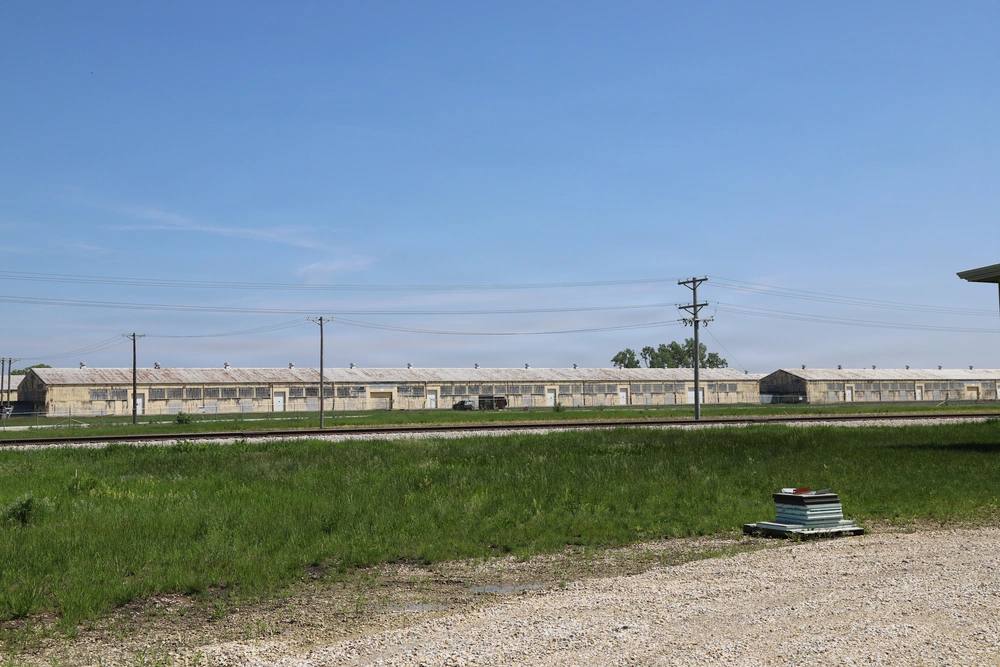
The U.S. Army will detonate about 9,500 pounds of unstable lead azide at the Iowa Army Ammunition Plant in Middletown this week, invoking emergency powers that let it bypass a federal court order that had put the plan on hold. The Justice Department told the 8th U.S. Circuit Court of Appeals in a filing late Saturday that the Army plans to move forward without a permit, using an emergency munitions and explosives exception in federal environmental law.
Source: Associated Press
This follows our earlier report that the Army planned the detonation for Tuesday despite the court pause. The plan has now changed: the blast is set for Wednesday, November 25, and the Army says it will proceed under emergency powers rather than under the frozen permit. Read the earlier report
What the government told the court
Government lawyers told the appeals court there is an “immediate risk” that the lead will explode on its own as temperatures are expected to drop below 30 degrees this week, allowing the Army to invoke the exception and proceed with the controlled detonation without an emergency permit that environmental groups challenged last week. “In short, a controlled detonation is by far safer than an uncontrolled explosion,” the Justice Department said, adding that the Army “intends to act consistent with” the terms of the emergency permit even if it is not in effect.
Source: Reuters
The Army said on Sunday evening that it plans to detonate the chemicals on Wednesday “to allow for optimal weather conditions” and for all mitigation measures to be put in place. It had earlier said in a post on X on Sunday that the detonation would take place on Wednesday, November 25. The Army did not respond to a Reuters inquiry on Sunday about the precise timing of the detonation.
Source: Associated Press
Why the court stepped in
The 8th Circuit on Thursday granted a request by environmentalists to put on hold a permit that cleared the way for the detonation in Middletown, a small community about 160 miles southeast of Des Moines. The Iowa Environmental Council and the Sierra Club Iowa Chapter sued to halt the operation, arguing the detonation could cause irreparable harm by dispersing lead particles. The blast was initially planned for Friday, but the Army has since changed the date three times following an outpouring of public concern about potential health and environmental effects.
“The Army seemed more concerned over the weekend with finding a way to sidestep the judicial process than on meeting the public’s demands for greater transparency, notice to affected communities, and far stronger protection of people, property, and the environment from serious harm,” said Earthjustice attorney Thien Chau.
Source: Associated Press
What is lead azide — and why it cannot just be moved
Lead azide has long been used as an explosive to trigger bombs and rockets, though it is being phased out by the armed forces because of concerns about its volatility and toxicity. In March, staff at the Iowa Army Ammunition Plant found several dozen barrels of degraded lead azide. Crystallisation of the material created an unstable and dangerous situation, prompting the Army to assemble experts in munitions chemistry, engineering and environmental safety to come up with a plan.
Source: Fire Engineering
According to reporting by The New York Times, cited by Fire Engineering, the Army had hired a company to chemically neutralise the lead azide but cancelled the contract two months later, citing safety concerns. Army officials have said they have no other choice than to blow up the 68 drums at the ammunition depot in southeast Iowa, and that moving the material off-site poses an “unacceptable risk of accidental detonation.” “Destroying it in place is the only responsible option,” Army officials state in documents published on its website.
The plant itself is a 19,011-acre facility at 17571 DMC Highway 79, Middletown, about 8 miles west of Burlington and less than 8 miles west of the Mississippi River, which forms the border with Illinois. The Army's computer modelling initially showed a plume of brain-damaging lead could have blown more than 100 miles into western Illinois on Friday, depending on weather conditions. The Army shared details during a public meeting in Middletown in October, but a public advisory a week ago was the first time other communities — some as far away as 100 miles — became aware of the potential impact.
What happens next
The controlled detonation is now set for Wednesday, November 25, and could go on for at least four hours. “The detonation will result in an air plume with some lead-containing particles which will disperse in the air and deposit on the ground,” an Army advisory states. “Lead is toxic to humans and animals.” Residents, farmers and local officials near Middletown — and across the river in western Illinois — will be watching the Army's mitigation measures, the weather, and whether the courts intervene again before Wednesday.
The Army will detonate 68 drums of degraded lead azide at its Middletown, Iowa, plant on Wednesday, invoking emergency powers to proceed without a permit after the 8th Circuit froze the permit. The government says falling temperatures could trigger an uncontrolled blast; environmental groups say the Army is sidestepping the courts.