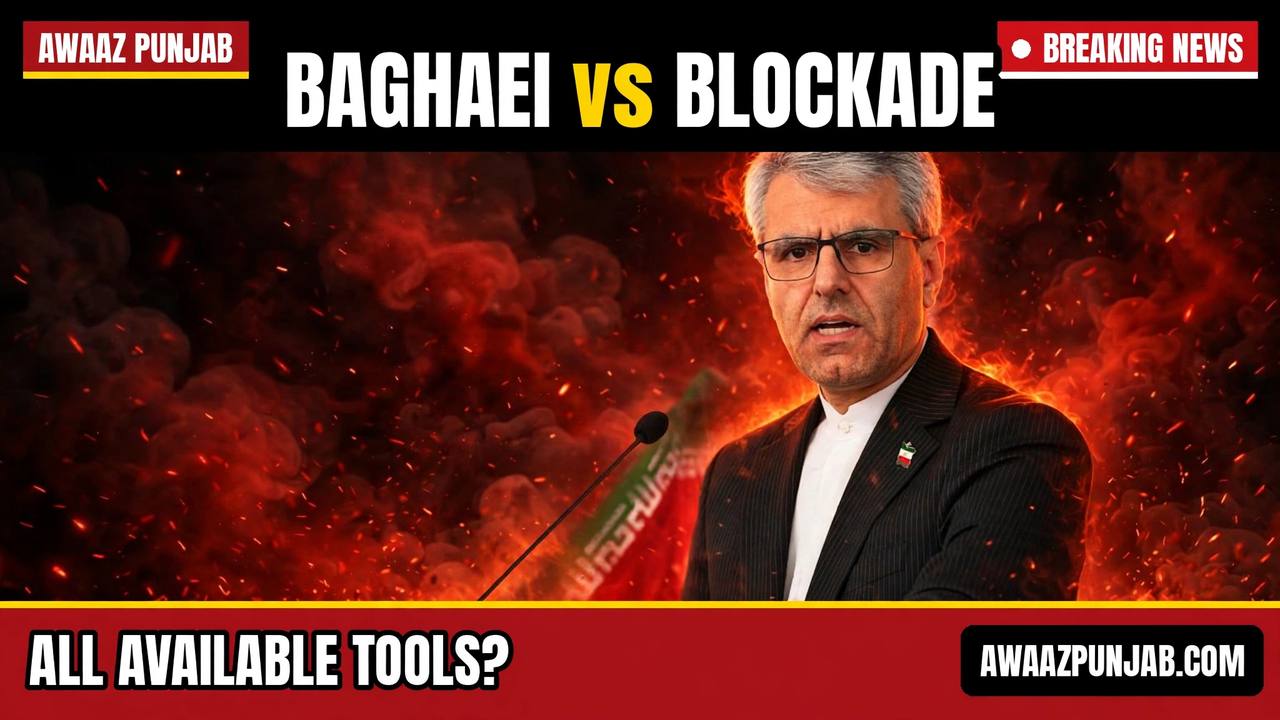
Iran will use all available tools to confront the naval blockade the United States has imposed on its oil exports, Foreign Ministry spokesperson Esmaeil Baghaei said on Monday, in Tehran's latest defiant message as the confrontation in the Gulf grinds on.
Source: Reuters
Baghaei delivered the warning at his weekly news conference in Tehran. He did not say which measures Iran might use, and the statement announced no specific military action or new restriction.
The blockade so far
The blockade on Iran-related oil exports was first imposed on April 13, lifted in June after Washington reached a draft understanding with Tehran, and then restored on July 14 after that agreement collapsed, according to Reuters.
The US military's Central Command says the blockade has prevented Iran from loading any crude oil onto its tankers since late August, and RFE/RL reported Iranian oil revenue is set to hit zero by mid-December. Iran has readied a 14-tanker convoy at Kharg Island in what has been seen as a test of the blockade.
Iran had already readied a 14-tanker convoy at Kharg Island to test the blockade. Read the earlier story
A violent weekend in the Gulf
The warning came after a weekend of attacks on shipping and Gulf targets. Two tankers were hit by unknown projectiles near Khasab, Oman, on Saturday with no casualties reported, and Iran's navy claimed two supertankers caught fire after hitting mines north of Ghanam Island, east of the Strait of Hormuz — a claim that has not been independently verified. Britain's maritime trade agency also reported a tanker incident involving military forces near Chabahar in the Gulf of Oman on Sunday.
Two supertankers were reported hit near the Strait of Hormuz over the same weekend. Read the earlier story
In Bahrain, Iran's Revolutionary Guard said on Saturday night that it had destroyed two American Patriot air-defence radars at US bases, a claim Bahrain rejected, saying the target was a civilian industrial facility at Sitra where a fire wounded two people. The US Central Command separately denied an Iranian claim that a US F-16 fighter jet had been damaged, calling it categorically false.
Bahrain said the target was a civilian industrial facility at Sitra, not a US base. Read the earlier story
What Washington says
President Donald Trump said on Saturday that he wants a 'permanent' deal with Iran but is not rushing his next move and could wait until 2027. US officials insist the blockade and sanctions are working, while analysts warn the current lull is unstable and could tip back into full-scale war, with Israel possibly rejoining strikes on Iran.
What is solid
- Baghaei said on November 23 that Iran will use all available tools against the US naval blockade.
- The blockade was imposed on April 13, lifted in June and restored on July 14.
- Two people were wounded in the fire at Sitra in Bahrain.
What is only claimed
- Iran's navy says two supertankers hit mines near Hormuz — not independently verified.
- The Revolutionary Guard says it destroyed two US Patriot radars in Bahrain — Bahrain says the target was civilian.
- Iran's army claimed it damaged a US F-16 — US Central Command calls that categorically false.
What happens next will turn on whether Iran tests the blockade — with a tanker convoy, as hardliners in Tehran have urged — or whether talks resume. For the lakhs of Punjabi and Indian workers living and working across the Gulf, any escalation means fresh risk to their safety, their jobs and the money they send home, and any disruption to shipping through Hormuz feeds straight into oil prices.