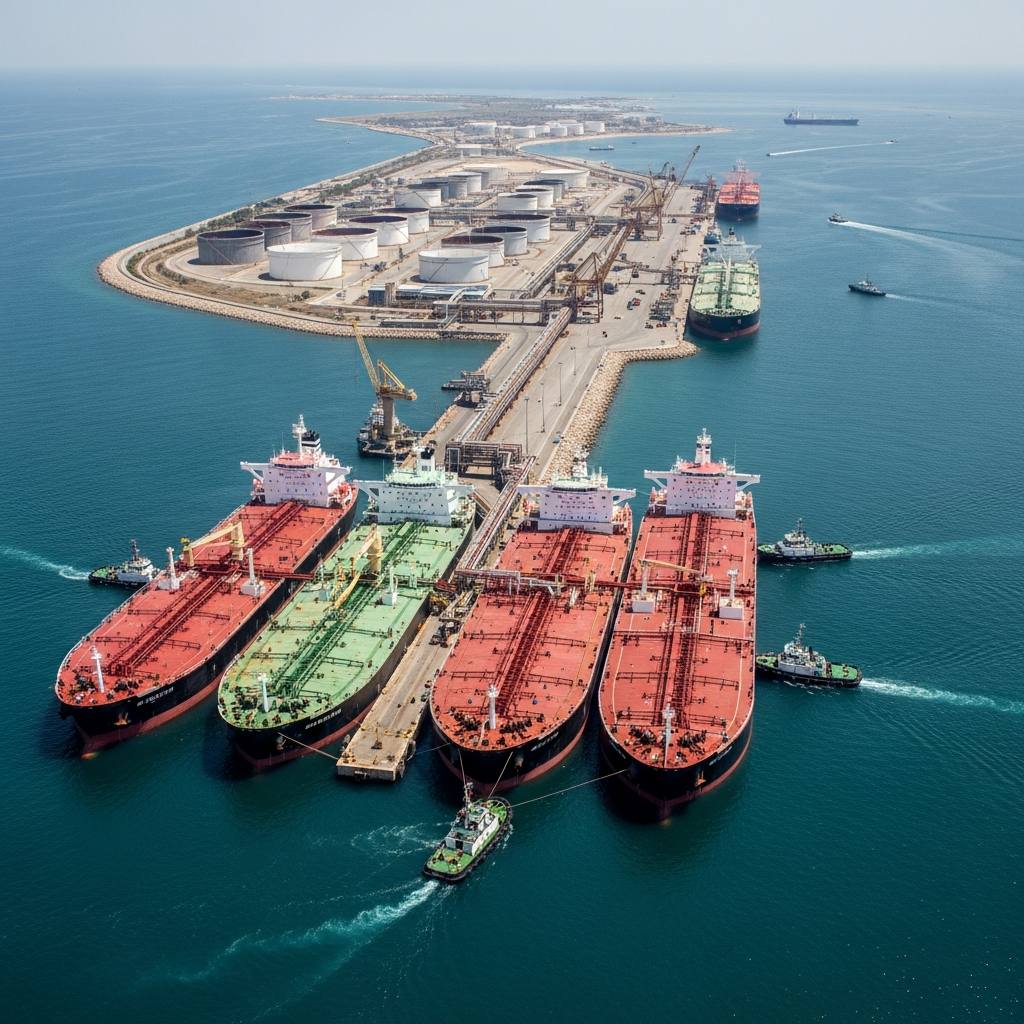
Iran has gathered more than 14 oil tankers at Kharg Island, its main crude export terminal in the Persian Gulf, in what ship-tracking data and satellite imagery show is a deliberate convoy being prepared to challenge the United States naval blockade of Iranian oil exports. Crews have been assigned to the vessels, Iranian flags have been raised over them, and most have switched off their tracking systems, according to reports by Euronews and Iran International published on Friday.
On Wednesday, US Central Command expanded its blockade to cover any ship that takes Iranian cargo at sea — a move that followed the first such transfer in months. Read: US tightens Iran blockade to ship-to-ship transfers
The convoy plan follows the first confirmed ship-to-ship transfer of Iranian crude since the blockade was reimposed in mid-July. The US-sanctioned Suezmax tanker Olym transferred about 200,000 barrels of crude to the medium-range tanker Hao Fan on Tuesday, November 17, just south of Kharg Island, according to Bloomberg, citing the nonprofit group United Against Nuclear Iran (UANI) and data firm Kpler. Both vessels switched off their transponders during the operation, and the Hao Fan was reported to be spoofing its location to appear near Oman's Shinas anchorage. Yaani, 200,000 barrels means around 2 lakh barrels — a small load, too little for a full export voyage on its own.
Euronews Persian, citing satellite imagery and ship-tracking data, reported that the 14-plus tankers are crewed and ready, and that the convoy is expected to head for the Sea of Oman in the coming days. Iran International reported that Tehran plans to send the vessels toward China and other destinations within 48 hours. No Iranian government official has confirmed a departure date, and the plan has so far been reported through Iranian media and tracking firms rather than announced officially.
Fars news agency, which is linked to Iran's Islamic Revolutionary Guard Corps (IRGC), proposed the convoy and warned that any American move against the tankers would be met with retaliation, including strikes on oil and terminal infrastructure in Gulf states, according to reports of its coverage. Iran International reported the IRGC-linked media's message in blunt terms: that Tehran would go to war if the United States attacked oil tankers bound for China. The warning has not been issued as an official government statement.
The United States has said its forces may stop, board or capture vessels that receive Iranian cargo at sea. US Central Command issued its expanded notice on Wednesday, November 18. Since the blockade was reimposed on July 14, US forces have redirected 147 commercial vessels that complied with blockade orders and disabled five merchant ships that refused to comply, according to CENTCOM figures reported earlier — the most recent disabling being the St Kitts-flagged cargo ship M/V Huda in the Gulf of Oman on November 7.
Oil prices, the Gulf and workers
Oil markets were watching the standoff closely on Friday. Brent crude was trading around $91 a barrel and US crude around $82, with Brent heading for a roughly 5% weekly fall — its third straight weekly decline — as traders focused on strong Middle East export flows despite the tanker attacks, Reuters reported. For the lakhs of Punjabi and Indian workers living in the Gulf states, a direct naval clash in the Gulf would carry immediate risks: shipping disruption, flight cancellations and pressure on remittances, while any sustained oil-price spike would feed through to fuel prices back home.
The blockade is the sharpest economic weapon in a war that began on February 28, when the United States and Israel launched strikes on Iran. Washington first imposed the naval blockade on April 13, lifted it in June, and reimposed it on July 14 after negotiations collapsed; since then Iranian oil exports have effectively halted, forcing production curbs. On Thursday, the US Senate voted 51–48 to reject a war-powers resolution that would have limited further military action against Iran, leaving the decision with President Donald Trump, who said on Thursday he would talk about Iran 'after the beginning of the year'.
The convoy plan comes as tanker attacks in the Strait of Hormuz continue — a tanker caught fire near Oman's Khasab on Friday after being hit by an unknown projectile. Read: Tanker catches fire after projectile strike near Hormuz
What happens next turns on whether the convoy sails — and what the US does if it does. Allowing the tankers through would punch a hole in a blockade that has choked Iran's oil income for four months; using force against them risks the Iranian retaliation Fars has threatened, and a wider clash in the world's most important oil waterway. Mediators from Oman, Qatar and Pakistan have reported no breakthrough in ceasefire talks, with Iran demanding the blockade and sanctions be lifted before formal negotiations resume.