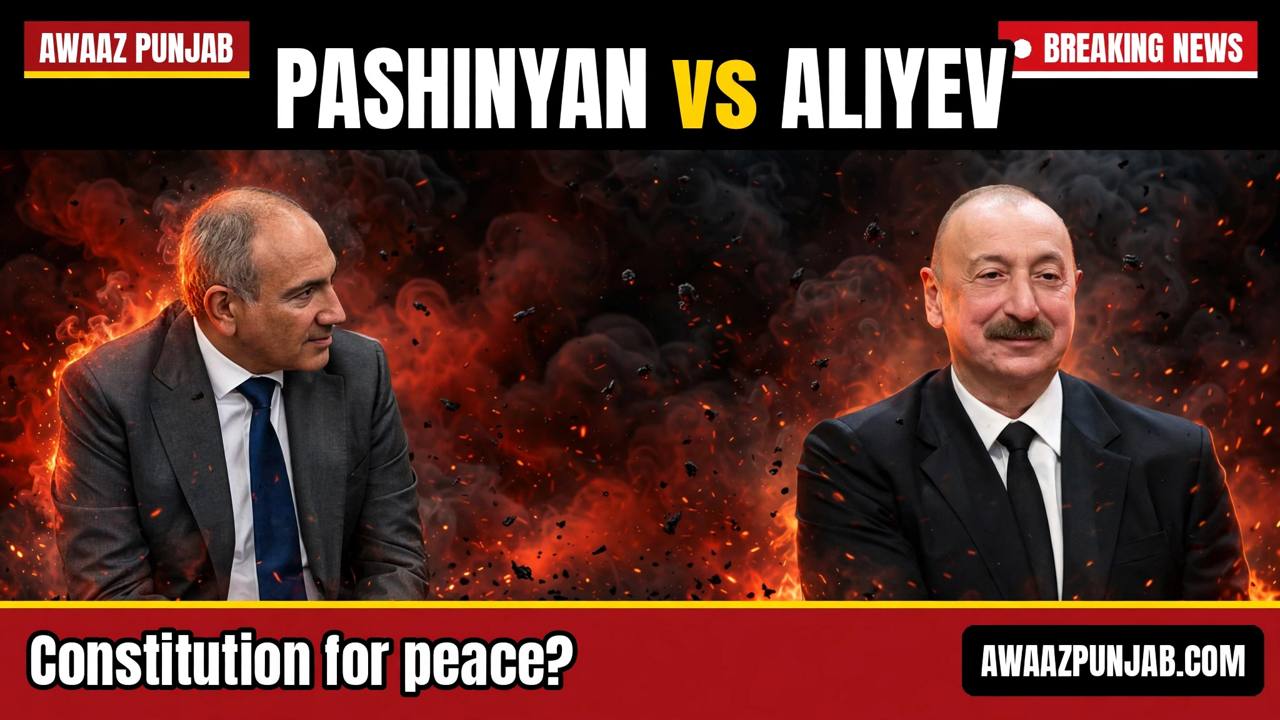
Armenia published a draft proposal of a new constitution on Monday, 23 November 2026, in what Reuters described as a key development towards signing a formal peace agreement with its neighbour and longtime foe, Azerbaijan.
Source: Reuters
The proposed new constitution rewrites the preamble and removes the reference to which Baku has objected — a reference to a Soviet-era document calling for the reunification of Armenia and Nagorno-Karabakh, then an autonomous region in Soviet Azerbaijan. For Azerbaijan, that reference has been a central sticking point to signing a formal deal.
Prime Minister Nikol Pashinyan, who won re-election in June 2026 in a vote widely viewed as a referendum on his handling of the peace process, addressed the nation shortly after the draft was published. “I stake my entire political, human and moral credibility on this issue and say that after the adoption of the new Constitution, we will not only sign and ratify a peace agreement with Azerbaijan, but will also have institutional, lasting and irreversible peace,” he said, according to the Armenpress state news agency.
Source: Prime Minister of Armenia
Pashinyan said the Justice Ministry published the first draft on a specially created website so that every citizen can review it and submit proposals. Article 8 of the draft states that the objective of Armenia’s foreign policy is to ensure peace — what Pashinyan called “a truly landmark declaration”.
Referendum hurdle remains
The charter will now undergo a public debate, but Pashinyan still needs at least six opposition legislators to join his ruling Civil Contract party — which lacks a constitutional majority — to call for a constitutional referendum. He has proposed that the opposition vote in favour of putting the draft to a referendum.
Armenia’s opposition parties, dominated by pro-Russian groups, have already said they will not support Pashinyan’s initiative. Pashinyan has faced a wave of criticism from the opposition and some sections of the public, who accuse him of capitulating to Azerbaijan, particularly since the 2023 war.
Decades of war over Karabakh
Armenia and Azerbaijan, neighbours in the South Caucasus, had been at intermittent war since the late 1980s, mostly over the mountainous region of Nagorno-Karabakh, which was controlled for decades by ethnic Armenians but recaptured by Azerbaijan in a lightning offensive in 2023. Nearly all of the territory’s ethnic Armenian population fled to Armenia.
The two countries signed a preliminary, US-brokered peace agreement last August. Since then they have begun to rebuild trade links and say they are at a state of “real peace”. A formal peace agreement, however, has remained unsigned — with the constitution’s preamble as the main obstacle.
What is solid
- Armenia published the draft constitution on 23 November 2026
- The draft rewrites the preamble and drops the Nagorno-Karabakh reunification reference
- Pashinyan won re-election in June 2026
What is only claimed
- Whether opposition parties will back a referendum
- Whether adopting the constitution will deliver lasting peace with Azerbaijan
What happens next: the draft goes through public debate, and Pashinyan must persuade at least six opposition legislators to support a referendum. If voters adopt the new constitution, Pashinyan says Armenia and Azerbaijan will sign and ratify a formal peace agreement.