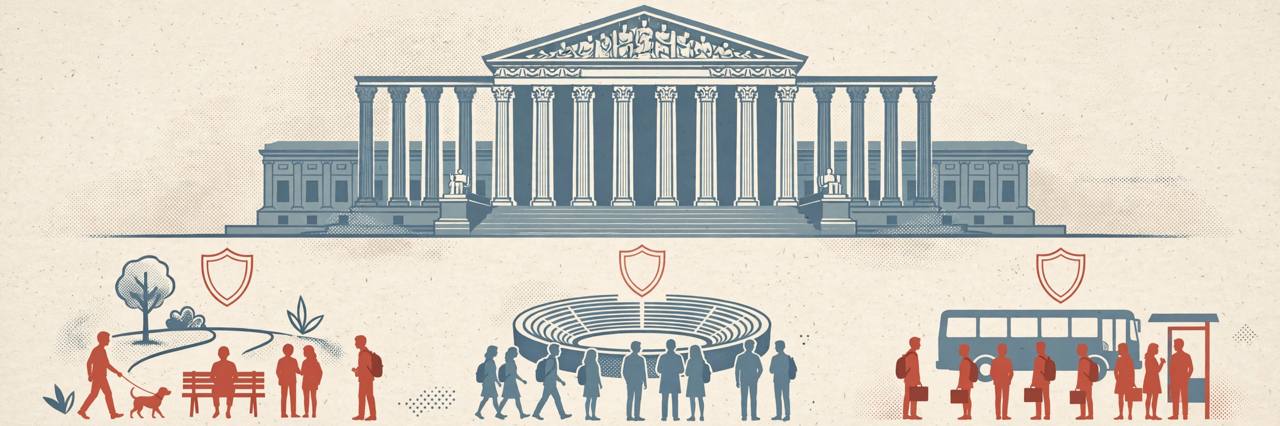
The United States Supreme Court on Monday, November 16, declined to decide whether Maryland's law banning the carrying of guns in so-called sensitive places — including stadiums, bars and public parks — violates the constitutional right to bear arms, leaving the state's restrictions in force.
Source: Reuters
The justices turned away an appeal by gun rights advocates of a lower court decision that had found the Maryland restrictions compatible with the Second Amendment to the US Constitution. The court as a whole gave no reasons for refusing the case, which is the usual practice when it declines an appeal, and no justice publicly dissented, Bloomberg Law reported.
Source: Bloomberg Law
What Maryland's law bans, and where
Maryland was one of several states that enacted new location-based gun restrictions after the Supreme Court's landmark 2022 ruling expanded gun rights. The Maryland law, signed in 2023 by Democratic Governor Wes Moore, prohibits firearms in locations including college campuses, hospitals, power plants and amusement parks, as well as in places that sell alcohol or cannabis for on-site consumption.
Those bans built on Maryland's longer-standing carry restrictions covering places such as public transit, casinos, schools and public protest sites. Together, the rules mean that even a person licensed to carry a handgun in Maryland must leave the weapon behind across a wide map of everyday public life — a football stadium, a hospital visit, a bar, a park or a bus ride.
The Bruen test at the centre of the fight
The challenge was brought by gun rights groups, including the Maryland affiliate of the National Rifle Association, together with several firearms-owning Maryland residents. They argued that many of the state's location bans fail the legal test the Supreme Court set in its 2022 decision in New York State Rifle and Pistol Association v. Bruen.
Bruen held for the first time that the Second Amendment protects an individual's right to carry a handgun in public for self-defence. Under the test that decision created, a gun control measure survives only if it is consistent with the nation's historical tradition of firearm regulation — not merely because it advances an important government interest. The challengers said Maryland's sweeping list of sensitive places has no such historical footing.
The case reached the Supreme Court by a split path. A federal judge in 2023 upheld some of Maryland's location restrictions while blocking others, which prompted separate appeals from both sides. The Richmond-based 4th US Circuit Court of Appeals then approved all of Maryland's disputed location bans, and the gun rights groups took that ruling to the Supreme Court.
Justice Thomas: sceptical, but not this case
Conservative Justice Clarence Thomas, who wrote the Bruen ruling, attached a statement to Monday's order saying he was sceptical that Maryland's restrictions are lawful. He nevertheless agreed with turning the case away, saying the plaintiffs' broad challenge to so many locations at once would complicate the court's review.
"In an appropriate and more narrowly focused case, however, we should consider the scope of states' authority to ban firearms in 'sensitive places'." — Justice Clarence Thomas, statement attached to the November 16 order, reported by Reuters.
Thomas's statement matters because it signals that Monday's refusal is not the court's last word on sensitive places. A future case challenging one or two locations, rather than Maryland's whole list, could still attract the justices — and Thomas has now said publicly that such a case deserves a hearing.
A court that has mostly expanded gun rights
The refusal comes in a year when the court, which has a 6-3 conservative majority, has twice moved to expand gun rights. In June, the justices struck down, 6-3, a Hawaii law that required gun owners to get a property owner's permission before bringing a handgun onto private property open to the public, such as most businesses. The same month, they ruled unanimously to limit a decades-old federal law barring firearms possession by certain drug users, narrowing a measure that had threatened the gun rights of millions of Americans who use marijuana and own firearms.
The Second Amendment, ratified in 1791, provides: "A well regulated militia, being necessary to the security of a free state, the right of the people to keep and bear arms, shall not be infringed." The United States has the world's highest rate of gun ownership, and the scope of that sentence has been fought over in three major Supreme Court rulings since 2008 that have progressively broadened gun rights, Reuters noted.
What happens next
For Marylanders, nothing changes on the ground: the sensitive-places bans stay in force at campuses, hospitals, stadiums, parks, bars and the other listed locations, and the 4th Circuit's ruling upholding them is now final. For the national fight, attention shifts to December 2, when the justices will hear a challenge to state restrictions on assault-style rifles — another chance for the court to expand gun rights in a case involving a type of weapon often associated with mass shootings. And Thomas's statement invites gun rights groups to return with the narrower sensitive-places case he described.