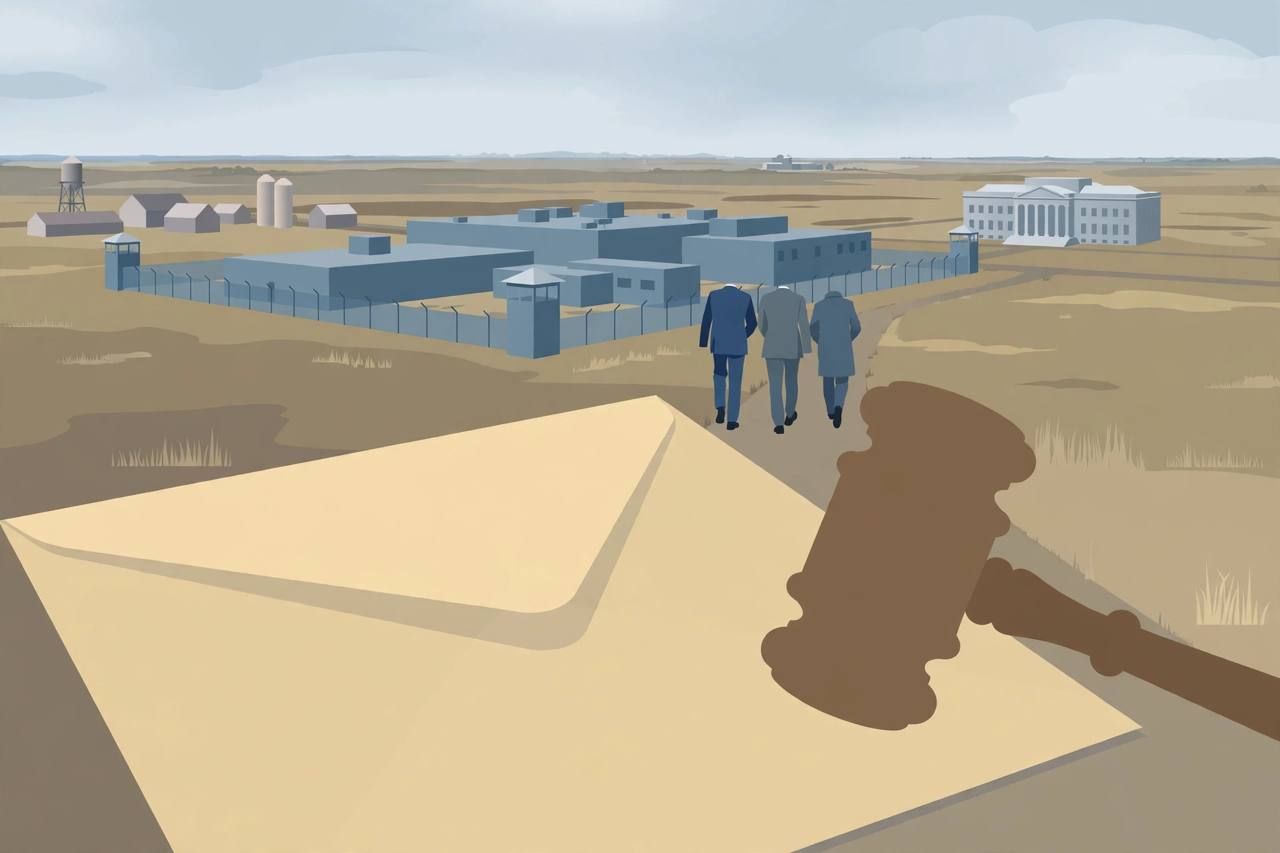
WASHINGTON — A top Democratic senator is now investigating the Trump administration's purchase of a Minnesota immigration detention facility from CoreCivic, raising questions over the price and calling on the company and the Department of Homeland Security to preserve their records, Reuters reported on Friday, November 13.
Source: Reuters, via KWSN
This is a new development on a story Awaaz Punjab has already covered: the purchase of the Prairie Correctional Facility in Appleton, Minnesota, was reported on November 2, and the facility's opening was reported on November 9. What changed this week is oversight — Senator Maggie Hassan's letters, dated November 11 and made public on Friday, open a Senate investigation into how the $495 million price was set. Hassan is seeking to lead the Senate Homeland Security and Governmental Affairs Committee when Democrats take control of Congress in January.
The question at the centre of the probe
"In 2025, DHS reportedly purchased the Prairie Correctional Facility from CoreCivic, a major immigration detention contractor, for $495 million — shortly after Minnesota declined to purchase the same facility for $75 million," Hassan's office said on Friday. That gap — roughly $420 million between the price the state was offered and the price the federal government paid — is the fact the investigation is built around.
Representatives from CoreCivic and DHS could not immediately be reached for comment on the letters on Friday, Reuters reported. That means the $495 million and $75 million figures in this story are, at this stage, the figures as stated by Hassan's office and as previously reported — not figures the department has confirmed in response to the probe itself.
How the price gap first surfaced
The gap was first reported on October 29 by KARE 11, the NBC-affiliated station in Minneapolis, which found that DHS paid CoreCivic $495.6 million in August for the vacant Appleton prison, about a year after the Minnesota Department of Corrections rejected a $75 million offer for the same facility. A fact check of that reporting concluded the claim was true, while noting it remained unclear why the federal price was so much higher.
The purchase also came shortly before the Government Accountability Office, the nonpartisan federal watchdog, released a report on September 24 saying ICE had wasted taxpayer money on unsuccessful detention projects and lacked important information about the long-term costs of its investments. At an October 30 press conference, Treasury Secretary Scott Bessent said he knew nothing about the reported overpayment for the Minnesota prison.
What DHS has said so far
DHS, in a statement first given to KARE 11 and repeated on November 2, said it followed the standard federal appraisal process when purchasing the Prairie Correctional Facility, and that it bought the prison to expand immigration detention capacity and support deportation plans without waiting years to build a new facility. On the price gap, the department said the earlier $75 million figure was only a preliminary, non-binding offer made during discussions with the Minnesota Department of Corrections, that the two sides never reached a formal agreement or completed an official appraisal, and that the earlier offer did not account for replacement costs, rising construction expenses or federal operating requirements.
Prairie Correctional Facility holds up to 1,600 detainees. CoreCivic told investors its revenue rose 28% year over year on increased ICE demand and the sale of four detention facilities to the federal government for a total of $2.21 billion — the Minnesota purchase is the largest single piece of that story now under Senate scrutiny.
What happens next
Hassan's letters ask CoreCivic and DHS to preserve their records — the step that legally freezes the paper trail before a committee can demand it. She is in line to lead the Homeland Security and Governmental Affairs Committee when Democrats take control of Congress in January, which would give the probe subpoena-backed authority it does not yet have. Until the department or CoreCivic responds, the verified facts are the letters, the dates, the two prices as reported, and DHS's appraisal-process defence — the explanation for the gap itself is exactly what the investigation says it intends to find.