NEW YORK — Federal prosecutors in Manhattan have unsealed an indictment charging five Ecuadorian nationals — among them the son of a former president of Ecuador, a former member of Ecuador's National Assembly and a former port-city mayor now running for that office again — with conspiring for more than a decade to import vast quantities of cocaine into the United States, in part by hiding it inside shipping containers of tuna and other legitimate goods. All five men are in custody abroad, arrested this month in Panama and Ecuador, the U.S. Attorney's Office for the Southern District of New York announced on Thursday, November 5.
Source: U.S. Attorney's Office, Southern District of New York (via U.S. Embassy in Ecuador)
The defendants are Jaime Estrada Medranda, 41; his father Jaime Estrada Bonilla, 71; Jacobo Abdala Bucaram-Pulley, 48; Geovanny Fernandez Menendez, 53; and William Jose Briones Lopez, 47 — all of Ecuador. Each is charged with conspiring to import cocaine into the United States, possessing machine guns, and conspiring to possess machine guns, prosecutors said. The charges are allegations in an indictment; the men are presumed innocent unless and until proven guilty, and court records did not list attorneys for any of them, the Associated Press reported.
Who the defendants are: a political family, a port and a seafood company
Jaime Estrada Medranda represented a district in Manabi Province in Ecuador's National Assembly — a district that includes Manta, the centre of Ecuador's tuna-processing industry and home to one of its largest ports. His father, Jaime Estrada Bonilla, is a former mayor of Manta, is currently running for the same office, and formerly served as president of the Port Authority of Manta. Father and son are also owners and executives of a major Manta-based seafood company and of an Ecuadorian professional soccer club, prosecutors said. The indictment alleges the two men used that position for years: partnering with some of the region's largest and most violent traffickers, including the designated foreign terrorist organisations Los Choneros and Los Lobos, and smuggling cocaine disguised inside their seafood company's shipments, with many loads allegedly sourced from paramilitary groups in the jungles of Colombia.
Jacobo Abdala Bucaram-Pulley is alleged to be a drug and firearms trafficker in his own right who also served as an intermediary for shipments from other traffickers, the Associated Press reported from the indictment. His father is Abdala Bucaram, who was elected president of Ecuador in 1996 and was ousted by Congress less than six months later for "mental incapacity"; he was accused of corruption and nepotism during his brief time in office, the AP reported. Prosecutors allege that in or about 2026, Medranda and Bonilla sent the other two defendants — Menendez and Lopez — as their representatives to meet Bucaram-Pulley and negotiate the export of a purported two-ton load of cocaine from Ecuador to Mexico, for further shipment to the United States.
How the alleged scheme worked: containers, tuna and trusted intermediaries
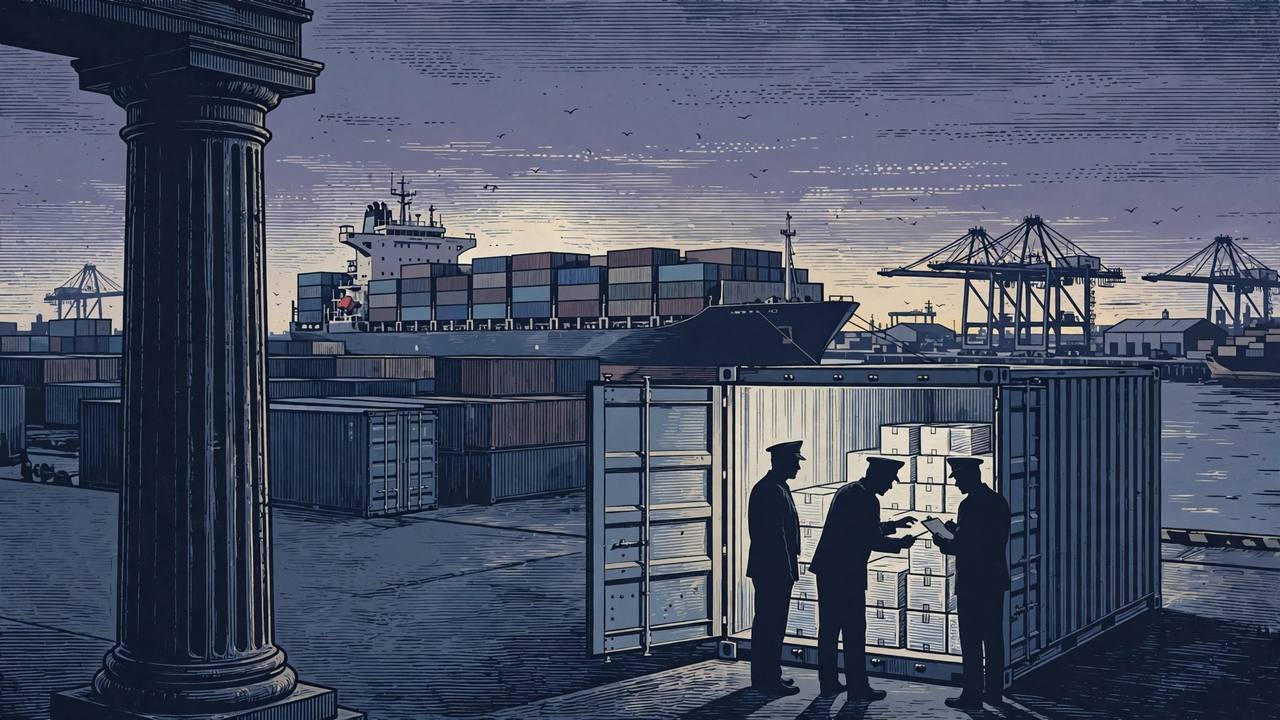
Ecuador sits between Colombia and Peru, the world's two largest cocaine-producing countries, and hundreds of tons of cocaine leave its main seaports each year, including Manta and Guayaquil, prosecutors said. Traffickers exploit legal commercial maritime routes, concealing narcotics in container ships and other vessels carrying legitimate commodities — seafood, bananas, timber and minerals — alongside an extensive network of fishing vessels and "go-fast" boats. To minimise their own risk, prosecutors allege, Medranda and Bonilla relied on trusted intermediaries to meet traffickers, receive payments and coordinate the receiving, packing and smuggling of cocaine out of Ecuador in containers packed with legitimate goods such as tuna.
One shipment in the indictment is specific, and it is the hardest fact in the case so far. In or about 2023, prosecutors say, the Estradas' seafood exporting company was used to ship ton-quantity loads of cocaine out of Ecuadorian seaports — and on or about May 27, 2023, the Ecuadorian National Police seized approximately 1,444 kilograms of cocaine inside one of the company's shipping containers at the Port of Guayaquil. That seizure is an event in the public record of the case; what a court has not yet decided is who, if anyone, is criminally responsible for it.
"The charges announced today represent a coordinated effort to dismantle political corruption and narcotics trafficking that had wreaked havoc in Ecuador and plagued the country with increasing violence in recent years," said U.S. Attorney Jamie McDonald. "As alleged in the Indictment, the defendants played a critical role in transforming the country into a major transit hub for 70 percent of the cocaine reaching the United States and Europe." DEA Administrator Terrance Cole said: "Political influence, financial resources, and powerful connections do not place anyone beyond the reach of American justice. Those who exploit legitimate businesses to move cocaine toward our communities should understand that DEA will follow the evidence, expose their networks, and work with our international partners to bring them before the courts." Both statements describe the prosecution's case; neither is a finding by a court.
Arrests in two countries, and the background: a port war between cartels
Medranda and Bonilla were arrested on or about November 2, 2026, while travelling in Panama. Bucaram-Pulley, Menendez and Lopez were arrested on or about November 4, 2026, in Ecuador. McDonald thanked the DEA's Special Operations Division Bilateral Investigations Unit, the Justice Department's Office of International Affairs, the DEA country offices in Quito and Panama City, the U.S. Department of State, the U.S. Embassy in Quito, and the governments of Ecuador and Panama for their assistance in securing the arrests.
The background is a country struggling to contain drug violence as rival cartels partner with local gangs in a battle to control coastal ports and other smuggling routes, the Associated Press reported. Ecuador is wedged between Colombia and Peru, the world's top cocaine-producing countries. The Trump administration has reached agreements with Ecuador and other Latin American countries to carry out joint military operations against criminal groups, even as it has maintained the right to unilaterally bomb vessels suspected of drug trafficking, the AP reported. For the U.S. Attorney's office, this case is being handled by its National Security and International Narcotics Unit; Assistant U.S. Attorneys Jonathan L. Bodansky, Jane Y. Chong, Jeffrey W. Coyle and Varun A. Gumaste are in charge of the prosecution.
What is solid
- An SDNY indictment against the five named men was unsealed on November 5, 2026, and the charges and arrest dates above are stated in the U.S. Attorney's own announcement.
- The cocaine-import conspiracy count carries a mandatory minimum of 10 years and a maximum of life; the machine-gun possession count carries a mandatory minimum of 30 years and a maximum of life, as prescribed by Congress.
- Court records did not list attorneys for the defendants when the charges were announced, the Associated Press reported.
What is only claimed
- Every account of the men's conduct — the seafood-container shipments, the partnerships with Los Choneros and Los Lobos, and the two-ton negotiation — is an allegation in the indictment, not a proven fact.
- The defendants are presumed innocent unless and until proven guilty; no plea, defence position or court finding has been reported.
The five men were arrested in Panama and Ecuador, not in the United States, so the next stage of the case is their transfer into the Southern District of New York's process — no arraignment date in Manhattan has been announced in the sources for this report. Sentencing, if any of them is convicted, will be determined by a judge; the mandatory minimums above are set by Congress and are published here for information only, as the U.S. Attorney's office itself notes.