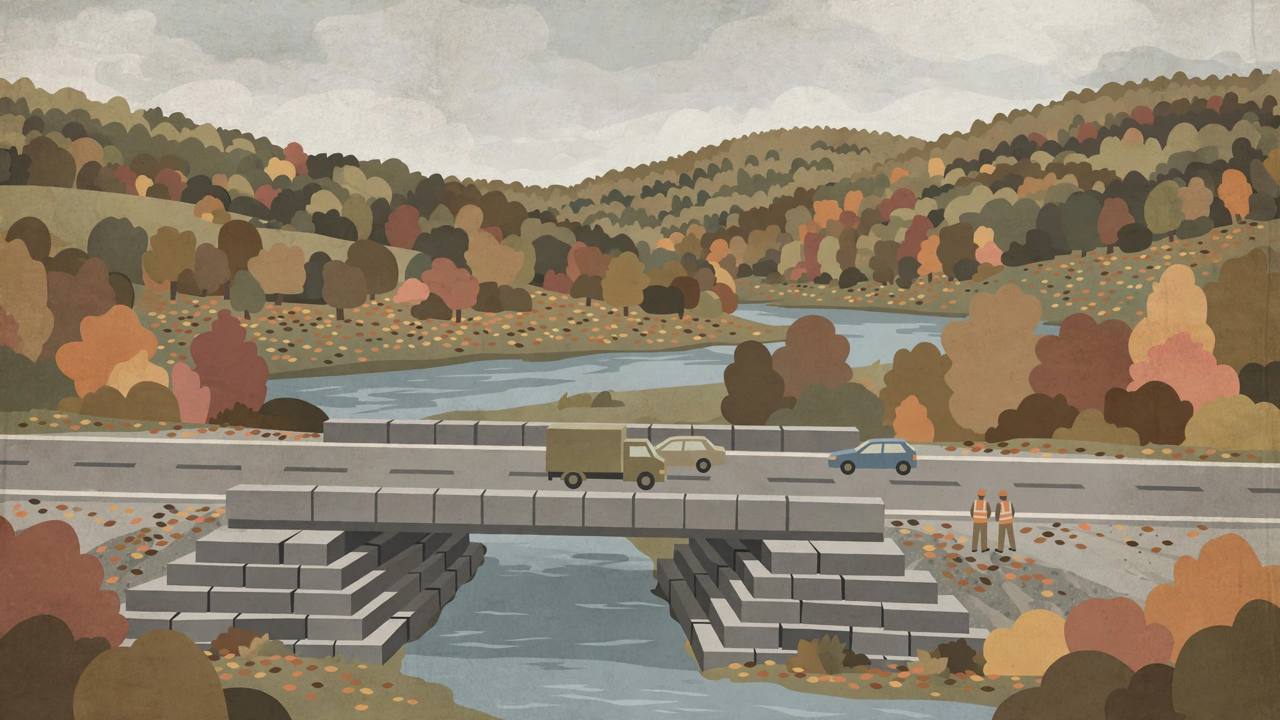
State Route 9J in the Town of Stuyvesant, Columbia County, has reopened to traffic, Governor Kathy Hochul announced on Friday, November 13, ending the long closure of a Hudson Valley road whose bridge over Mill Creek was wrecked by catastrophic flooding during a severe rainstorm in late July.
Source: New York State Office of the Governor
Traffic returned to the road on Thursday afternoon, and the town supervisor said the closure had lasted 106 days, imposing long detours and extra fuel costs on residents who rely on the route between Columbia County and the Capital Region.
Source: QNC News
How the July flood broke the road
The closure began after a severe storm in late July dropped more than 11 inches of rain on parts of the region in a short period. Floodwater scoured away the soil around the crossing over Mill Creek and eroded the foundation and supporting structure of the bridge that carries the roadway, leaving the road unsafe for traffic and forcing drivers onto lengthy alternative routes through neighbouring communities for the rest of the summer and the whole of the autumn.
"Mother Nature struck a fierce blow last summer, dumping a record amount of rain — more than 11 inches in some spots — over a two-day period," Governor Hochul said. "Once the rain stopped falling, our NYSDOT team immediately got to work to repair the damage and get this vital roadway open as quickly as possible. I applaud the talented women and men of NYSDOT for their ability to rapidly respond and their use of innovative engineering solutions, working non-stop to get this important work done so quickly."
Source: New York State Office of the Governor
The superblock repair
Engineers from the New York State Department of Transportation repaired the crossing using modular, prefabricated interlocking concrete units known as superblocks, which were used to create a new foundation and support structure for the bridge and to support the roadway embankment. Because storms have grown more severe in recent years, NYSDOT has been pre-ordering and stockpiling the blocks so they can be deployed quickly after storm damage, and the Route 9J repair was one of the first uses of the system in New York State. The whole repair was completed in less than four months.
State Transportation Commissioner Marie Therese Dominguez said the department is "constantly working to find new and better ways to respond to severe weather events," and that crews were able to clear the roadway and repair Route 9J "in record time." Division of Homeland Security and Emergency Services Commissioner Terry O'Leary called the reopening a testament to the state's push for a more resilient infrastructure network as it transitions from summer storms to winter weather.
Source: New York State Office of the Governor
What the closure meant locally
Route 9J runs along the eastern bank of the Hudson River and is a popular corridor for motorists travelling between the Hudson Valley and the Capital Region, serving local communities and farms and giving access to fishing, boating and camping destinations along the river. State Senator Michelle Hinchey said floodwaters had "washed out a critical travel route for the community," and thanked DOT crews who worked around the clock and the governor for expediting the work so people could safely regain access.
Source: New York State Office of the Governor
The Mill Creek crossing was one of many roads damaged by the same summer storms. The governor's office listed repair and reopening work across four counties, including State Route 23B in Greenport, State Route 22 in Hillsdale, State Route 295 in Chatham and U.S. 9 in Kinderhook in Columbia County; Route 9J in Castleton and Schodack, State Route 150 and U.S. 20 in Rensselaer County; State Route 385 in Coxsackie in Greene County; and a series of routes in Albany County, including State Route 5, State Route 32 and Fuller Road. Hundreds of NYSDOT crew members and contractors worked around the clock on the storm repairs across the Capital Region.
The road is open in both directions, but finishing work — striping and roadside landscaping — will continue at the site over the coming weeks, and motorists are asked to slow down and use caution near the work crews. No final cost for the emergency repair project was given in the announcement, and no date was set for completing the remaining work.
What happens next: drivers can use Route 9J again in both directions while the finishing work continues, and the state is pointing travellers to 511NY for up-to-date road information. For Stuyvesant residents, farmers and the delivery and service drivers who cover this stretch of the Hudson Valley, the reopening ends more than three months of detours that added time and fuel cost to everyday trips — and the superblock method used here is now the state's template for the next storm-damaged crossing.