DALLAS, Texas — A Canadian resident who federal prosecutors say spent years tracking a former coworker across three states and two countries — and who was allegedly caught on a doorbell camera at her Dallas apartment door wearing a full rubber mask — has been indicted by a federal grand jury in North Texas on two felony stalking charges, the U.S. Attorney's Office for the Northern District of Texas announced this week.
Source: U.S. Department of Justice, Northern District of Texas
The defendant is Nikolay Sapov, also known as Nikolay Georgiyevitch Sapov. The two-count indictment charges him with stalking through interstate travel and stalking through the use of electronic communications. U.S. Attorney Ryan Raybould announced the indictment, which was unsealed this week in Dallas. An indictment is an allegation, not a conviction, and Sapov is presumed innocent unless the government proves the charges beyond a reasonable doubt.
From a tennis tournament to a years-long fixation, prosecutors say
According to the Justice Department, Sapov first met the victim several years ago when both worked as seasonal player-services employees at the Miami Open tennis tournament. Court documents reported by Daily Texas News date the meeting to 2021 and say the victim is originally from Argentina. Prosecutors allege Sapov developed an obsession with her: repeatedly contacting her outside work hours, tracking down the personal and family social media profiles of the victim and her relatives, and sending unwanted gifts and correspondence to her homes.
The detail in the court filings is chilling in its patience. Daily Texas News, summarising the court documents, reported that Sapov allegedly opened a limited liability company in the victim's name, developed an intense fixation on Argentina, her home country, and attempted to learn Spanish. In 2023, investigators say, a star-naming certificate arrived at an apartment whose address the victim says she never gave him. The Justice Department says Sapov travelled to Orlando and to Plantation, Florida, to stalk her in 2023 and again in 2025, and that police later linked him to incidents in both cities.
Toronto to Dallas: the June 2026 escalation
The case came to a head in Dallas in June 2026. Prosecutors allege Sapov travelled from Toronto, Canada, to Dallas, Texas, where the victim was living, rented a vehicle at Dallas-Fort Worth International Airport and located her gated residential complex — an address she had never disclosed to him. On June 22, 2026, the victim saw Sapov loitering near her apartment building; local law enforcement and property security responded and issued him a criminal trespass warning, the Justice Department said. A neighbour later told police a man matching his description had been seen around the complex for about two weeks.
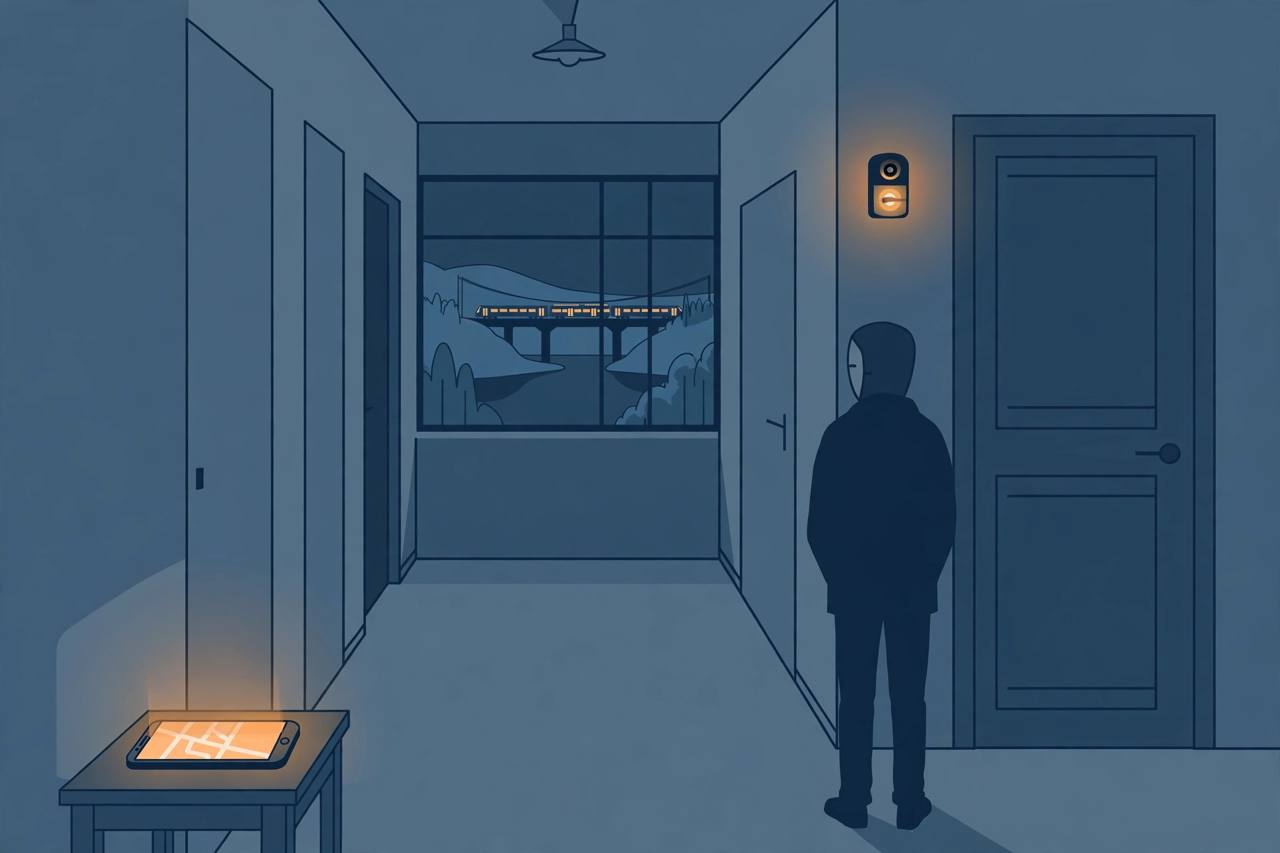
Two days later, on June 24, a neighbour's video doorbell captured an individual matching Sapov's physical build, clothing and footwear approaching the victim's front door wearing a full rubber mask to conceal his face. When the person was confronted through the doorbell intercom, he fled. Fearing for their safety, the victim and her partner temporarily moved into emergency hotel lodging and bought additional security measures; the victim told investigators she feared for her life.
"No individual has the right to terrorize another human being or shatter their sense of safety inside their own home," U.S. Attorney Ryan Raybould said. "From relentless digital harassment to an international stalking campaign that spanned across the globe, this defendant went to chilling lengths to hunt down, disguise himself, and intimidate this victim. This indictment makes our position clear: predatory behavior across borders will be met with swift, uncompromising federal justice."
Even after the Dallas incidents and the police reports, prosecutors allege, the contact did not stop. The Justice Department says Sapov continued sending unwanted electronic messages to the victim through August 2026, including an artificial intelligence-generated image depicting the victim posing alongside him. FBI Dallas Special Agent in Charge R. Joseph Rothrock said stalking and targeted harassment "can have a profound impact, disrupting victims' lives and leaving them feeling vulnerable," and that the FBI remains committed to holding accountable those who use threats and intimidation to instil fear.
Arrested on an Amtrak train at the border
On August 22, 2026, U.S. Customs and Border Protection officers arrested Sapov under a Texas stalking warrant as he travelled on an Amtrak train from Canada into the United States. According to the Justice Department, officers recovered electronic equipment and two cell phones containing maps and street names surrounding the victim's neighbourhood, screenshots of key-copying and locksmith companies, and AI-generated photographs and videos of the victim. Court-document reporting adds that investigators recovered a Flipper Zero electronic device they linked to the 2023 Florida incident.
Why this case reaches beyond one apartment complex
BACKGROUND: Federal stalking law is built for exactly this pattern — conduct that crosses state or national lines and uses phones, messaging and social media as weapons. The two counts here mirror that structure: one for the physical travel, one for the electronic campaign. For the large Punjabi and South Asian communities split between Toronto-area Canada and Texas cities such as Dallas and Houston, the case is a reminder that a harasser based in another country is not beyond the reach of U.S. federal court once the conduct crosses the border — and that border officers, as the Amtrak arrest shows, act on outstanding state warrants at the crossing.
WHAT HAPPENS NEXT: Sapov is scheduled to appear in federal court in Dallas at a later date. The case is being prosecuted by Assistant U.S. Attorney Nadin-Sarah Salkić. It was investigated by the FBI's Dallas Field Office Violent Crimes Task Force, with substantial assistance from U.S. Customs and Border Protection, the Dallas Police Department and the Tyler Police Department. If convicted on both counts, Sapov faces up to five years in federal prison on each count, followed by supervised release and potential financial penalties.