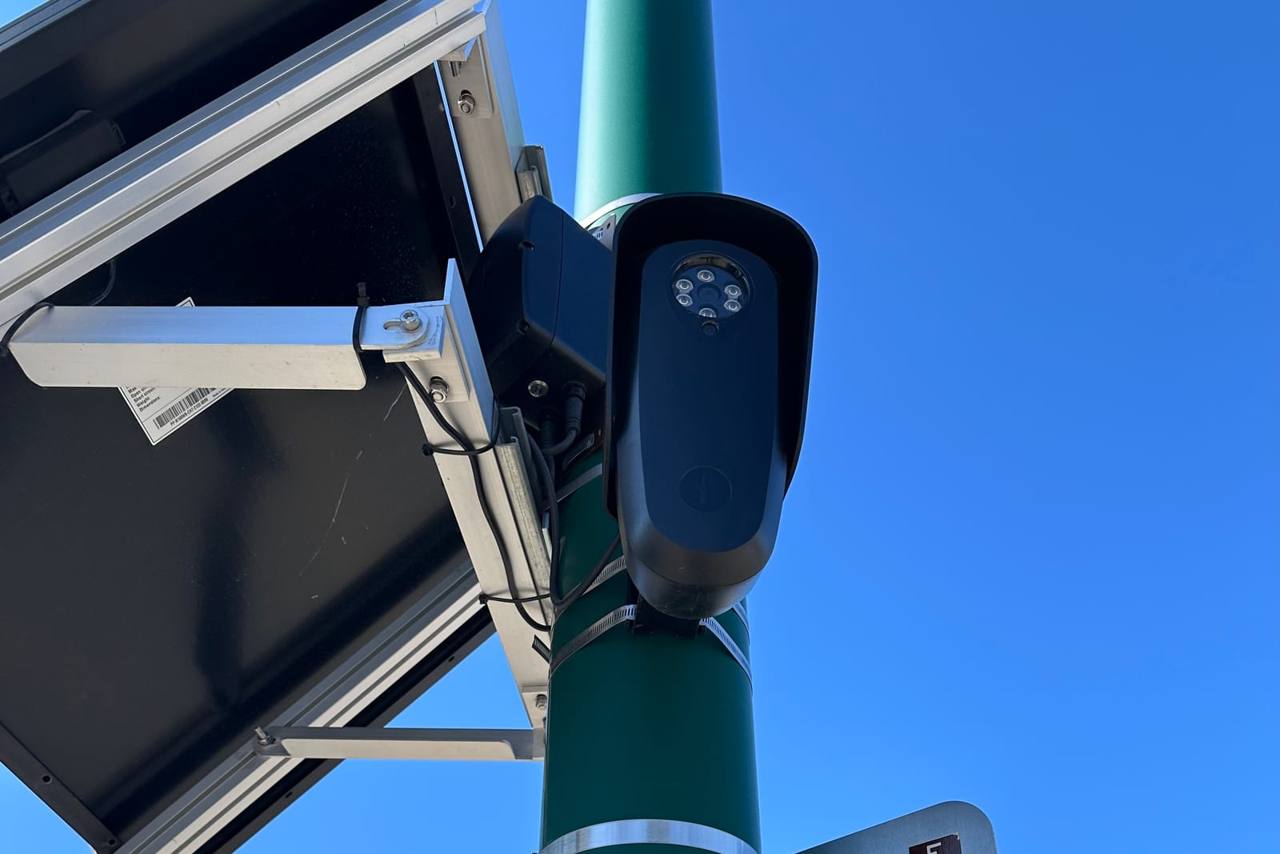
Virginia's State Crime Commission voted on Tuesday, November 10, to recommend much tougher penalties for police agencies and officers who break the state's license plate reader law — including a minimum civil penalty of $5,000 for every plate record shared against the rules — while also backing an emergency exception that would let police share plate data with federal and out-of-state agencies without a court order when there is an imminent threat of bodily harm, the Daily Press and The Virginian-Pilot reported.
Source: Daily Press / The Virginian-Pilot, Nov. 11, 2026, via Red Virginia News
The commission also recommended standards for decertifying officers who break the sharing restrictions — a step that would end an officer's law enforcement career — and supported an independent, random auditing process, according to reporting by the Virginia Mercury and WTOP. The commission did not recommend banning the cameras. None of the recommendations is law yet: they go to the Virginia General Assembly, whose next session opens on January 13, where lawmakers will decide whether to write them into statute.
Source: Virginia Mercury / WTOP via AI Spy Tech, facts as of Nov. 14, 2026
The emergency exception, argued by a Hampton prosecutor
The sharing exception was championed by Hampton Commonwealth's Attorney Anton Bell, who sits on the commission. Bell told members that most violations of the 2025 law are not abuses at all, but officers passing information to agencies such as the FBI “to address a criminal act that is currently going on or trying to be prevented.” “To completely prohibit sharing with a federal agency or with another state, I think it's going to have unintended consequences,” Bell said. “I just don't believe that that was the spirit of this statute.” No commission member objected to his proposal, and the final recommendation would allow sharing without a court order in cases such as an imminent threat of homicide, missing persons and human trafficking.
Source: Daily Press / The Virginian-Pilot, Nov. 11, 2026, via Red Virginia News
Bell pointed to the case this site covered in October, when a Smithfield police officer shared Flock plate data with the FBI during the investigation of the March 12 shooting at Old Dominion University, and the Isle of Wight commonwealth's attorney declined to charge the officer. “Everything was fluid,” Bell said of that night. He argued that waiting for a warrant or subpoena can cost precious time, especially on weekends when judges are not available, and that the delay can endanger lives. “If we're going to up the penalty for violating this statute, then we want to make sure that it's the type of behavior that we want to capture,” he said.
Source: Daily Press / The Virginian-Pilot, Nov. 11, 2026, via Red Virginia News
What the statewide survey found
The vote followed a statewide survey the commission's staff sent to every law enforcement agency in Virginia in August 2026. Of 359 agencies, 351 answered, and 191 said they use automatic license plate readers. Twenty agencies — one in ten of those using the systems — reported unauthorized use by their own employees, including searches run for federal or out-of-state agencies and officers searching their own plates. Seven agencies kept data longer than the 21-day legal limit, four shared data on a continuing basis with other states' agencies, one shared continuously with a federal agency, six had no policy at all, and staff could not find the legally required posted policy online for 59 of 178 agencies. A commission report the week before the vote found that 20 agencies, including the Virginia State Police, the Virginia Beach Police Department and the Richmond Police Department, had acknowledged violations since January, more than half of them tied to sharing during criminal investigations. As of October 19, seven criminal charges against two people, in cases linked to James City County and Chesterfield County, were pending under the law.
Source: Virginia Mercury / WTOP via AI Spy Tech, facts as of Nov. 14, 2026
What Virginia's law says now
The rules sit in Virginia Code § 2.2-5517, most of which took effect on July 1, 2025. Plate data must be purged 21 days after capture unless it is tied to an open investigation; audit-trail records are kept for two years. Police may use the cameras only for criminal investigations backed by reasonable suspicion, for missing or endangered people and human trafficking cases, and for alerts on warrants and stolen vehicles or plates. The data may not be placed into any other state, federal, private or commercial database, and sharing with a federal or out-of-state agency without a court order, warrant or subpoena is a Class 1 misdemeanor, punishable by up to 12 months in jail or a $2,500 fine. Every search must be logged with the date, time, purpose and case number, agencies must audit their own use at least every 30 days, and the raw data is exempt from the state Freedom of Information Act. Agencies must post their policy publicly and file annual reports — the first are due April 1, 2027, with a statewide State Police report due July 1, 2027.
Source: Virginia Mercury / WTOP via AI Spy Tech, facts as of Nov. 14, 2026
Senate Majority Leader Scott Surovell, a Fairfax Democrat, said he supports plate reader systems with strict guardrails, citing the 2002 D.C. sniper attacks, which killed 10 people, and wondering how much sooner the shooters might have been found with the technology — while cautioning that deciding what counts as an emergency is complicated. “It's important that there's sufficient consequences, not just for individual police officers that are looking up their neighbors or boyfriends or girlfriends, or whatever, but also for the law enforcement agencies that don't seem compelled to follow the laws that we pass,” Surovell said on November 10, according to the Virginia Mercury. House Majority Leader Charniele Herring of Alexandria, who chairs the commission and carried the 2025 law, asked whether plate details could already be relayed in ordinary conversation; Bell answered that it would still be a violation if the information came from a plate reader.
Source: Daily Press / The Virginian-Pilot, Nov. 11, 2026, via Red Virginia News
While Richmond debates the rules, local governments are already voting with their contracts. At least 27 localities have announced since August that they are reassessing their use of the cameras, and the Virginian-Pilot puts the number of agencies ending or re-evaluating their programs at more than 40 of the 191 using them. Henrico County ended its Flock contract on October 14 and county crews took the cameras down. Richmond has said it will not renew its contract, which runs to June 30, 2027. Only two criminal charges had been filed over unauthorized use at the time of an earlier commission briefing, despite roughly 20 reported incidents, and public speakers at commission meetings have called for tighter restrictions or an outright ban, citing privacy and mass-surveillance concerns.
Source: WTVR CBS 6 reporting via WarrenCountyVa.com, Nov. 9, 2026
The commission's recommendations — the $5,000-per-record penalty, decertification standards, random audits and the imminent-threat sharing exception — go to the General Assembly session that starts January 13. Several lawmakers want an outright ban on the cameras, which the commission did not recommend, so a fight over the future of plate readers in Virginia is set for the winter session. Until lawmakers act, the 2025 law, with its 21-day purge rule and its misdemeanor penalty for illegal sharing, remains the law.
For drivers in Virginia — including the state's large Punjabi community and the truckers who run Interstate 95, Interstate 64 and Interstate 81 every day — the debate is not abstract. Every plate that passes one of these cameras is recorded, and the rules decided in Richmond determine how long that record is kept, who can see it, and whether it can be handed to a federal agency in an emergency or only under a judge's order. What residents can check today is limited but real: their police department's plate reader policy must be posted publicly, and from April 2027 each agency must publish an annual report, including how many cases of unauthorized use it found.