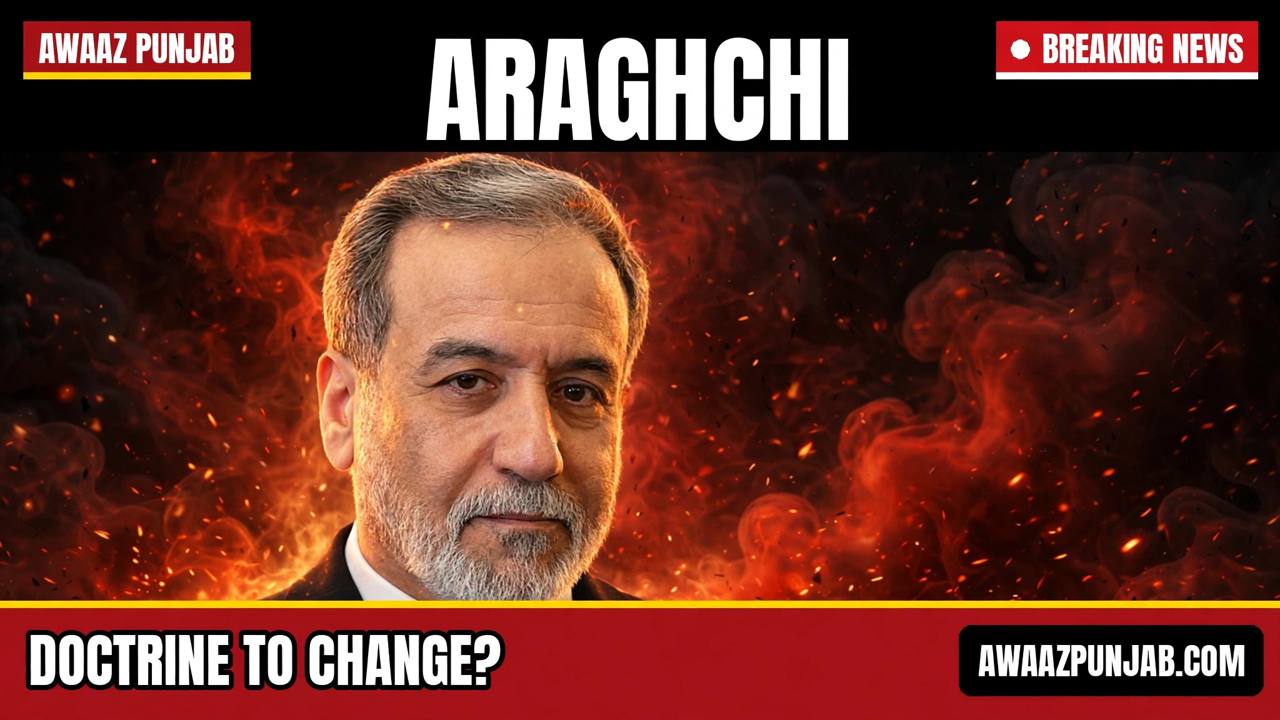
Iran's Foreign Minister Abbas Araghchi has said the case for changing Iran's nuclear doctrine has 'strong logic', in the clearest sign yet that Tehran's leadership is openly debating whether to abandon its longstanding ban on nuclear weapons. In an interview published on Saturday, November 21, Araghchi insisted that Iran's official position has not changed — but he described the debate among Iran's elite as 'serious and strategic', and said both sides had strong arguments.
Araghchi's argument, as he put it, is that Iran's membership of the Nuclear Non-Proliferation Treaty (NPT), IAEA safeguards and international monitoring 'failed to protect' the country's nuclear facilities, which have come under attack from US and Israeli forces both last year and this year. 'Those who believe that the nuclear doctrine should be changed, their claim is that the existing doctrine failed to protect our nuclear facilities,' he said, adding that leaving the current framework 'would not have simple consequences'.
Enriched uranium will stay in Iran
In the same interview, given to the state-run IRNA news agency and the government daily Iran, Araghchi said Iran's stockpile of enriched uranium would remain inside the country and 'be used according to our needs however those needs are defined'. He said a formula could be found that keeps enriched material inside Iran. The International Atomic Energy Agency estimated in 2025 — before Israel launched strikes on Iran in June that year — that Iran held about 440 kilogrammes (970 pounds) of uranium enriched to about 60 percent.
Washington has made Iran's nuclear programme a central sticking point in efforts to end the war that began on February 28, insisting on guarantees that Iran will never develop a nuclear weapon before agreeing to a full ceasefire. US Vice President JD Vance said in an interview with Reuters last month: 'If you don't want a nuclear weapon, then why do you need 60 percent enriched fuel?'
Source: Reuters
A debate that has been building for weeks
Araghchi is not the first senior Iranian official to raise the question in public. Earlier this month, security chief Mohsen Rezaei said officials were discussing whether to keep following the previous doctrine if a new war broke out, while stressing that Tehran had not changed its policy. And on November 12, Iran's Assembly of Experts — the clerical body that elects the supreme leader — said reviewing the country's defence doctrine and establishing stronger deterrence had become 'unavoidable necessities'.
On November 12, Iran's Assembly of Experts called a review of leaving the NPT and building stronger deterrence an unavoidable necessity. Read the earlier story
Iran has consistently maintained that its nuclear programme is for peaceful purposes only — electricity generation, medical research and agriculture — a position backed by a decades-old religious decree, or fatwa, issued by the late Ayatollah Ali Khamenei banning the development of nuclear weapons. Tehran also insists its right to enrich uranium for peaceful purposes under the NPT, which it joined in 1970, is 'non-negotiable'.
What is solid
- Araghchi gave the interview to IRNA and the government daily Iran on Saturday, November 21
- Araghchi said both sides of the doctrine debate have 'strong arguments' and that the official doctrine has not changed
- The IAEA estimated in 2025 that Iran held about 440 kg of uranium enriched to about 60%
What is only claimed
- Whether Iran will actually change its nuclear doctrine or leave the NPT
- Whether the debate signals a real policy shift or is mainly pressure on Washington in the talks
What happens next
The debate is unfolding while diplomatic efforts to end the war continue, with Qatar mediating and Iran saying it is ready for both defence and diplomacy. Analysts are split: Rouzbeh Parsi, a researcher at Lund University, told Al Jazeera that an official reversal of Iran's policy was 'within the realm of possibility', while others note that Araghchi himself stressed the doctrine has not changed. What Tehran decides — and what Washington demands in return for a ceasefire — will shape whether the war ends at the negotiating table or resumes.
This is the first time Iran's foreign minister has publicly said the pro-change case has 'strong logic'. It does not mean Iran has decided to build a bomb — Araghchi was explicit that it has not — but it puts the option on the table in a way Tehran had avoided for decades, and it raises the stakes in the talks over the war.
Sources: RFE/RL; Al Jazeera; IRNA (via RFE/RL and Al Jazeera reporting).