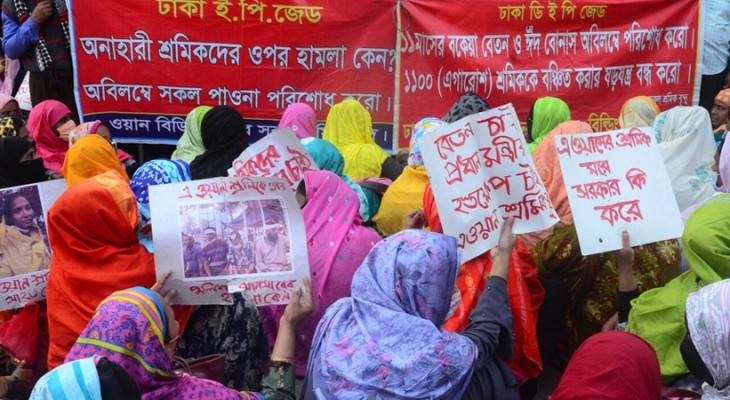
DHAKA — Bangladesh's garment factory owners sharply escalated their standoff with protesting workers on Saturday, announcing that 55 factories have already been closed indefinitely and warning that from Sunday any factory where unrest stops production will also shut — with no wages paid for the closure period.
Source: The Business Standard
The warning came at a joint press conference of the Bangladesh Garment Manufacturers and Exporters Association (BGMEA) and the Bangladesh Knitwear Manufacturers and Exporters Association (BKMEA) at the BGMEA building in Uttara, Dhaka. BGMEA President Mahmud Hasan Khan said the 55 factories, in the industrial belts of Savar, Ashulia and Gazipur, were closed under Section 13(1) of the Bangladesh Labour Act, 2006, the provision owners describe as 'no work, no pay', under which workers are not entitled to wages while a factory is shut because of an illegal strike or unrest.
Khan said production also remained suspended on Saturday at 147 garment factories, as workers did not report for duty or owners feared vandalism. The BGMEA said those 147 factories employ around 300,000 workers, and that the number of affected factories changes from day to day because the unrest is not in the same factories each day. Some factories in Savar, Ashulia and Gazipur have now faced disruption for between seven and 12 days.
A wage demand the owners have not yet answered
Garment workers have been protesting since mid-October, demanding a higher minimum wage as living costs rise. Workers are demanding a minimum monthly wage of Tk 30,000 — about $242 — up from the current Tk 12,500, about $101, set in 2023. At the minimum wage board's meeting on 9 November, workers' representative Babul Akhter formally proposed Tk 32,000 a month for the minimum wage and Tk 30,000 for trainees.
The government formed a six-member minimum wage board on 1 November, and it has held two meetings so far. The BGMEA confirmed it will attend the board's third meeting on Monday, 16 November, and submit the owners' wage proposal that day. The board process is expected to produce a revised wage structure applying from December, with the first higher pay expected in January — but the protests have continued despite appeals from the government, owners and labour leaders.
Saturday's protests were concentrated around Chandra and Palli Bidyut in Kaliakair, Gazipur, according to reports from the industrial areas. Police said 132 people had been arrested in cases connected with the recent unrest — 72 by Savar police and 60 by Ashulia police. Ashulia Industrial Police said work was not taking place at 59 factories in the Savar-Ashulia belt on Saturday, counting factories closed under Section 13(1), indefinitely closed, or observing holidays.
Khairul Mamun Mintu, legal affairs secretary of the Bangladesh Garments and Sweaters Workers Trade Union Centre, warned that invoking Section 13(1) could further fuel workers' anger and intensify the unrest, because workers would receive no wages during the closures.
The closures are the latest escalation of the wage dispute this desk has been following since the government formed the minimum wage board at the start of November, after protests spread across Ashulia and other industrial areas. Read the earlier report: wage board formed as garment protests spread
What happens next turns on two dates: Sunday, 15 November, when owners say unrest-hit factories will begin closing indefinitely, and Monday, 16 November, when the wage board meets and the owners table their first wage offer. The garment sector is Bangladesh's primary export-earning industry and earns the lion's share of the country's foreign exchange, so a prolonged shutdown would hit orders, exports and hundreds of thousands of workers' incomes at the same time.