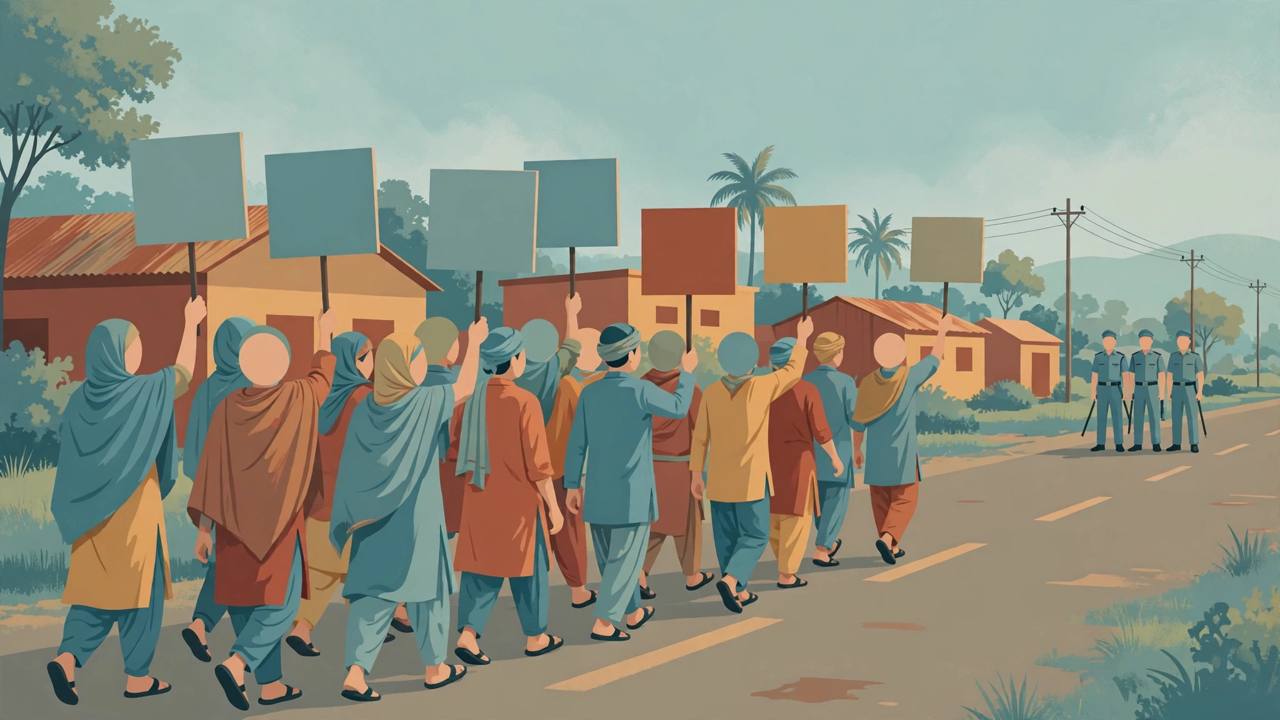
Bangladeshi police fired tear gas and stun grenades on Tuesday, November 17, in clashes with thousands of garment workers who took to the streets after a key wage-board meeting was postponed, Agence France-Presse (AFP) reported. Protesters hurled bricks, torched vehicles and blocked the main highway between the capital Dhaka and Mymensingh, as demonstrations demanding higher wages turned violent across the industrial belt around the capital.
The workers are demanding a minimum monthly wage of 30,000 taka (about $240) — a 140 per cent increase on the current 12,500 taka — as they struggle with rising food, housing, transport and healthcare costs, AFP said. The garment industry generates about $38 billion a year for Bangladesh and employs more than four million people, most of them in factories supplying Western clothing brands.
Highways blocked, factories shut
The Hindu reported that more than 1,000 paramilitary personnel were deployed as workers blocked three major highways — Dhaka-Aricha, Dhaka-Tangail and Dhaka-Mymensingh — causing long tailbacks. The Border Guard Bangladesh (BGB) said it had deployed 42 platoons in the industrial hubs of Ashulia, Gazipur and Narayanganj. In Dhaka's Mirpur area, police fired sound grenades at around 10:30 a.m. to disperse workers moving towards the Mirpur-10 roundabout, Mirpur police officer-in-charge Hafizur Rahman told the Prothom Alo newspaper, according to The Hindu.
The Business Standard reported that workers blocked the Dhaka-Mymensingh highway in Gazipur, at Chandana Chowrasta and Bhogra Bypass, and the Dhaka-Aricha highway at Fulbaria in Savar at around 11 a.m., before police fired tear gas shells and sound grenades at about 11:50 a.m. to clear the road. It said 57 garment factories in Gazipur remained closed indefinitely, quoting Gazipur Industrial Police superintendent Amzad Hossain, while The Hindu put the number of factories declared closed across the industrial belt on Tuesday at at least 37. Local reporting from Gazipur said at least 20 people, including journalists, were injured in the clashes there.
Why the wage board meeting matters
The government set up a six-member minimum wage board on November 1, with representatives of employers and workers, after protests began in late October. The board held meetings on November 4 and November 9. Its third meeting, scheduled for Monday, November 16, was postponed after a member representing the garment workers said he was unwell, a source in the Bangladesh Garment Manufacturers and Exporters Association (BGMEA) told AFP. The board said its next meeting would be held on November 23.
In a joint statement, the BGMEA and the Bangladesh Knitwear Manufacturers and Exporters Association (BKMEA) called for wage negotiations to resume as soon as possible. AFP reported that the new minimum wage would be announced in December and take effect in January. The Hindu reported that, amid the intensified protests, the authorities had announced the revised pay structure would be implemented from December 1, with workers receiving their first salaries under the revised scale in January.
A follow-up to weeks of unrest
Tuesday's clashes are the latest escalation in a wage movement that has repeatedly shut production in recent days — 55 factories were closed on November 14 under the industry's 'no work, no pay' rule, and 150 factories shut on Sunday, November 15, as the unrest spread. What happens next turns on the November 23 wage-board meeting: a credible path to a December announcement could calm the industrial belt, while another postponement risks further highway blockades in the world's second-largest garment-exporting country, whose factories supply clothing chains across Europe and North America.
Sources: AFP reporting on the November 17 clashes and the wage demand; The Hindu on highway blockades, BGB deployment and factory closures; The Business Standard (Dhaka) on the Gazipur and Savar blockades and the 57 closed factories in Gazipur.
Source: AFP via Barbados Gazette