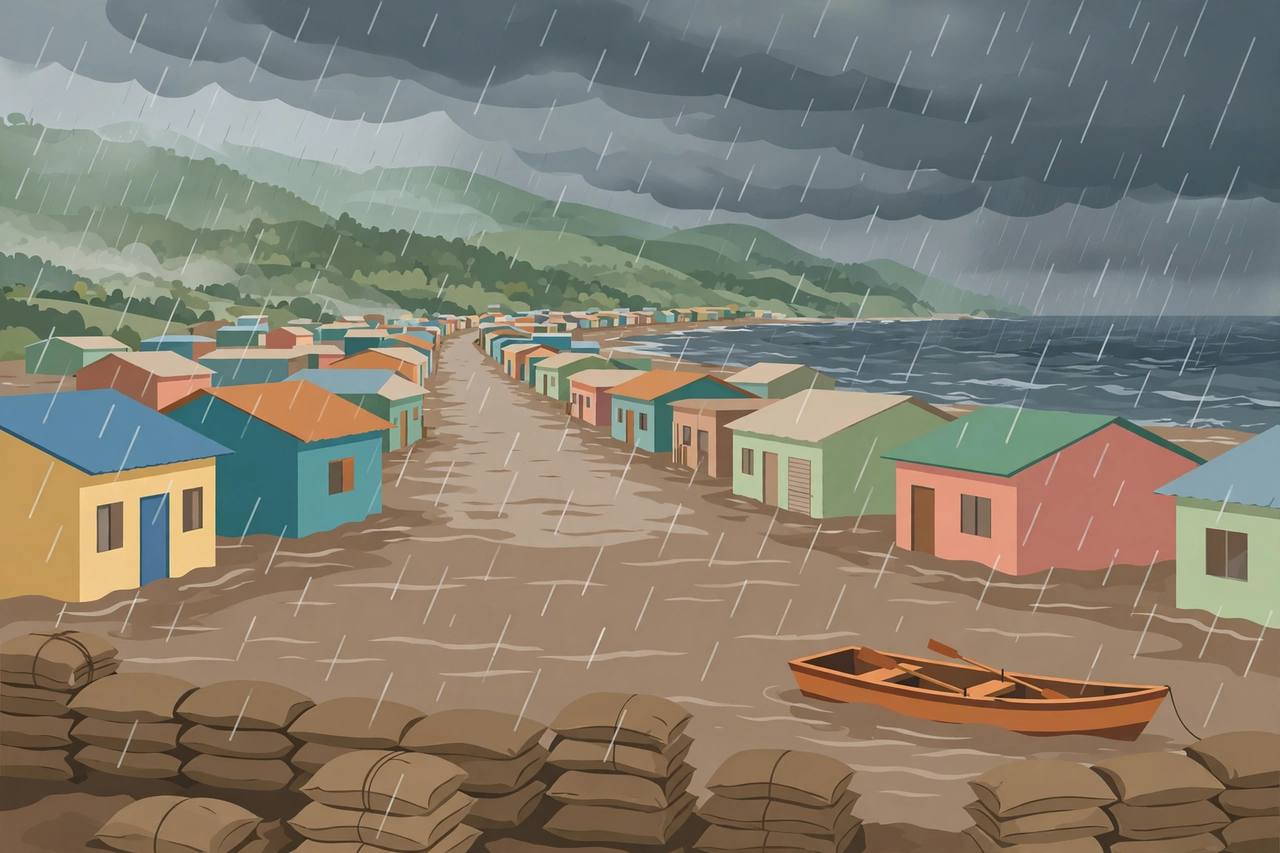
QUITO — Ecuador's El Niño floods and landslides have killed 11 people and seriously affected more than 48,000 others since late August, the National Risk Management Secretariat has told the country's emergency committee, as the government promised direct 'recovery bonuses' to victims and warned the rains could continue into February 2027.
Source: Cuenca High Life, Nov 4, 2026 (Risk Management report to the COE)
The figures were presented to the National Emergency Operations Committee (COE), which met on Tuesday, November 3, in Samborondón. Infrastructure Minister Roberto Luque said the government will provide financial assistance to people whose homes and livelihoods have been damaged, and that the amounts of the 'recovery bonuses' will be decided later this week, once damage assessments are completed. A countrywide red alert connected to El Niño remains in force, allowing agencies to speed up relief work; the US Embassy in Ecuador noted in an October 28 alert that the Risk Management Secretariat had declared a countrywide red alert over the phenomenon.
Source: US Embassy Ecuador weather alert, Oct 28, 2026
Risk Management said the 1,086 adverse events were recorded in coastal and low-lying regions between August 28 and November 3. Deaths were reported across five provinces: four people died in landslides in the Camilo Ponce Enríquez canton of Azuay Province, two died in the Galápagos Islands, and deaths were also reported in El Oro, Guayas and Pichincha provinces, the secretariat said.
Homes, bridges, hospitals and crops hit across the coast
The damage bill is still growing. Risk Management reported 32 bridges destroyed and 25 kilometres of roadway destroyed, 90 hospitals and health clinics damaged, and seven schools closed because of flood damage. Some 5,247 hectares of crops have been destroyed — yaani about 12,960 acres — and several hundred farm animals have died in the flooding, it said.
Among the emergency operations now under way is the release of supplies, including mattresses, tools and other basic necessities, from customs warehouses in Guayaquil. The COE ordered the National Customs Service to provide a full inventory of its warehouses within 48 hours so the goods can be distributed to affected areas, Cuenca High Life reported. 'We need to get relief to the people as quickly as possible and don't have time to wait for the bureaucratic processes,' Luque said.
'The most intense El Niño on record' — and months more rain possible
In its report to the COE, the National Institute of Meteorology and Hydrology (Inamhi) said the current El Niño is the most intense on record, with a 5-degree rise in Pacific Ocean temperatures 'creating unprecedented amounts of moisture in the atmosphere' and driving the flooding rains. Historic amounts of rainfall have been recorded in Guayaquil, Esmeraldas, Manta and other coastal locations since early September, Inamhi said — and it warned the flooding rains could continue, possibly into February 2027. The US Embassy alert, citing NOAA, put the chance of a very strong El Niño through December 2026 at more than 90 per cent.
The Galápagos Islands, some 900 kilometres off the mainland, have been hit as well: torrential rain from October 30 flooded large sections of Santa Cruz island, damaged the main island road, disrupted drinking-water service and forced families from their homes, The Cuenca Dispatch reported on November 2. About 2,000 people were affected there, five temporary shelters with capacity for about 1,000 people were prepared, and 10 tons of humanitarian assistance were flown and shipped to the archipelago.
Asked after the COE meeting whether the $600 million the government has set aside for El Niño relief — yaani about $60 crore — would be sufficient, Minister Roberto Luque said it was not: 'By the time this is over, I expect that we will spend much, much more.'
Ecuador is one of several Latin American countries battling the same Pacific warming — Bolivia declared its own El Niño emergency at the end of October: Read: Bolivia declares El Niño emergency
What happens next: the COE is expected to fix the recovery-bonus amounts later this week as provincial damage assessments are completed, customs-warehouse supplies are due to move to affected areas within days, and Inamhi's warning of rain into February means Ecuador's coastal provinces — Guayas, El Oro, Esmeraldas and Manabí among them — face the risk of further flooding and landslides through the southern summer. El Niño is the warming of surface waters in the central and eastern Pacific that disrupts weather worldwide; for Ecuador's coast it typically means heavier rain, swollen rivers and landslides.