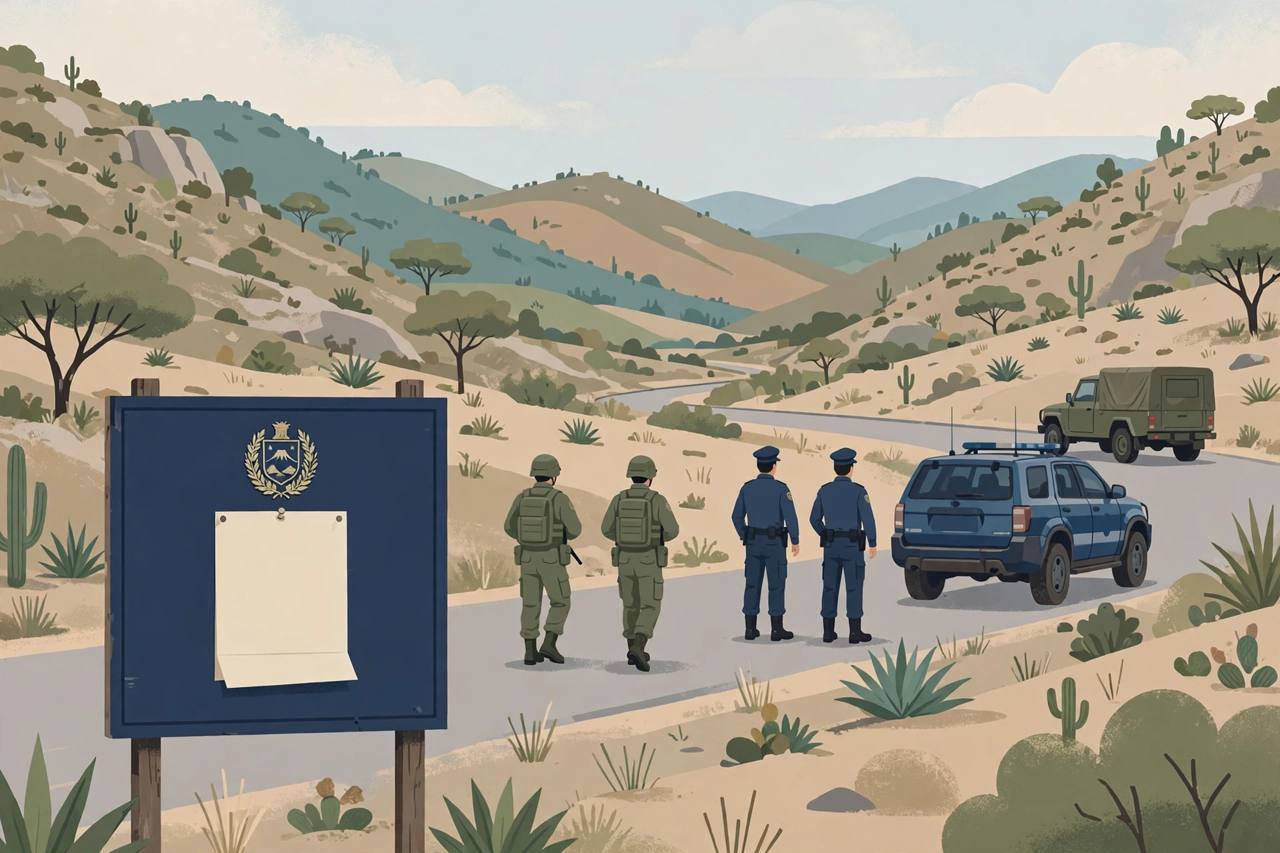
Guatemalan authorities on Saturday, November 14, decreed a state of emergency — a state of siege — in the eastern departments of Zacapa and Izabal, banning gatherings and boosting powers for the security forces, Reuters reported. The decree took effect immediately and runs for the next 30 days.
Source: Reuters
Under the decree, outdoor gatherings are limited and security officials may disperse groups by force, make arrests and enter residences without a warrant, Reuters said. The two neighbouring departments together span an area roughly the size of Qatar. The Spanish news agency EFE reported that the measure suspends constitutional guarantees including freedom of movement and assembly and the requirement of a court order for arrests and searches.
Source: EFE via Lado
The decree is the government's response to the earlier attack this desk reported, in which lawmaker Julio Cesar Portillo Paz and three police officers were killed in Zacapa. Read the earlier report: lawmaker Portillo and three police killed in Zacapa
A wave of attacks since September
EFE reported that the escalation began on September 27 in Huite, Zacapa, where an armed group killed eight people in separate crime scenes, a case that remains under judicial reserve. On November 6, in Rio Hondo in the same department, lawmaker Julio Cesar Portillo Paz, 36, and three police officers of his escort were ambushed by armed men; Portillo was taken to hospital but later died of his injuries, and President Bernardo Arevalo later announced the three officers had also been killed, Reuters and EFE reported.
The violence continued in the early hours of Friday, EFE reported: armed men in camouflage entered the village of La Majada, Zacapa, and killed five people, and hours later, in Puerto Barrios, the capital of Izabal, a rancher and a farmer were ambushed and shot dead in their vehicle — seven killings in one day. Reuters said authorities have not identified those responsible for the attack on Portillo.
Drug trafficking, gangs and the army deployment
In its decree, published on its official social media, the government cited security reports that had identified activities linked to drug trafficking, Europa Press reported, saying the recent escalation was related to transnational criminal and terrorist organisations that had led to acts of violence, intimidation and threats. EFE reported that the violence in these areas bordering Honduras coincides with recent United States designations against the organised-crime groups Los Lorenzana, Los Huistas and Los Mendoza for international drug trafficking; Europa Press reported that the United States this week added several gangs operating in Zacapa to its list of terrorist organisations, which it said were linked to Mexican drug cartels.
Europa Press reported that the state of siege was decreed after Guatemala's army deployed on Saturday around 400 to 600 troops in Zacapa and Izabal as part of a security reinforcement. Guatemalan outlet La Tronadora reported that Congress has received the decree documentation and has three days to consider, approve, modify or reject the measure, a matter that could be taken up at its session next Tuesday, while the state of siege is already in force.
What happens next will turn on the congressional decision and on whether the expanded powers — which restrict rights recognised in articles 5, 6, 26, 33 and 38 of Guatemala's constitution, covering freedom of action, lawful detention, freedom of movement, assembly and the carrying of arms, according to the government's own explanation reported by La Tronadora — bring the wave of attacks in the east under control.