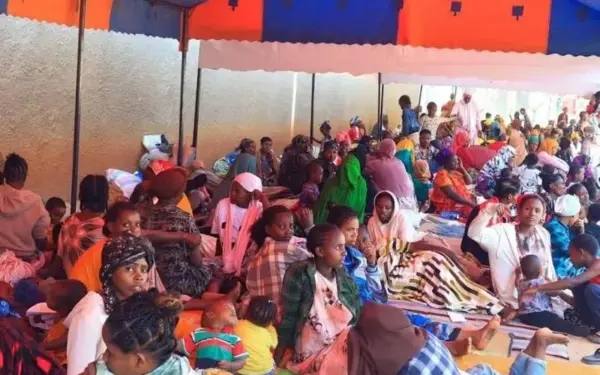
Fighting between Ethiopia's Oromia and Somali regional forces has now killed people on the Kenyan side of the border, Marsabit Governor Mohamud Ali said, as heavy gunfire and shelling were reported overnight on the Ethiopian side of the divided town of Moyale.
Source: The Eastleigh Voice
Speaking at a press conference on the humanitarian impact of the conflict, Ali said 22 people on the Kenyan side had been injured by stray bullets and two fatalities had been reported. He said more than 10,000 Kenyan residents had been displaced from their homes, while a government-led rapid needs assessment estimates that more than 50,000 people have crossed into Marsabit County from Ethiopia in search of safety.
Overnight into Saturday, heavy gunfire and shelling were heard on the Ethiopian side of Moyale as the clashes intensified, according to local reports, and video reviewed by Kenyans.co.ke showed homes in flames amid machine-gun and rocket-launcher fire. Kenyan police confirmed two additional deaths on the Kenyan side following the shelling, and the Kenya Defence Forces (KDF) safely detonated twelve unexploded rocket-propelled grenades in Moyale on Friday, Kenya Today reported.
Source: Kenya Today / Kenyans.co.ke
As of 13 November, at least 12 fatalities had been confirmed across both sides of the border, the same report said. Ethiopian hospital officials told Reuters that nine people died from injuries sustained in the early days of the clashes; Ethiopian authorities have not released an updated death toll.
A new development, not the October flight alone
This is a follow-up to the earlier displacement story: an IOM assessment reported on 9 November found that about 50,000 people had already crossed since late October, that 71 per cent of surveyed households did not have enough to eat and that 80 per cent named food as their most urgent need. What is new this week is the confirmed Kenyan-side death toll, the displacement of Kenyan residents themselves, and explosive ordnance landing in civilian areas.
The earlier IOM assessment put the crossing at about 50,000 people, with food the most urgent need. Read: Families who fled Ethiopia for Moyale need food, water and shelter
Ali said explosive ordnance had also landed in civilian areas, including near public facilities, exposing residents — particularly children — to danger, and he called on national security agencies to strengthen civilian protection and ensure suspected unexploded ordnance is safely cleared by qualified personnel. He said the conflict had disrupted learning and national examinations, and that interrupted electricity supply to Moyale had undermined cross-border trade and strained essential services.
Background: a flag, a disputed town, and a spreading fight
Moyale is a town split by the Kenya-Ethiopia border and administered on the Ethiopian side by both the Oromia and Somali regional states, which have a long-standing dispute over land and administrative control. The latest wave of fighting began on 18 October, after Somali regional officials opened an administrative office and raised their regional flag in a disputed area; fighting escalated from 22 October and spread to neighbouring districts.
Separately, at least eight people were reported killed early on Saturday, 14 November, when gunmen attacked a pastoralist settlement at Malkamari, in the Mubarak area of Dawa Zone in Ethiopia's Somali Region, across the border from Kenya's Mandera County, local authorities said. Local authorities blamed an armed Oromo militia; there was no independent account of who carried out the attack, and that blame is reported here as an allegation, not a verified finding.
Source: Abay Times
What is solid
- Marsabit Governor Mohamud Ali stated on 13 November that two people had been killed and 22 injured by stray bullets on the Kenyan side, about 10,000 Kenyan residents displaced, and more than 50,000 people had crossed from Ethiopia (Eastleigh Voice and Hivi Leo, reporting the same governor's statement).
- The KDF detonated twelve unexploded rocket-propelled grenades in Moyale on Friday and heavy fighting was reported overnight into Saturday (Kenya Today / Kenyans.co.ke).
What is only claimed
- Who carried out the reported 14 November Malkamari attack: local authorities blamed an armed Oromo militia, with no independent account of the attackers (Abay Times).
- The total death toll across both sides: at least 12 confirmed as of 13 November in Kenyan reporting, while Ethiopian authorities have not released an updated toll.
On health, Ali warned that overcrowded shelters, shortages of essential medicines and worsening nutritional conditions were increasing public health risks, with measles and rubella cases already confirmed among affected populations. The county government is working with the national government and humanitarian agencies to provide emergency food, water, medical care, nutrition services and essential household supplies, he said.
What happens next: Ali appealed for increased support from the national government, United Nations agencies and humanitarian partners, identifying emergency shelter, medicines, immunisation, nutritional treatment, safe water, sanitation and protection services for women and children as immediate priorities, and he urged residents and community leaders to maintain calm and not exploit the situation to fuel ethnic tensions or retaliation. The Moyale border crossing remains closed and under heavy security, Kenya Today reported, as intermittent fighting continues.