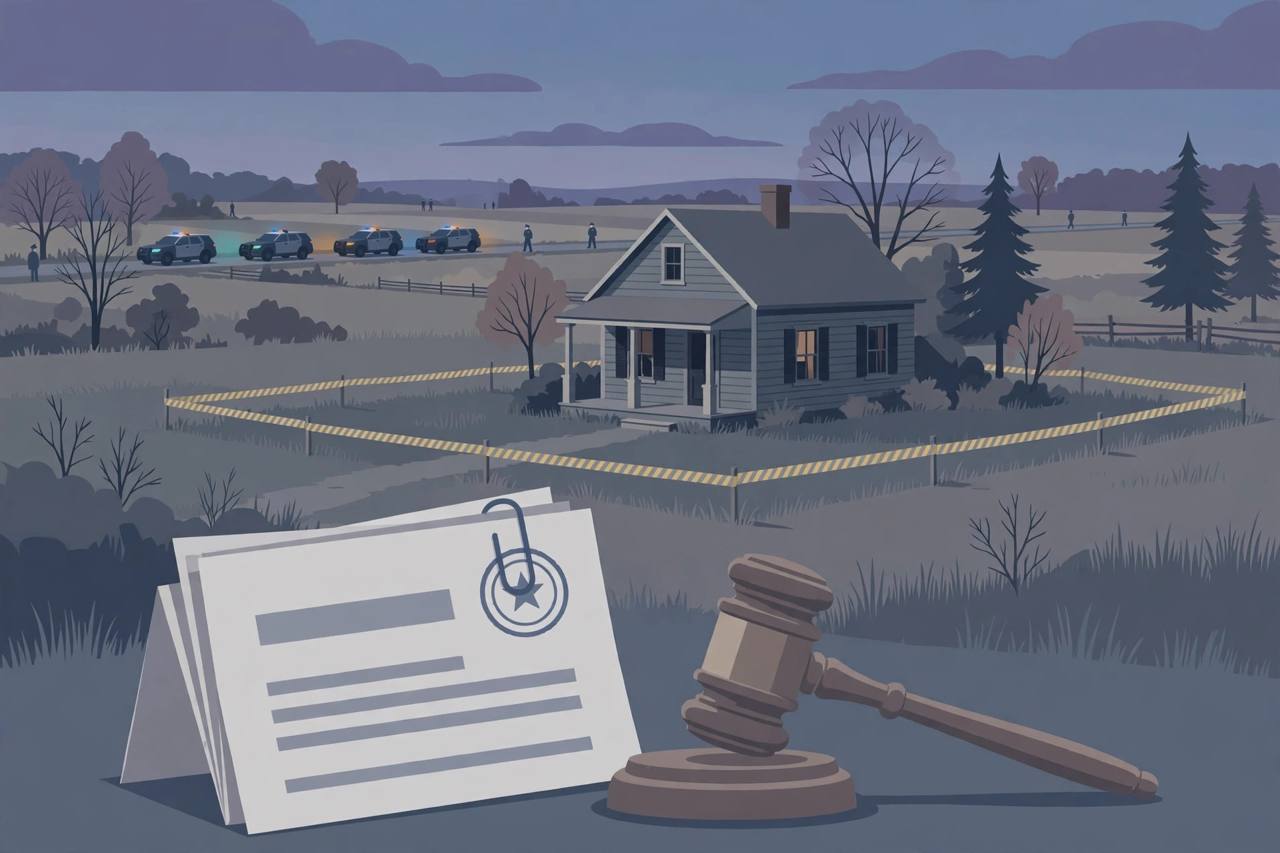
OTISVILLE, Michigan — The Michigan Department of Attorney General announced on November 13 that it has concluded its review of the fatal shooting of James Jennings, 54, by Michigan State Police troopers in Otisville on July 31, 2025, and will file no charges, finding that the troopers acted in self-defense and in defense of others.
Source: Michigan Capitol News
The decision closes the criminal review of a long armed standoff in Otisville, a small village in Genesee County in Michigan's Thumb region, northeast of Flint. Jennings was killed after, according to the Attorney General's account, he fired repeatedly at troopers and into a neighbouring area where bystanders were present during an evening standoff at his home.
How the standoff began
According to the department, troopers responded to a 911 call and met a woman near Jennings' residence who reported that she had been attacked by Jennings inside his home. Officers documented her injuries and then tried for an extended period to persuade Jennings by telephone to leave the house peacefully. Jennings refused, told troopers he was 'dug in' and 'hunkered down', and said he was not going to jail or prison, the department said.
Knowing that Jennings had numerous firearms inside the home, troopers requested help from the Michigan State Police Emergency Support Team (EST) and set up a security perimeter around the residence. The EST arrived at about 5:30 p.m. and continued negotiations by phone, using police vehicle public-address systems to demand his surrender while assuring him he would be safe if he complied.
Non-lethal measures first, then gunfire
Before any trooper fired, the team used a series of non-lethal measures — siren activations, flash-bang devices, pepper balls and specialty vehicles in an attempt to breach the home and bring about a surrender. At 6:54 p.m., Jennings fired a shot at troopers. Police did not return fire at that point and instead continued non-lethal measures while again urging him to leave the house safely, according to the review.
Jennings then resumed firing multiple times at troopers and their vehicles. One of his shots entered an occupied neighbouring home but did not injure anyone inside. Between 6:54 p.m. and 7:09 p.m. he opened fire four times, and five members of the Emergency Support Team returned fire, guided by radio transmissions describing his location in an attic space surrounded by firearms and ammunition magazines. Troopers fired into that area through the roof and walls, and Jennings was killed after sustaining four gunshot wounds.
The Michigan State Police Emergency Support Team was created in 1974 for high-risk incidents, including hostage rescues, barricaded gunmen and high-risk arrests. It brings together tactical units and trained negotiators who respond to operational calls across Michigan — which is why its negotiators, not only its tactical members, were central to the hours of phone contact in Otisville.
How the review was done
Under standard Michigan procedure, an officer-involved shooting is first investigated by personnel from outside the district where it happened, and the file is then referred to the Attorney General for an independent charging review. In this case the initial investigation was conducted by the Michigan State Police Second District Special Investigation Section. Attorney General's lawyers then reviewed police reports, signed statements from the officers involved, body-worn camera footage, vehicle video footage, the Genesee County medical examiner's report, scene diagrams and Michigan State Police use-of-force policies, among other materials.
In its conclusion, the department said that, on all the facts presented — including that law enforcement officers possess legal authority to act in self-defense — it found no criminal liability for the responding officers, because their actions were taken in defense against deadly force directed at themselves and at public bystanders. A full report detailing the review is available through the Michigan Department of Attorney General.
What happens next
With no charges authorised, there is no criminal court case arising from the troopers' use of force, and no court date to follow. The Attorney General's decision is the final word in the state criminal review of the shooting itself. That does not decide any separate civil claim, which the department does not review, and it does not change the underlying facts of July 31, 2025: a woman reported an attack, a man who said he would not go to jail fired repeatedly from inside his home, a round entered a neighbour's occupied house, and he was killed when five team members returned fire.
For Michigan readers, including the state's Punjabi diaspora families in the Detroit suburbs, the Saginaw valley and west Michigan trucking and farming communities, the case is a clear example of how officer-involved shootings are reviewed in the state: an outside-district investigation first, then a public no-charges decision from the Attorney General explaining the evidence that was examined and the self-defense standard that was applied.
What is solid
- The Attorney General announced on Nov. 13, 2026 that no charges will be filed in the July 31, 2025 Otisville shooting of James Jennings, 54
- Troopers first used negotiations and non-lethal measures; Jennings fired first at 6:54 p.m. and fired four times in the 6:54–7:09 p.m. window, according to the department
- Five Emergency Support Team members returned fire; Jennings died of four gunshot wounds; one of his rounds entered an occupied neighbouring home without injuring anyone
What is only claimed
- The account above is the Attorney General's reviewed account of the standoff; no separate family or independent account was published with the Nov. 13 announcement
- A no-charges decision decides criminal liability only — it does not decide any civil claim