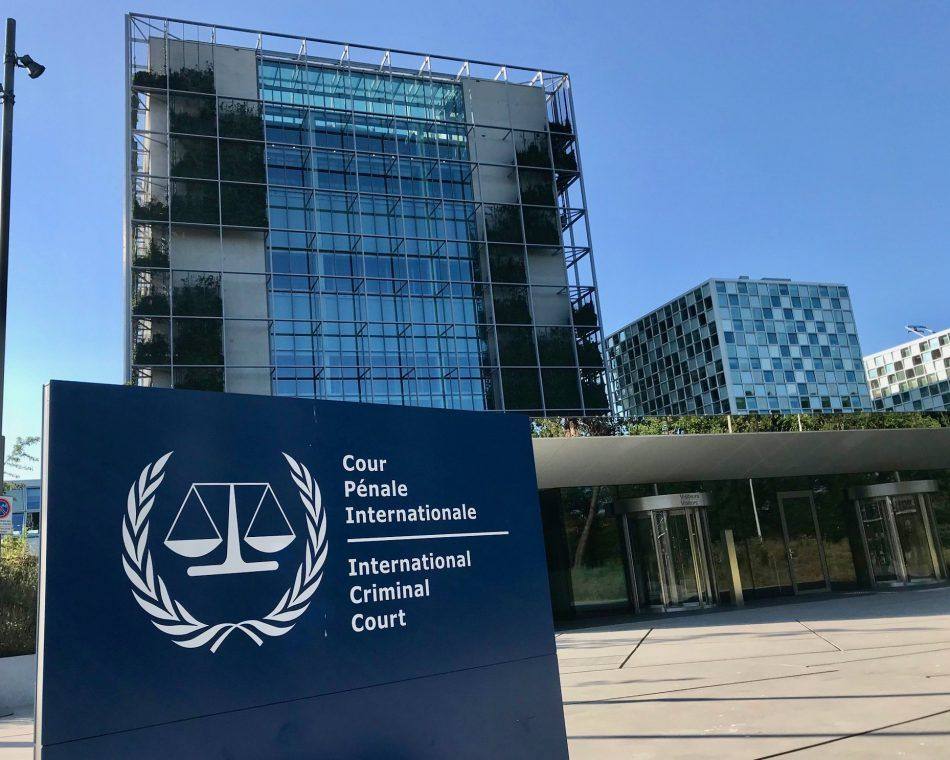
THE HAGUE — The International Criminal Court failed to fully investigate misconduct complaints against two of its nominees to be judges, and did not pass the accusations on to the countries that will vote on them, according to an exclusive investigation by The Associated Press published on Sunday.
Source: Associated Press
In all, the court received complaints against seven of the 14 people nominated for the judicial election, which takes place in the coming days at the court's annual meeting of member states in The Hague, where diplomats begin gathering on Monday.
One candidate was accused of bullying colleagues at work and other inappropriate behaviour. Another was accused of touching a colleague inappropriately and then threatening to retaliate if the behaviour was reported.
The two cases the court could not close
In the first case, three women alleged in formal complaints that the candidate berated them until they cried, or made them uncomfortable by inviting them for late-night drinks or to travel together, documents seen by AP show.
AP spoke to 13 people who have worked with or had professional contact with that nominee. Four said they had experienced behaviour similar to what was alleged in the complaints, and two said they had witnessed it. None of them had been contacted by investigators, and all spoke on condition of anonymity because they feared retaliation.
The country that nominated the candidate said it had looked into the allegations and could not substantiate them. But a senior diplomat from that country, speaking anonymously because he was not authorised to discuss the matter publicly, told AP it had not interviewed any of the candidate's current or former staff because it 'didn't have the resources' to conduct such an investigation.
In the second case, a woman said the nominee touched her inappropriately during a work event and threatened retaliation if she reported it. The court's internal watchdog, the Independent Oversight Mechanism, said in its annual report that it was unable to reach its own conclusions about the accusations because the women did not want their identities disclosed, and that 'limited the IOM's ability to ensure the due process rights of the candidates.'
Seven complaints, four substantiated
The complaints received by the court also included accusations of bribery, misrepresenting professional credentials and other misconduct, according to documents seen by AP. In four cases, the accusations had already been reported in the media or looked into by other institutions, and the watchdog said it was able to substantiate them.
AP said it had learned the names of the candidates who faced formal complaints, but had chosen not to name any of them because it was only able to investigate some of the allegations.
A vetting process that ran out of time
The court adopted the new vetting process after the removal of its former chief prosecutor, Karim Khan, over sexual misconduct allegations, which he denies. Under it, anyone with concerns about a contender had 60 days to file a complaint, to be evaluated by the Independent Oversight Mechanism.
But after nominations opened in January, the court struggled to attract enough candidates, and the deadline for countries to submit names was pushed back three times. Three of the 14 nominees subsequently withdrew. The delays left the watchdog just two weeks to compile evaluations of the candidates' 'high moral character' — the standard required by the court's founding treaty, the Rome Statute — before the committee of legal experts assessing the nominees began its interviews.
The watchdog did not finish the vetting in time. Instead it gave the committee a preliminary report three days before interviews began, and it is not clear what information that report contained. The committee later said in its own public report that it 'could not make a conclusive determination regarding the criterion of high moral character' for any of the candidates.
"There was insufficient time to do any proper vetting," Ezequiel Jimenez, an international legal expert who has written a book on ICC governance, told AP.
The court's oversight body, the Assembly of States Parties, told AP it was reviewing its procedures for possible improvements. Its president, Päivi Kaukoranta, said at a news conference that the process was confidential and meant to ensure the people in the senior posts 'would have the high moral character that we would expect.'
What the voting states were told
Earlier this month, the oversight body provided member states with 'relevant extracts' of the watchdog's report, including a summary of the accusations and the candidates' responses. But documents seen by AP show the information was sent only about the three remaining candidates for whom the watchdog said it could substantiate the allegations.
Immediately after the judicial elections, the court will move on to selecting a new chief prosecutor to replace Khan — and it is using the same vetting process for those candidates.
A court under pressure
The election comes as the court — which prosecutes the world's gravest crimes, including war crimes and genocide — faces what AP described as an existential threat from the Trump administration, which is campaigning to dismantle the institution over its investigations into the United States and Israel. Washington has imposed sanctions on more than a dozen current and former staff members and on the institution itself.
Civil society groups have long said the court did not vet applicants for senior posts rigorously enough, and that criticism took on new urgency after the Khan case. Niger has become the third country to leave the court.
What is solid
- The ICC received formal complaints against seven of its 14 judicial nominees.
- The court's watchdog did not fully investigate the complaints against two nominees, and the voting states were not given those details.
- The expert committee said it could not make a conclusive determination on 'high moral character' for any candidate.
What is only claimed
- The underlying misconduct allegations — bullying, inappropriate touching, bribery and misrepresented credentials — have not been proven in any court or formal finding, and AP chose not to name the nominees.
- The nominating country in one case said it looked into the allegations and could not substantiate them.
Tajikistan quit the ICC earlier this month. Read that story here. Read the Tajikistan story