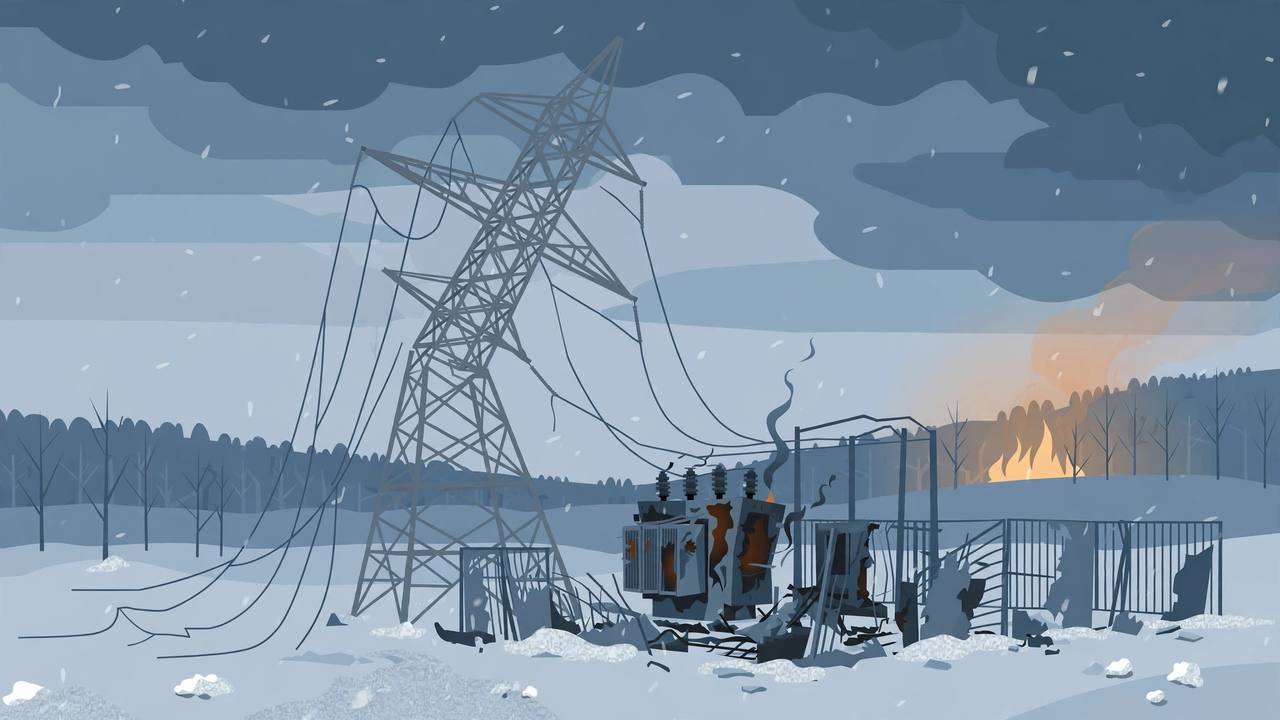
Russian forces struck electrical substations in five Ukrainian regions overnight on November 29, as President Volodymyr Zelenskyy said Moscow is using the approach of winter to target the country's energy system. Zelenskyy said that over the past week Russia launched more than 1,960 attack drones, over 1,600 guided aerial bombs and eight missiles at Ukraine.
In a post on X on Sunday, Zelenskyy said Russian forces hit substations in the Vinnytsia, Kirovohrad, Rivne, Kharkiv and Odesa regions. "The Russians are trying to take advantage of the approaching cold weather to attack energy infrastructure and other critical facilities," he wrote. He said many strikes also hit residential buildings.
Source: Volodymyr Zelenskyy on X, via Ukrinform
The overnight attacks killed two women — one in Odesa, where a Russian drone struck a multi-storey apartment building, and one in Zaporizhzhia, where guided bombs fell near residential buildings. At least four people were injured in Zaporizhzhia. A morning strike also set a market on fire in Kyiv Oblast, according to Ukrainian reports.
140 drones overnight; Russia claims 1,017 downed
Ukraine's Air Force said Russia launched 140 drones at Ukraine overnight, including 93 jet-powered Shahed-type drones. Russia's Defence Ministry said its air defences intercepted and destroyed 1,017 Ukrainian fixed-wing drones over Russian territory and Crimea. Neither side's claims can be independently verified, and the figures count different things — drones launched at Ukraine against drones Russia says it shot down.
Source: Ukrinform / Russian Defence Ministry, via Europe Says
Zelenskyy thanked repair crews and air defence forces and renewed his appeal to international partners for additional air defence systems and financial support, saying Ukraine needs more help to protect its power grid through the winter.
A winter campaign against heat and light
The strikes fit a pattern Russia has repeated each winter of the war: hitting power plants, substations and gas facilities to cut heat, light and water as temperatures fall. A United Nations commission has found that Russia's systematic attacks on Ukraine's energy infrastructure amount to crimes against humanity. Ukrainian officials say repair teams work under fire to restore power, and outages can last for days after a substation is hit.
The energy campaign is also squeezing daily life far from the front. Strikes have reached regions in western and central Ukraine, including Vinnytsia and Rivne, and Ukrainian officials have warned repeatedly that the power system is under severe strain as the heating season begins.
Earlier on Sunday, a Russian drone strike on an apartment building in Odesa killed an elderly woman — read our report on the Odesa attack. Odesa apartment strike: full story
On Saturday, Zelenskyy signed a decree putting into effect a National Security and Defence Council decision on protecting critical infrastructure through the 2026–27 heating season, including restrictions on media reporting of strike damage. Read: the infrastructure-protection decree
What happens next
Ukraine's government is racing to repair substations and stockpile equipment before the coldest weeks, while pressing allies for more air defence missiles. Zelenskyy has also said Ukraine is ready to halt fire along the current front line and move to diplomacy — a position he set out in an interview this week as US envoys continue to press for a settlement.
Zelenskyy told Al Jazeera that Ukraine is ready for a ceasefire along the current front lines, with Kyiv seeking security guarantees and a say over paying for the war's costs. Zelenskyy's ceasefire offer
With winter closing in, each substation strike means longer blackouts and colder homes for Ukrainian families — and a heavier repair bill for a grid Russia has targeted for four winters running.