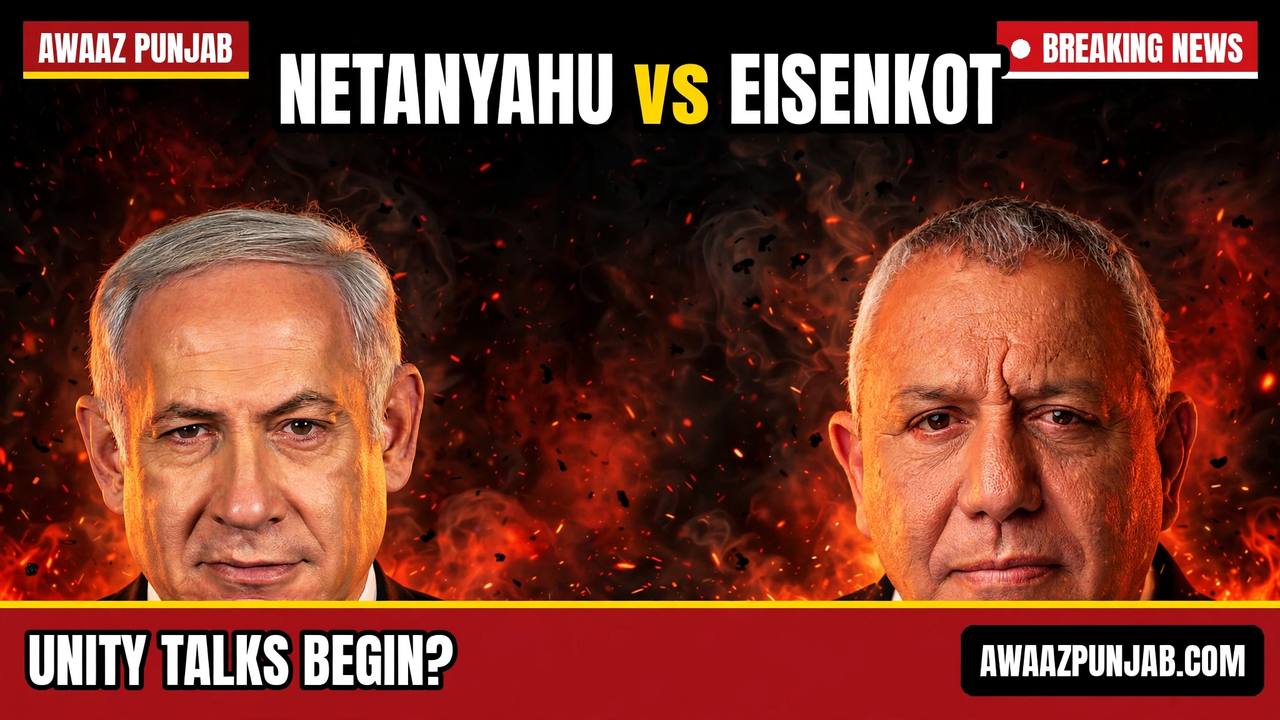
Israeli Prime Minister Benjamin Netanyahu and rival leader Gadi Eisenkot began talks on a national unity government on Sunday morning, meeting at Israel Defense Forces headquarters in Tel Aviv in an effort to break the country's election deadlock.
Source: BBC
The Times of Israel reported that the two men began their meeting at the Kirya military headquarters with a security update. Photographs showed Netanyahu's motorcade arriving at the compound, with demonstrators outside calling for a unity government.
Source: The Times of Israel
What Netanyahu offered
Netanyahu proposed the unity government on Saturday, offering Eisenkot the first turn as prime minister while Netanyahu would serve as alternate prime minister, before the premiership rotates. The BBC and The Times of Israel both reported the offer in those terms.
Source: BBC
One complication has already surfaced. Hebrew media, cited by The Times of Israel, reported that Netanyahu is demanding to remain prime minister for an unspecified period amid a potential "security incident" before any rotation. That demand is reported, not an agreed term, and it cuts against the offer as first described.
Eisenkot had given Netanyahu 24 hours to prove the offer was genuine, The Times of Israel reported, putting the Sunday meeting under immediate pressure to show progress.
Why the deadlock has lasted a month
Israel has been without a settled government since the 27 October election ended in deadlock, with neither Netanyahu's Likud bloc nor Eisenkot's Yashar-led bloc winning a majority. In consultations with President Isaac Herzog in early November, Netanyahu received 53 recommendations and Eisenkot 48, and Herzog gave Eisenkot the mandate to try to form a government on 7 November.
The 26th Knesset was sworn in on 10 November with Netanyahu remaining as caretaker prime minister, and Eisenkot has spent the weeks since trying to assemble a coalition. On 21 November he invited Likud to coalition talks, the step that opened the way to this weekend's unity proposal.
The other meetings in play
While Netanyahu and Eisenkot met, Yashar was also meeting separately with Naftali Bennett's B'Yachad party. The Times of Israel reported that Bennett has been the sole party leader in Eisenkot's bloc pushing for a unity government with Likud.
Eisenkot has also been nearing a coalition with ultra-Orthodox and Arab parties, according to The Times of Israel, giving him an alternative path if the unity talks fail — and leverage in the room with Netanyahu.
President Herzog's consultations left neither leader with a majority, and Eisenkot received the mandate to form a government. Read the earlier story
Eisenkot invited Likud to coalition talks on 21 November, the step that opened the way to this weekend's unity proposal. Read the 21 November story
Neither side has announced an agreement. What happens next depends on whether the Kirya talks bridge the gap between Netanyahu's reported demand to stay on as prime minister and the rotation Eisenkot was offered — and on whether Eisenkot's 24-hour test is met.