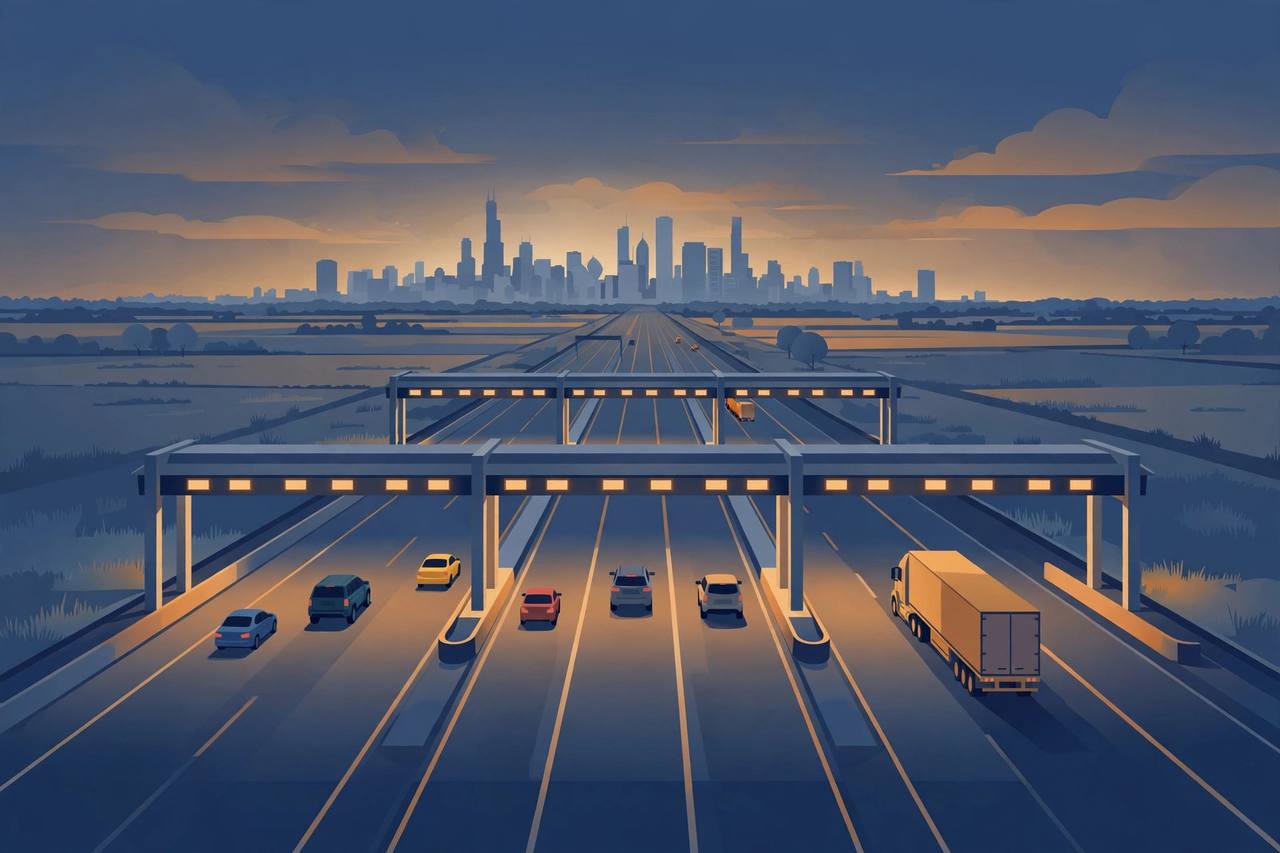
From January 1, 2027, every trip on an Illinois tollway will cost more. The Illinois State Toll Highway Authority board voted 8–0 on August 19, 2026 to raise passenger tolls by about 45 cents a trip — the first increase for car drivers in more than 15 years — and to raise commercial vehicle tolls by about 30 percent on average.
Source: The Lombardian
What changes on January 1
For passenger cars using I-PASS, the toll at the most common mainline plazas rises by 45 cents — a plaza that costs 75 cents today will cost $1.20. Drivers without an I-PASS, who pay by plate, will see 90 cents added per toll: a $1.50 plaza becomes $2.40. On average, a passenger trip will cost about $1.24, and the average cost per mile for I-PASS users rises from about 7 cents to about 11 cents.
Source: TollGuru
The increase applies across the Tollway's nearly 300 miles of road — the Jane Addams Memorial Tollway (I-90), the Tri-State Tollway (I-94/I-294), the Reagan Memorial Tollway (I-88) and the Veterans Memorial Tollway (I-355) — the corridors that carry Chicago-area commuters and much of the freight moving through northern Illinois.
Source: 97ZOK
What it means for truckers
Commercial tolls rise by about 30 percent on average, and the Illinois Policy Institute warns the increase may feed into the prices of consumer goods moved through northern Illinois. For Punjabi truckers who run the Chicago corridors every week — I-90, I-294 and I-88 are among the busiest freight routes in the Midwest — the rise lands on every crossing, so owner-operators will need to build it into their per-mile costs from January.
Source: Illinois Policy Institute
The commuter maths
The Illinois Policy Institute estimates that a commuter passing through two tolls a day, five days a week, for 50 weeks a year will pay about $225 more in 2027 under the new rates. Passenger tolls have not risen since 2012, making Illinois one of the lowest per-mile toll systems in the country; commercial rates, by contrast, have risen every year under a schedule set in 2008.
Source: Illinois Policy Institute
Why the increase — and where the money goes
The higher tolls fund the Tollway's $26.5-billion, 15-year “Driving Connections” capital programme, approved alongside the rate rise: rebuilding roads and bridges, improving interchanges and easing congestion across the system. The board approved the plan unanimously, even though the Illinois Policy Institute reports overwhelming opposition in online public comments — 76 percent against — and describes the increase as part of a deal between Governor J.B. Pritzker and labour unions in a 2025 bailout of Chicago-area mass transit.
Source: Illinois Policy Institute
Rates will keep rising every two years
This is not a one-off increase. From 2029, toll rates are scheduled to be adjusted every two years in line with inflation, without a further board vote — so the 45-cent rise could be the first of several. The Tollway posts current rates at illinoistollway.com, where drivers can check what their own plaza will charge from January 1.
Source: The Lombardian
I-PASS users pay roughly half the pay-by-plate rate, so a topped-up transponder is the cheapest way through. Truckers should factor the 30 percent commercial rise into January rate quotes now — the new rates apply on every Illinois Tollway road from January 1, 2027.