Latest News — Punjab, India, USA and the World
Awaaz Punjab is an independent digital news platform publishing original, source-verified reporting in English, Punjabi and Hindi. Every story below is published with its sources named and dated, and every article is available in all three languages. Our newsroom covers Punjab first — its politics, districts and the road to the 2027 assembly election — along with India, the Punjabi diaspora in the USA and Canada, and world affairs that touch Punjab's people, from the Gulf to North America.
The blast struck a house beside a middle school in the Andar Ser area on Saturday morning. Officials say the house stored dynamite used in mining; the exact trigger is not yet known and casualty figures are still initial.
Published 2026-11-28 · Awaaz Punjab
The Capital Development Authority cancelled the allotment of the G-6/4 house, saying the registered owner was a foreign national whose identity card NADRA had cancelled. The family was given 30 minutes to leave; whether the son was formally arrested is contested.
Published 2026-11-28 · Awaaz Punjab
Xavien D. Elias, 19, was shot in the chest at a gathering in East Wenatchee early Friday and died at Harborview Medical Center in Seattle. Jorge F. Sanchez-Bustos, 19, was arrested on a first-degree manslaughter charge after investigators say he pointed a handgun at Elias and pulled the trigger, believing it was unloaded.
Published 2026-11-28 · Awaaz Punjab
Police in Dhanusha shot and arrested 30-year-old Jay Kumar Yadav near the Jatahi border on Saturday, 13 days after 60-year-old Ramjatan Yadav was found dead with sharp-weapon wounds near a pond in Shahidnagar. Police said the accused was fleeing to India and is in stable condition at Provincial Hospital Janakpur.
Published 2026-11-28 · Awaaz Punjab
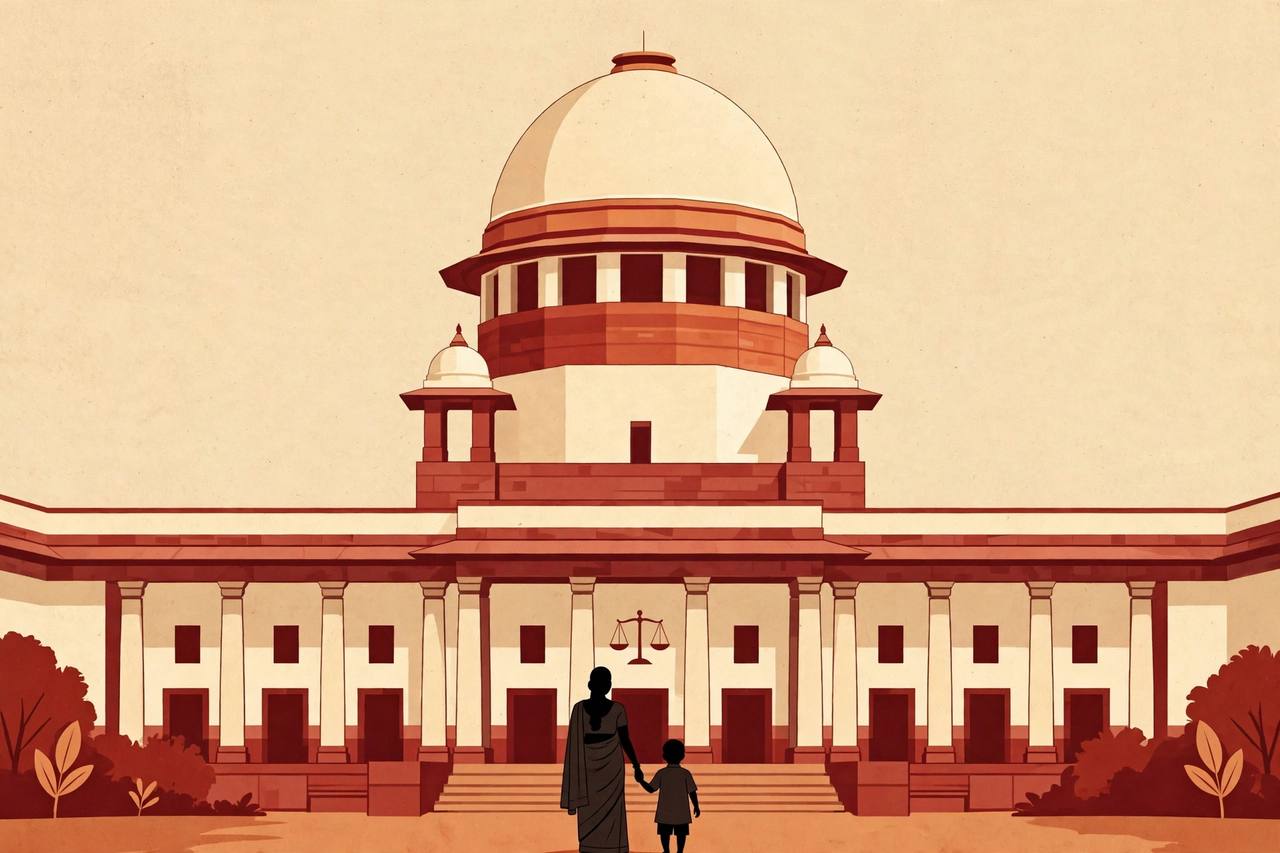
A division bench held the Railways responsible for the faulty barrier that fell on Nidhi Devi Mishra in Sitapur in 2018, and said maintaining level crossings is a safety duty, not a sovereign function. The ex gratia sum of ₹46,250 will not be adjusted against the award.
Published 2026-11-28 · Awaaz Punjab
King George's Medical University acted after its Anti-Ragging Committee found the students involved in ragging juniors, who were allegedly made to stand in a queue and greet seniors. The suspended students are barred from classes and the hostel, and their scholarships will be withheld for a year.
Published 2026-11-28 · Awaaz Punjab
Prime Minister Serhii Koretskyi said the revised 2027 budget sends almost 5 trillion hryvnias — about $110 billion, or 43% of GDP — to security and defence, the biggest wartime figure yet. Parliament votes on 9 December, and Kyiv still needs €70 billion it does not have.
Published 2026-11-28 · Awaaz Punjab
Foreign Ministry spokeswoman Maria Zakharova told a Moscow briefing on 26 November that Kyiv is trying to widen the war — citing Ukrainian strikes on ships in the Gulf of Finland and off Libya — and that Britain is picking targets for strikes inside Russia. Kyiv has repeatedly said Moscow rejected every ceasefire proposal this year.
Published 2026-11-28 · Awaaz Punjab
The grants, announced Friday as Native American Heritage Month closes, send more than $26 million through Tribal Homekey+ and $18 million through Tribal CalHome — part of $500 million the state has invested in tribal housing since 2019.
Published 2026-11-28 · Awaaz Punjab
The five-year package would put 800 body cameras and Tasers, a new records system, drone response and Axon's Outpost plate readers in Fresno officers' hands — weeks after an audit showed outside agencies could tap the city's Flock camera data.
Published 2026-11-28 · Awaaz Punjab
Mohd Jameel, son of Gulam Hussain and a resident of Kakuta in Pakistan-occupied Kashmir, was apprehended near Rangar Nallah in Karmara village on Saturday evening and is being questioned.
Published 2026-11-28 · Awaaz Punjab
The Public Works Department has ordered the 13 superintending engineers — one for each revenue district — to attend weekly hotspot reviews in person and file action-taken reports within 48 hours, after the Municipal Corporation of Delhi flagged their repeated absences.
Published 2026-11-28 · Awaaz Punjab
Nepal's Foreign Ministry says a worker hurt in Tuesday's attack died in hospital with burns over 68 percent of his body; two others remain seriously injured and one has returned home.
Published 2026-11-28 · Awaaz Punjab
Lonnell M. Moore, 25, known locally as rapper Kill Bill, was found with multiple gunshot wounds in the 4600 block of South Federal Street on Friday night. Police have announced no arrests.
Published 2026-11-28 · Awaaz Punjab
Security forces found 33 gold bars and bundles of Rs 500 notes inside a steel container buried near the Indravati river — the latest blow to the Maoists' money network in Chhattisgarh's Bijapur district.
Published 2026-11-28 · Awaaz Punjab
Doctors at AIIMS New Delhi, working with Tel Aviv University, used robotic guidance to place stimulation electrodes with precision in the brain of a Parkinson's patient — a first for the country.
Published 2026-11-28 · Awaaz Punjab
Delhi Police told a Rouse Avenue court on Saturday that the Electoral Registration Officer confirmed Sonia Gandhi's name in the 1980 and 1983 electoral rolls, while her citizenship certificate shows she became an Indian citizen only on April 30, 1983. The court gave police until December 14 to report whether any cognisable offence is made out.
Published 2026-11-28 · Awaaz Punjab
A day after winning 255 pradhan posts, the Congress took nearly 62% of the deputy pramukh posts across 37 districts; women won 178 of the 418 seats, and one Udaipur samiti faces a re-poll after a counting discrepancy.
Published 2026-11-28 · Awaaz Punjab
In a Saturday-evening statement, Israel's longest-serving leader offered to serve second in a unity government — the clearest sign yet he may be contemplating defeat, as rival Gadi Eisenkot closes in on a coalition of his own.
Published 2026-11-28 · Awaaz Punjab
The EPA found no lead in 38 post-detonation water samples at public supplies near the Iowa Army Ammunition Plant, and air monitors recorded zero airborne lead for 30 straight hours — the first lab results since the Army blew up nearly five tons of unstable lead azide on Wednesday. But officials and critics say the full picture is still weeks away.
Published 2026-11-28 · Awaaz Punjab
At a Lucknow press conference, the Samajwadi Party chief claimed Form 6 applications had risen 22-fold and alleged 2,84,000 fake votes were added by November 17 — and questioned the conflicting voter figures given by the Chief Minister and the state's Chief Electoral Officer.
Published 2026-11-28 · Awaaz Punjab
The Trinamool Congress chief flew to New Delhi on Saturday after urgent calls from INDIA bloc leaders, hours after her nephew and party parliamentary leader ordered all 28 TMC Lok Sabha MPs to attend the November 30–December 4 special session and back the party line on the delimitation and women's reservation bills.
Published 2026-11-28 · Awaaz Punjab
Police raided the Snowline Hotel in Thamel on Wednesday and seized Rs 50.5 lakh in Nepali currency plus Omani rials and UAE dirhams from a 20-year-old Nepali woman and a Maldivian national who could not explain where the money came from.
Published 2026-11-28 · Awaaz Punjab
The armed group that seized a cargo ship off Yemen on Saturday morning has left the vessel, the UK Maritime Trade Operations agency said. The crew are safe and the ship is sailing on to its next port.
Published 2026-11-28 · Awaaz Punjab
Published 2026-11-28 · Awaaz Punjab
Published 2026-11-28 · Awaaz Punjab
Published 2026-11-28 · Awaaz Punjab
Published 2026-11-28 · Awaaz Punjab
Published 2026-11-28 · Awaaz Punjab
Published 2026-11-28 · Awaaz Punjab
Published 2026-11-28 · Awaaz Punjab
Published 2026-11-28 · Awaaz Punjab
Published 2026-11-28 · Awaaz Punjab
Published 2026-11-28 · Awaaz Punjab
Published 2026-11-28 · Awaaz Punjab
Published 2026-11-28 · Awaaz Punjab
Published 2026-11-28 · Awaaz Punjab
Published 2026-11-28 · Awaaz Punjab
Published 2026-11-28 · Awaaz Punjab
Published 2026-11-28 · Awaaz Punjab
Published 2026-11-28 · Awaaz Punjab
Published 2026-11-28 · Awaaz Punjab
Published 2026-11-28 · Awaaz Punjab
Published 2026-11-28 · Awaaz Punjab
Published 2026-11-28 · Awaaz Punjab
Published 2026-11-28 · Awaaz Punjab
Published 2026-11-28 · Awaaz Punjab
Published 2026-11-28 · Awaaz Punjab
Published 2026-10-22 · Awaaz Punjab
Published 2026-10-19 · Awaaz Punjab
Published 2026-10-18 · Awaaz Punjab
Published 2026-10-18 · Awaaz Punjab
Published 2026-10-18 · Awaaz Punjab
Published 2026-10-18 · Awaaz Punjab
Original Reporting — Only on Awaaz Punjab
Some of what we publish exists nowhere else: our numbered Awaaz Punjab Jaanch Reports are original, document-based investigations, and our Punjab Election 2027 hub tracks all nine parties and all 117 MLAs with their official 2022 affidavit data, a promise-by-promise Vaada Tracker and reader polls — a permanent public archive built from primary records.
More from Awaaz Punjab
Our Editorial Standards
How we work: every story is checked against at least two independent, reputable sources before publication; allegations are labelled as allegations; figures carry the name of the outlet or agency that reported them and the date; corrections are published openly. Read our full verification method on the How We Verify page, our data desks on the School, Podcast and SUNO audio pages, and our numbered original investigations in the Investigations section.
Awaaz Punjab is an independent, trilingual newsroom — for Punjab, by Punjabis. We do not sell aggregated news; we publish investigations that stand on sources, with the outlet and date attached to every claim. Our first beat is Punjab's drug crisis, our second is Punjab politics. From Amritsar to Toronto — wherever a Punjabi lives, Awaaz Punjab reaches.