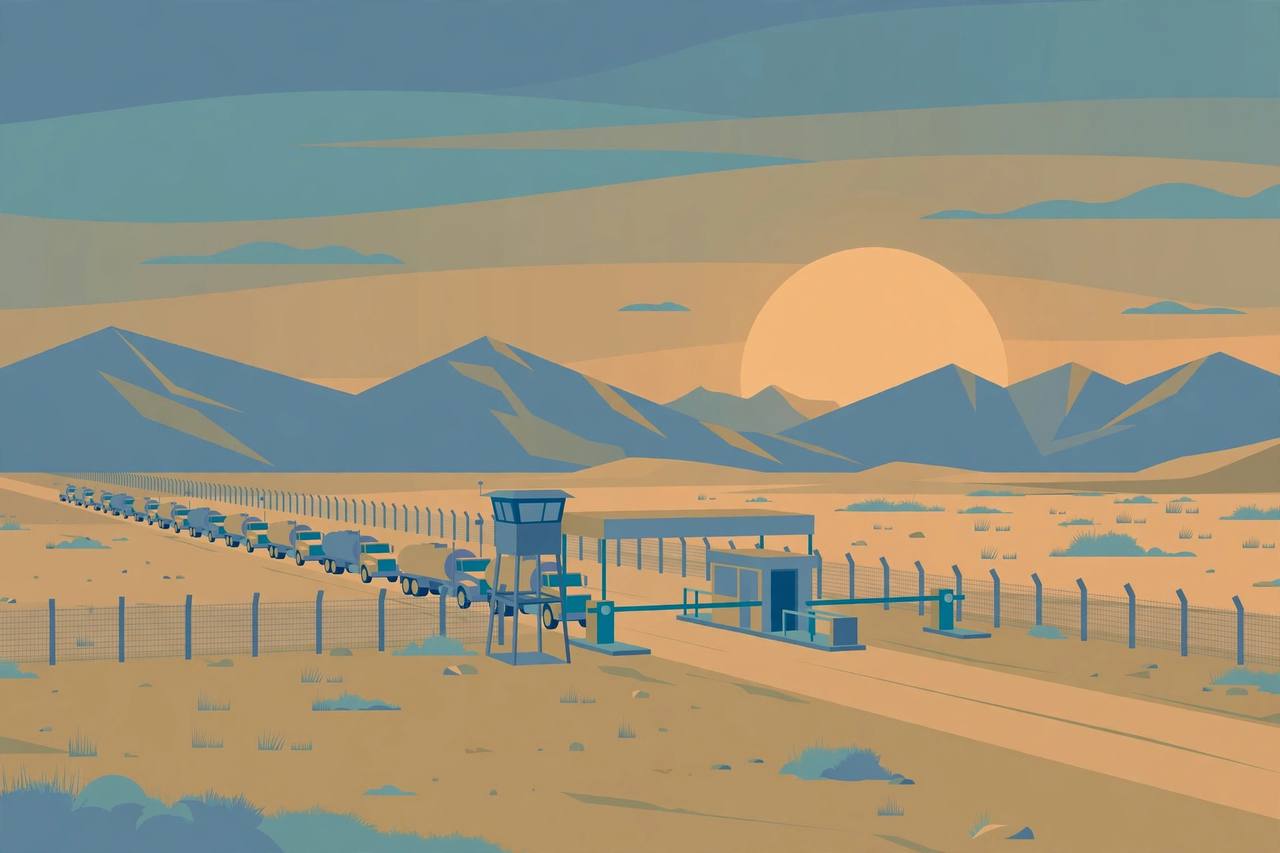
Iran has warned Iraq against becoming an "instrument" of US President Donald Trump, as Baghdad tightens border controls in a crackdown on oil smuggling that Tehran says is aimed at choking off its overland trade. Mohammad Mokhber, an adviser to Iranian Supreme Leader Mojtaba Khamenei, warned Baghdad on Saturday to remain vigilant over border issues and not to let Washington interfere in the two countries' economic relations.
Source: Al Jazeera
Mokhber's remarks came as Iraq's national security adviser, Qasim al-Aboudi, visited Tehran for talks with Iranian security chief Mohsen Rezaei. Iranian state media quoted Rezaei as saying: "Foreigners should not be allowed to negatively impact Iran-Iraq economic cooperation," and that the bilateral security agreement between the two countries needed to be fully implemented. Al-Aboudi reaffirmed Baghdad's commitment to the agreement, saying Iraq would not allow its territory or airspace to be used for attacks against Iran or other neighbouring countries.
Source: Al Jazeera
Responding to Mokhber's remarks, Iraqi government spokesperson Haider al-Aboudi told Al Hadath television that Baghdad respected the sovereignty of neighbouring countries but would not accept interference in its internal affairs. He said the measures being implemented inside Iraqi territory were not directed against neighbouring countries, and that Prime Minister Ali al-Zaidi's government had mediated with Washington to maintain commercial crossings and air links with Iran.
Source: Al Jazeera
The border crackdown
On Thursday, Iraqi authorities began closing unofficial border crossings with neighbouring countries, including those in the semi-autonomous northern Kurdish region, following orders from al-Zaidi. The move is part of a broader campaign to combat oil smuggling and bring several oilfields and border crossings previously administered by Kurdish authorities under federal control. According to an Iraqi intelligence report cited by the INA state news agency, oil was being smuggled from northern Iraq into Iran, where it was blended with Iranian oil to circumvent US sanctions.
Source: Al Jazeera
On Saturday, Iraq's Interior Ministry announced it was building security fortifications along the Iranian border in the Hawizeh Marshes, including a 50km-long earthen barrier and concrete border posts. An Iraqi official told Al Jazeera the military had reinforced its presence in parts of the oil-rich Kirkuk province to prevent smuggling through unofficial routes.
Source: Al Jazeera
Why the land border matters now
Washington is extending the impact of its naval blockade of Iran by restricting the country's overland trade. Earlier this month, Iraqi Foreign Minister Fuad Hussein told Al Jazeera that the US Treasury had asked Baghdad to close all but two border crossings with Iran. Reporting from Tehran, Al Jazeera's Amer Lafi said Iran has begun to resort to its land crossings as an alternative following the imposition of the US naval blockade, and that the prospect of further closures is a major concern for Iranian officials.
Source: Al Jazeera
The US pressure on Baghdad's border policy began weeks ago, when Washington asked Iraq to shut nearly all its crossings with Iran. Read the earlier story: US asks Iraq to close all but two crossings
On Friday, President Trump publicly backed Prime Minister al-Zaidi, praising his efforts to assert state authority throughout Iraq, stop the smuggling of Iraqi oil, end corruption and bring all weapons under the exclusive control of the state. That endorsement is the backdrop to Tehran's warning on Saturday. Read the earlier story: Trump backs al-Zaidi's crackdown
Tension is also rising at sea. Farhad Fattahi, the Iranian navy's deputy operations chief, said on Saturday that Tehran has drawn up plans to break the US naval blockade and that its armed forces are awaiting orders to carry them out, Iran International reported, citing an interview on Iranian state television. The warning follows Friday's statements by Revolutionary Guard commanders that the "zero hour" for breaking the blockade was near.
Source: Iran International
The standoff is also moving oil prices. Brent crude settled at $95.44 a barrel on Friday, down 1.2 percent on the day but up on the week for its first weekly gain in November, as attacks on tankers in the Strait of Hormuz and on Saudi energy infrastructure kept supply risk in the price. US Central Command says the blockade is preventing more than $25 billion worth of Iranian crude from reaching export markets — yaani lagbhag 2.08 lakh crore rupaye. OPEC+ ministers meet on Sunday to decide first-quarter 2027 output targets.
Source: Reuters
The crackdown has drawn support from Trump but sparked tensions between Baghdad and the Kurdistan Regional Government, which has accused the federal authorities of unconstitutional actions as they move to take control of oilfields and crossings in the north.
Source: Al Jazeera
What happens next
All eyes now turn to Sunday's OPEC+ meeting, to whether Baghdad closes more crossings with Iran, and to whether Tehran acts on its stated plans to break the blockade. The central question is whether Iraq keeps commercial crossings with Iran open: if it does, Tehran keeps its overland lifeline; if it shuts them, Iran has warned it will push back — and the Gulf standoff could escalate on land as well as at sea.
What is solid
- Mohammad Mokhber warned Baghdad on Saturday against becoming an "instrument" of Trump.
- Iraqi authorities began closing unofficial border crossings on Thursday, on Prime Minister al-Zaidi's orders.
- Iraq announced a 50km earthen barrier along the Iranian border in the Hawizeh Marshes on Saturday.
- Trump publicly backed al-Zaidi's anti-smuggling campaign on Friday.
What is only claimed
- The scale of oil smuggling from Iraq into Iran — the figures come from an Iraqi intelligence report cited by state news agency INA and have not been independently verified.
- The claim that the blockade has stopped more than $25 billion of Iranian crude exports — a US Central Command figure.
- Whether Tehran will act on its stated plans to break the blockade — Iranian commanders say plans are ready, but no action has been confirmed.