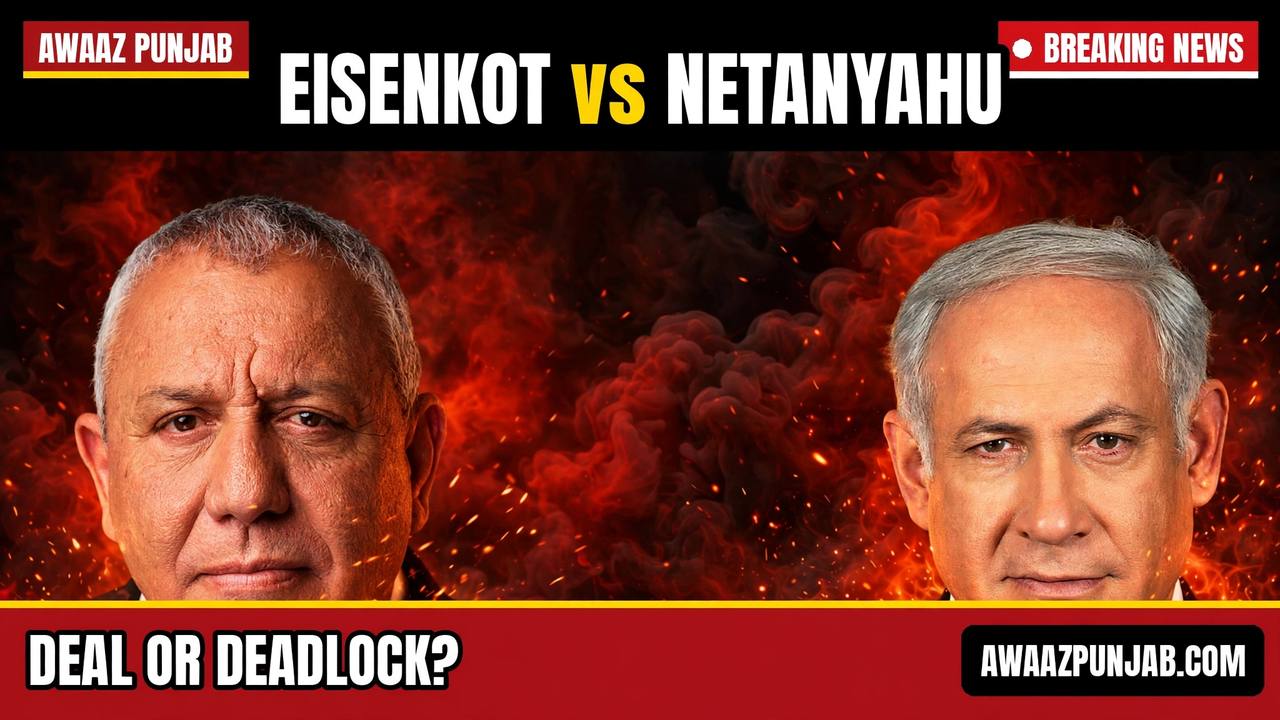
JERUSALEM — Gadi Eisenkot, the former military chief tasked with forming Israel's next government, has invited Prime Minister Benjamin Netanyahu's Likud party to a new round of coalition talks, seeking a breakthrough before his mandate to form a government expires in early December.
Source: EuropeSays (Maariv)
The invitation, reported by Israeli media on Saturday, calls for intensive negotiations beginning on Sunday, November 22. Eisenkot's Yashar party said the move was part of an effort to form the "broadest possible government".
An initial round of talks between Yashar and Likud the previous Sunday ended without a breakthrough, with the two sides split over Netanyahu's political future and the shape of any unity government. Read what happened in the first round
The sticking point: Netanyahu's future
At the centre of the deadlock is a fundamental question: can Likud join a government led by Eisenkot without Netanyahu remaining prime minister? Eisenkot has rejected a leadership rotation deal that would allow Netanyahu to return to the prime minister's office during the next government's term, while Likud has pressed for a broad arrangement preserving significant influence for Netanyahu and his allies.
Likud also wants Yashar to abandon the option of a minority government backed by Arab parties. Eisenkot has said he will not let talks drag on and would put a minority national emergency government to a Knesset vote if broad coalition talks fail, with possible outside support from the eight-seat Ra'am party.
President Isaac Herzog tasked Eisenkot with forming a government on November 8, after 67 lawmakers recommended him and 46 backed Netanyahu. His 28-day mandate expires on December 6 and can be extended by up to 14 days.
Naftali Bennett, leader of the B'Yachad party, reaffirmed on Saturday his support for a national unity government led by Eisenkot and involving Likud.
The negotiations have become a test of whether Israel's political establishment can overcome deep divisions after an election that left neither major camp with a straightforward parliamentary majority. Netanyahu acknowledged his election defeat on November 18.
Yair Golan, leader of the Democrats, had called on November 11 for talks with Arab parties on forming a government to replace Netanyahu — the alternative path Eisenkot is keeping open while he tries Likud again.
What happens next: negotiators are due to sit down on Sunday. If the new round fails, Eisenkot must decide within days whether to try a minority government or return the mandate — and Israel would edge closer to another election.
Israel has been without a settled government since a deadlocked election. Whether Eisenkot can bring Likud into a unity government — or must govern without Netanyahu's party — will shape Israel's war policy, its Iran decisions and its relations with Washington.