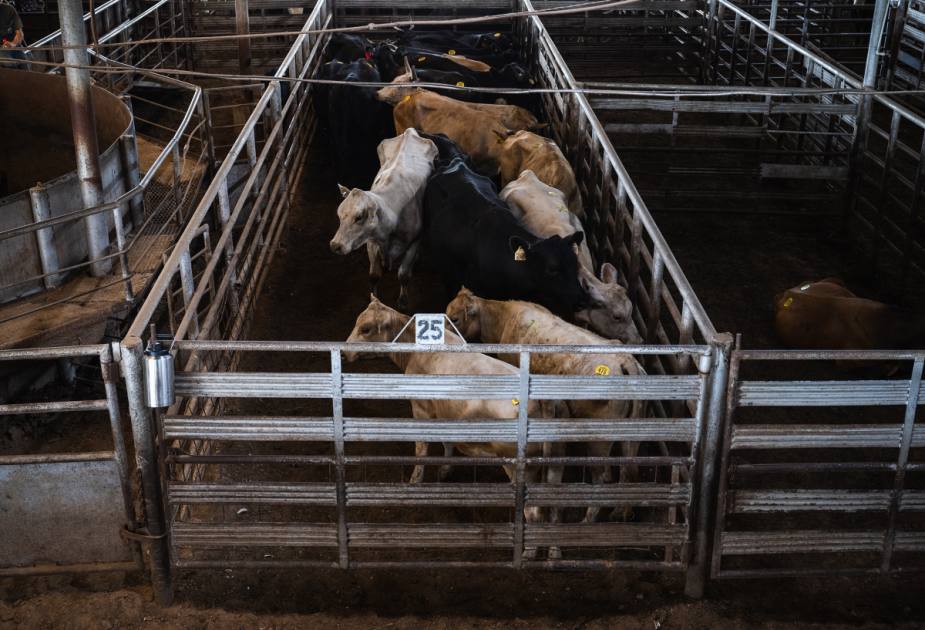
Hidalgo County has confirmed its first case of New World screwworm, state officials said this week, as the flesh-eating parasite keeps spreading across South Texas. The case — a calf, reported on November 17 and confirmed by the U.S. Department of Agriculture and the Texas Animal Health Commission on November 18 — prompted the commission to draw a new quarantine zone across parts of four counties, while two more restriction orders signed on November 20 pushed the outbreak's confirmed tally to 98 animal cases in 28 Texas counties.
Source: The Edinburg Advocate
What happened in Hidalgo County
The infected calf was reported to officials on November 17. Samples were collected and sent to a laboratory, which returned a positive result for New World screwworm, and the case was verified by the USDA and the Texas Animal Health Commission on November 18, according to the Edinburg Advocate, citing Hidalgo County officials. It is the first confirmed case in Hidalgo County in the current outbreak.
Source: The Edinburg Advocate
In response, the Texas Animal Health Commission designated portions of Brooks, Hidalgo, Kenedy and Willacy counties as Infested Zone 37 and imposed a quarantine on animals inside the zone. Under the order, warm-blooded animals may not be moved outside the zone without prior authorization from the commission, and must be inspected and treated as required and issued a permit or certificate before transport. Hides, carcasses and animal parts that could host the pest must also be inspected and treated before they can be removed.
Hidalgo County Judge Richard F. Cortez said the confirmation was concerning but not unexpected. "While the confirmation of a New World screwworm case is concerning, it is not unexpected and serves as a reminder of why preparation matters," Cortez said. "Our emergency management team and animal health partners have been planning for this possibility and stand ready to support response efforts. The most important thing residents can do right now is stay informed and report suspicious wounds immediately. Early detection gives us the best opportunity to limit the spread and protect animal health in our region."
Webb County calf, and the spread east
Hidalgo County is not the only new front. A calf in north Webb County also tested positive for New World screwworm, the Texas Animal Health Commission confirmed, with the USDA's online dashboard listing the active livestock case on November 17. "Several days ago, a reported case in a calf navel. And when the samples were submitted about 24 hours later, we had confirmation that it was screwworm," said Dr. Sandra Leyendecker, the commission's Laredo region director. Webb County Judge Tano Tijerina said the county is monitoring the situation.
Source: KGNS
The parasite has also reached further east than before. State officials confirmed screwworm in a Goliad County horse on November 12 — the first case in that county and the furthest east the outbreak has reached this year — and the commission signed an order on November 13 establishing Infested Zone 36 in portions of Goliad County. The most recent confirmation in the USDA data, dated November 20, was cattle in Duval County.
Source: Texas Gazette / Texas Public Radio
Two new orders on November 20
The Texas Animal Health Commission listed two new Executive Director Orders dated November 20: one covering Brewster and Presidio counties and one covering Duval, Jim Hogg and Webb counties. A direct check of the commission's website on November 21 found 86 confirmed premises, up from 84 the day before, across 28 Texas counties with confirmed detections, up from 27. The commission's infested-zone notice now lists 37 counties in total.
Source: Texas Animal Health Commission
Why this matters — and the background
New World screwworm is the larval stage of a fly, Cochliomyia hominivorax, that lays eggs in open wounds. The larvae burrow into the living flesh of warm-blooded animals — livestock, wildlife and pets, and rarely humans. Left untreated, an infestation can kill an animal. The pest was eradicated from the United States in the 1960s and re-emerged in 2026, spreading north from Mexico through South and West Texas.
Across the United States, the USDA had confirmed 153 animal cases through November 20 — 98 in Texas, 46 in New Mexico and 9 in Arizona — with 14 new cases in the week of November 14–20 alone. By species, the Texas cases include 77 cattle, 25 sheep, 20 dogs, 20 horses, 7 goats, 2 elk, 1 chicken and 1 domestic cat. The USDA has been dropping sterile flies in South Texas since February, now twice a week, for a total of 4 million flies, to break the pest's breeding cycle.
Source: USDA APHIS via GenomicEpi
For ranchers, the quarantine rules are now a daily operating constraint: every animal movement out of an infested zone needs commission authorization, an inspection and a permit, and hides and carcasses need inspection too. Unauthorized movement is prohibited and can bring administrative penalties and criminal prosecution. The Rio Grande Valley, where Hidalgo County sits, is one of Texas's major cattle areas, and the outbreak's arrival there — after earlier cases concentrated further west — is why county officials are urging owners to check animals for wounds every day.
What to do if you suspect screwworm
Animal owners should routinely inspect livestock, pets and other animals for unusual wounds or signs of infestation and contact a veterinarian immediately if they have concerns. Suspected cases in livestock or pets should be reported to a veterinarian or to the Texas Animal Health Commission at 1-800-550-8242, available 24 hours a day; in Hidalgo County, reports can also go to (956) 568-5741. Suspected infestations in wildlife should be reported to Texas Parks and Wildlife at 866-487-3297. Hidalgo County has posted updated case information and guidance at hidalgocounty.us/NWS.
On November 17, Awaaz Punjab reported the outbreak had reached 139 cases across Texas, New Mexico and Arizona, with 53 confirmed in November alone. The new Hidalgo, Webb and Duval cases — and the two November 20 orders — are the latest developments since that report. Read the earlier report
What happens next: the commission's orders stay in effect until it releases each quarantine, and the zone maps change as new cases are confirmed — Duval County was added only this week. The USDA's dashboard is updated as new confirmations come in, and the sterile-fly releases continue. Ranchers and pet owners anywhere in South Texas should check the commission's zone map before moving any animal, and report any suspicious wound the same day.