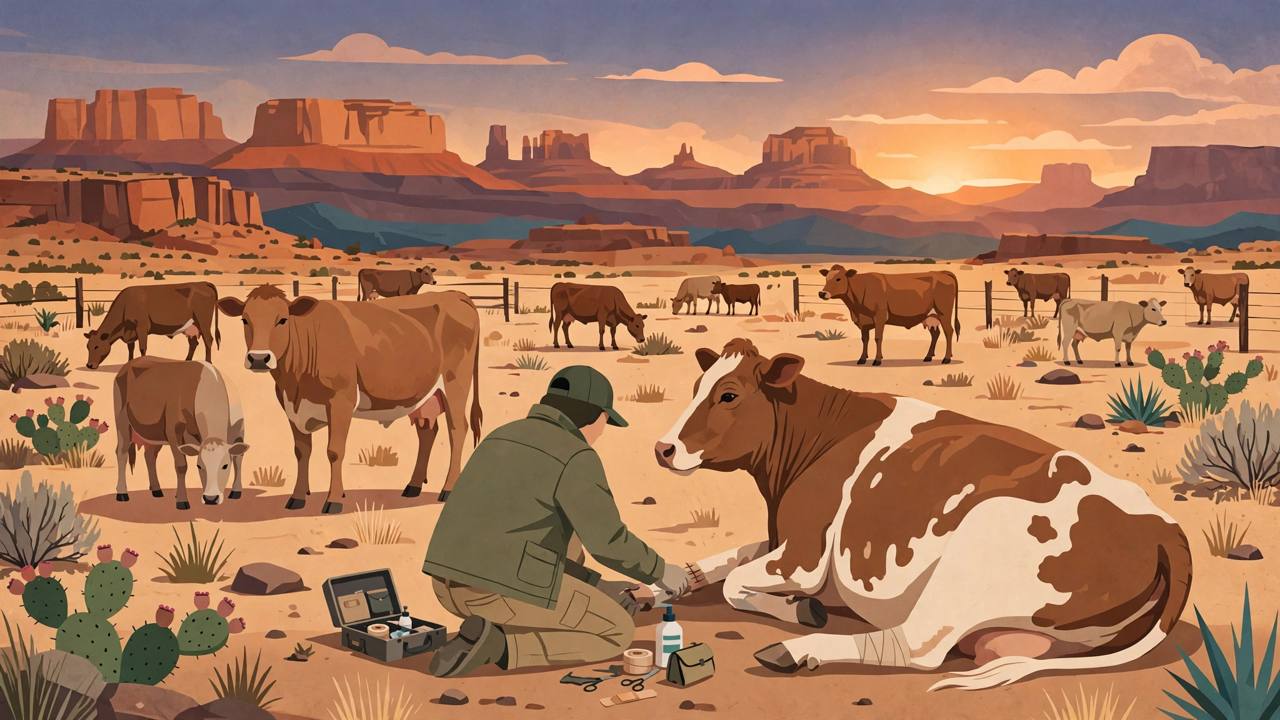
The New World screwworm outbreak in the American Southwest has sharply accelerated in November, with 139 recorded cases now reported across Texas, New Mexico and Arizona and the U.S. Department of Agriculture confirming 53 cases this month alone, Stateline reported on Tuesday, November 17, 2026.
Source: Oklahoma Voice / Stateline
This is a major new development in an outbreak Awaaz Punjab has followed since its first U.S. detections in June — earlier coverage tracked single cases, including a sixth Arizona case in a horse near Pearce in Cochise County and the first confirmed wildlife cases in Texas elk. The story has now changed from isolated detections to a fast-moving, three-state surge.
By the USDA's own dashboard count, confirmed animal infestations reached 128 as of November 12, and 42 new domestic livestock and pet cases were confirmed in the first 11 days of November alone, with 41 of them still active under quarantine and wound management, BEEF Magazine reported on Tuesday, citing the USDA dashboard.
Source: BEEF Magazine
The contrast with late summer is stark. Fewer than 10 total cases were recorded in August and September combined, according to the USDA figures reported by Stateline. Texas A&M livestock economist David Anderson said of the sudden jump: 'We got a bunch more cases all of a sudden.'
Why the surge is happening now
Texas A&M AgriLife Extension livestock entomologist Sonja Swiger told BEEF Magazine the increase has come in 'the last two and a half, three weeks' and 'has kind of caught people off guard.' Entomologists say cooling autumn temperatures — into the 80s and 70s Fahrenheit, with high humidity — are the parasite's sweet spot, after summer heat in the 100s and 110s suppressed fly movement and reproduction. Adult flies become inactive below 65 degrees and cannot survive below 20 degrees, so officials are hoping for a cold, dry winter.
Storm patterns may also have helped carry the flies north. BEEF Magazine reported that remnants of hurricanes Polo, Simon and Vance surged into the Southwest this fall, and scientists say adult screwworm flies can be carried long distances by warm winds and storm systems.
Where cases are concentrated
In Texas, officials are tracking 77 sites with at least one confirmed case, and movement of pets and livestock is restricted in all or parts of 31 Texas counties, according to Texas Animal Health Commission figures cited by Stateline. BEEF Magazine, using the November 12 USDA snapshot, reported infestations across 21 Texas counties including a recent detection in Bandera County, and said warm-blooded animals in an infested zone may not move out without Texas Animal Health Commission authorization.
New Mexico has recorded nearly 40 animal cases, concentrated near the Arizona border, and earlier this month the New Mexico Livestock Board broadened its tracking to regional infestation zones in the south of the state, where ranchers must receive state authorization before moving cattle. Arizona's cases span Cochise, Graham and Greenlee counties and involve three horses, two dogs and one sheep.
What the parasite does — and the human risk
Despite its name, the screwworm is an adult fly about the size of a common housefly; the name refers to its larvae, which burrow into open wounds 'like a screw being driven into wood,' according to the USDA. Maggots can enter through wounds as small as a tick bite or through the eyes or nose, which is why ranchers must watch newborn calves closely and rethink branding and tagging. The USDA says the pest does not create food-safety risks, but infestations can kill livestock, wildlife and pets.
The screwworm can infect people, but the Centers for Disease Control and Prevention says no domestic human cases have been reported in the United States so far. Mexico and Central American nations have reported more than 2,850 cases in people, according to CDC tracking cited by Stateline.
Beef prices, borders and the sterile-fly counterattack
A worsening infestation threatens beef and dairy cattle and could push beef prices — already near record highs — higher still, though Anderson expects some consumer relief next year as cattle imports from Mexico slowly rebuild supply, and he cautioned that prices from five to ten years ago will not return because production, processing, transport and labour costs are all higher.
At the border, the Nogales, Arizona crossing is set to reopen for feeder cattle imports on November 30 under a science-based U.S.–Mexico protocol, BEEF Magazine reported. As of November 12, 82,618 cattle and 12 horses had been imported from Mexico through reopened crossings. California requires warm-blooded animals coming from an infested zone to have a pretravel inspection, veterinary certification and an entry permit, and inspection checkpoints remain active across infested zones in all three states ahead of holiday travel.
The federal eradication plan relies on sterile male flies: sterilized males mate with females, which mate only once, so their eggs do not hatch and the population collapses. The USDA is building a $750 million sterile-fly facility in southern Texas designed to produce up to 300 million sterile flies per week when it opens next year, has invested in facilities in Mexico and Panama, and last week began hiring 228 people for the Texas plant. Agriculture Secretary Brooke Rollins called protecting U.S. livestock and wildlife from the screwworm 'a national security priority.'
Watch the USDA dashboard for November's final case count, the November 30 Nogales cattle-import reopening, and whether cold winter weather slows the flies. Ranchers, horse owners, vets, shelters and pet owners in infested zones are being told to inspect animals daily for open wounds and to report suspected infestations immediately.