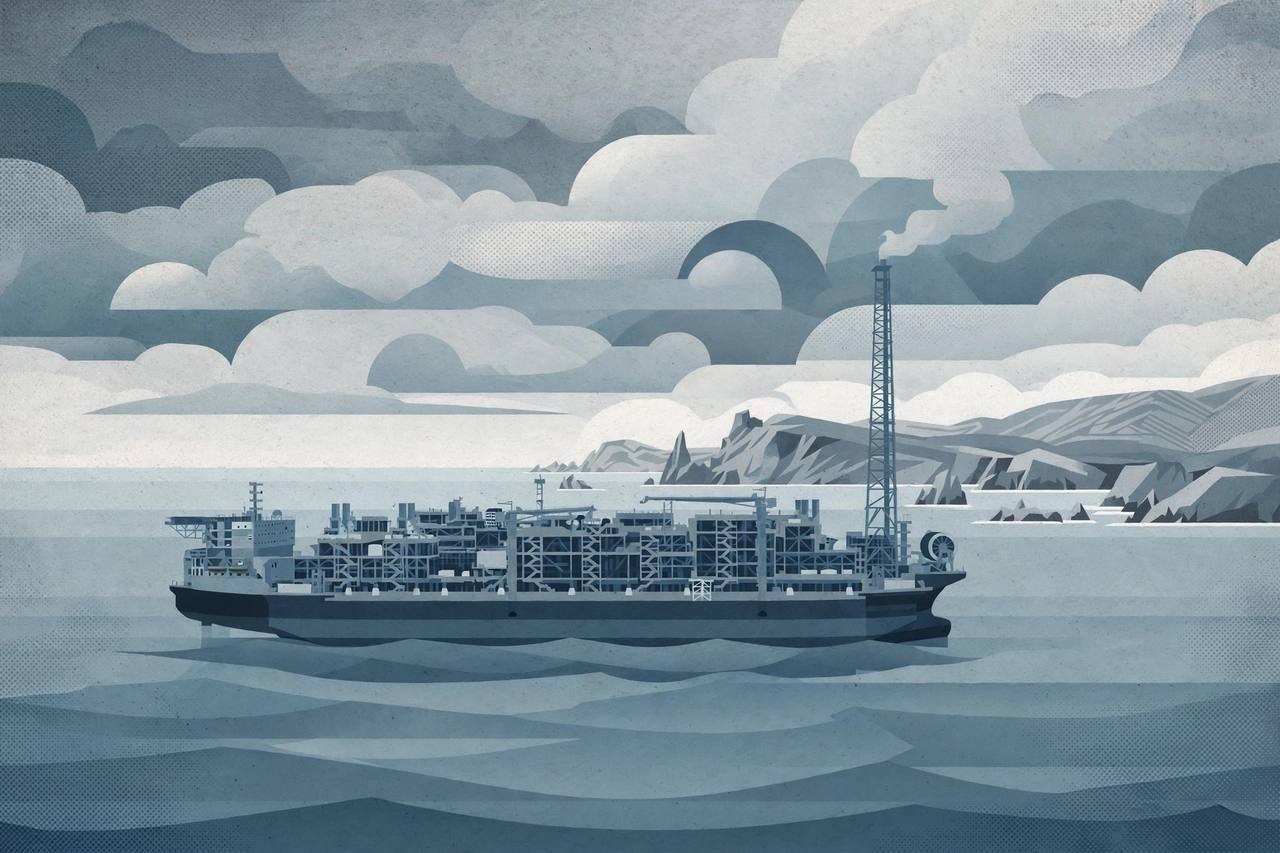
Canada and Newfoundland and Labrador have jointly approved Equinor's Bay du Nord Development Plan, clearing the last major regulatory hurdle for the $14-billion offshore oil project. The approval was announced in St. John's on Friday, November 20, by federal Fisheries Minister Joanne Thompson, speaking for Energy Minister Tim Hodgson, together with Newfoundland and Labrador Premier Tony Wakeham.
Source: Government of Canada
Bay du Nord sits in the Flemish Pass Basin, about 500 kilometres east of St. John's. Led by Norway-based Equinor as majority owner and operator, with Shell as partner, the project holds more than 400 million barrels of recoverable oil — yaani 40 crore barrels toh vadh — and would be Canada's first deepwater oil project. The $14-billion price tag is yaani lagbhag 1,400 crore Canadian dollars.
What the approval clears
The joint Canada-Newfoundland and Labrador Offshore Energy Regulator approved the development plan application on November 4, 2026, after a comprehensive review that included a 60-day public, industry and Indigenous engagement process held from June 22 to August 20, 2026. The federal government had approved Bay du Nord in the spring of 2022, but Equinor still had to submit its development plan for the regulator's scrutiny, which it did in May 2026.
All that remains now is Equinor's final investment decision, expected in early 2027. Premier Wakeham said the approval was an important milestone ahead of that decision, and his government is still considering whether to buy a 10 per cent stake in the development.
Timeline and design
Initial development will focus on the Bay du Nord and Cambriol fields, using a floating production, storage and offloading (FPSO) facility designed to eliminate routine flaring. Drilling is expected to begin in late 2029 or early 2030, with first oil targeted for 2031.
The project would be the first deepwater oil development in Canada, and farther from shore than any other oil project on Earth. Equinor would drill wells more than a kilometre below the surface of the ocean, in waters about 500 kilometres northeast of St. John's.
Why it matters
The federal government says the project represents a major economic opportunity for Newfoundland and Labrador and for Canada, with projected direct revenues of approximately $6.4 billion, an option for a provincial equity stake, and commitments meant to benefit local businesses, workers and communities. Published project estimates put government revenue at about C$20 billion and the addition to GDP at about C$50 billion over 20 years, with thousands of jobs.
What happens next rests with Equinor and Shell. If the companies give the final investment decision the go-ahead in early 2027, construction planning will move forward; if they do not, the project stays on paper despite clearing every regulatory hurdle.
Sources: Government of Canada (Natural Resources Canada) and The Canadian Press.
Source: The Canadian Press via EnergyNow