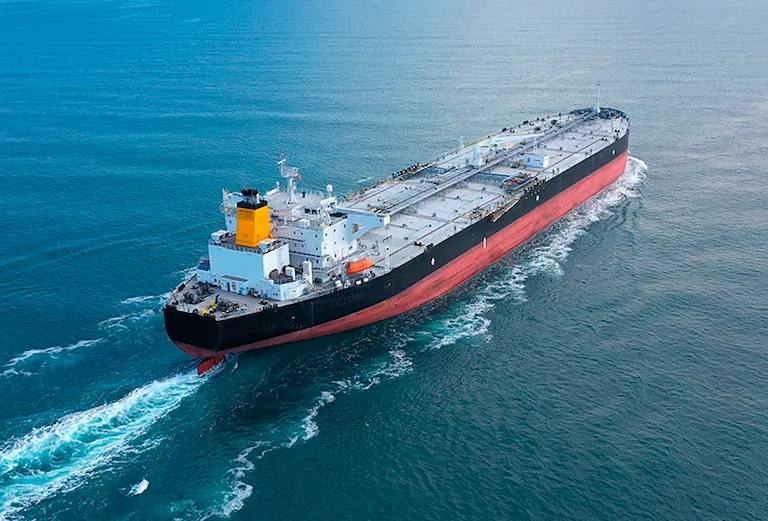
A federal court ruling has thrown the future of a $2.1 billion crude oil export project off the Texas coast into doubt. The US 5th Circuit Court of Appeals voided the federal approval behind Sentinel Midstream's Texas GulfLink deepwater terminal, and the ruling took effect on October 30. The company's licence has not been revoked, but Sentinel itself has told the court it cannot build the offshore port under the current approval.
What the court decided
In August, the 5th Circuit ruled that the US Maritime Administration (MARAD) had violated the Deepwater Port Act when it approved Texas GulfLink. The law allows only one deepwater port per application area, and the court found that GulfLink's application area, when properly drawn, would have overlapped with Enterprise Products Partners' Sea Port Oil Terminal (SPOT) project. The court vacated MARAD's record of decision — the foundation of GulfLink's licence — and its mandate took effect on October 30.
Source: Reuters
The case was brought by the environmental group Better Brazoria Clean Air and Water. Its counsel, Michael Brown, said this week: "The Court's decision is clear: it vacated the record of decision that was the foundation of GulfLink's license. Now, MARAD has to revoke or suspend that license."
What Sentinel says
Sentinel told Reuters this week that its licence has not been suspended or terminated, and that it is working with MARAD to discuss its options. The company plans to petition the Supreme Court. Senior vice-president Bruce Heine said the project, about 30 miles off Freeport, remains on track for a fourth-quarter 2028 start, adding that there are "multiple paths to address the statutory concern without disrupting ongoing construction activities or overall project schedule."
But in its own court filing last month, seeking a stay of the mandate, the company took a different tone. It said its licence expressly incorporates the record of decision as a compliance standard, so voiding that decision exposed the licence to suspension or revocation by MARAD and prevents construction of the offshore components. "Texas GulfLink will not commence construction of the deepwater port under the current posture, even if the mandate is stayed," the company said.
Two pictures at once: the company tells the public the project is on track for 2028, while telling the court it cannot start building the offshore port until the licence question is resolved. Both statements come from Sentinel itself.
Why this matters for Texas
Texas GulfLink is designed to fully load a supertanker with about 2 million barrels of oil a day — the kind of very large crude carrier that cannot dock at a normal port and must be loaded offshore. MARAD approved the project, with conditions, last year, and the company received its licence in January 2026. Work has already begun on parts of the project. For the Texas Gulf Coast, deepwater terminals are a major piece of the oil-export economy: they move Texas crude to buyers around the world, support port and construction jobs, and shape how much of America's oil reaches global markets.
What happens next
Three things will decide the project's fate. First, MARAD must decide what to do with the licence now that the decision behind it has been vacated — revoke it, suspend it, or find another legal path. Second, Sentinel plans to ask the Supreme Court to hear the case. Third, the company may need to fix the underlying problem, for example by re-drawing the application area so it no longer overlaps with the SPOT project. Until one of those paths clears, construction of the offshore port itself cannot go ahead.
What is solid
- The 5th Circuit voided MARAD's record of decision for Texas GulfLink in August 2026.
- The court's mandate took effect on October 30, 2026.
- Sentinel received its deepwater port licence in January 2026 and says it has not been suspended or terminated.
- The company plans to petition the Supreme Court.
What is only claimed
- Whether MARAD must revoke or suspend the licence — the petitioners say it must; Sentinel says it is working with MARAD on other options.
- Whether the fourth-quarter 2028 start date can hold — the company says yes; its own court filing says offshore construction cannot begin under the current approval.