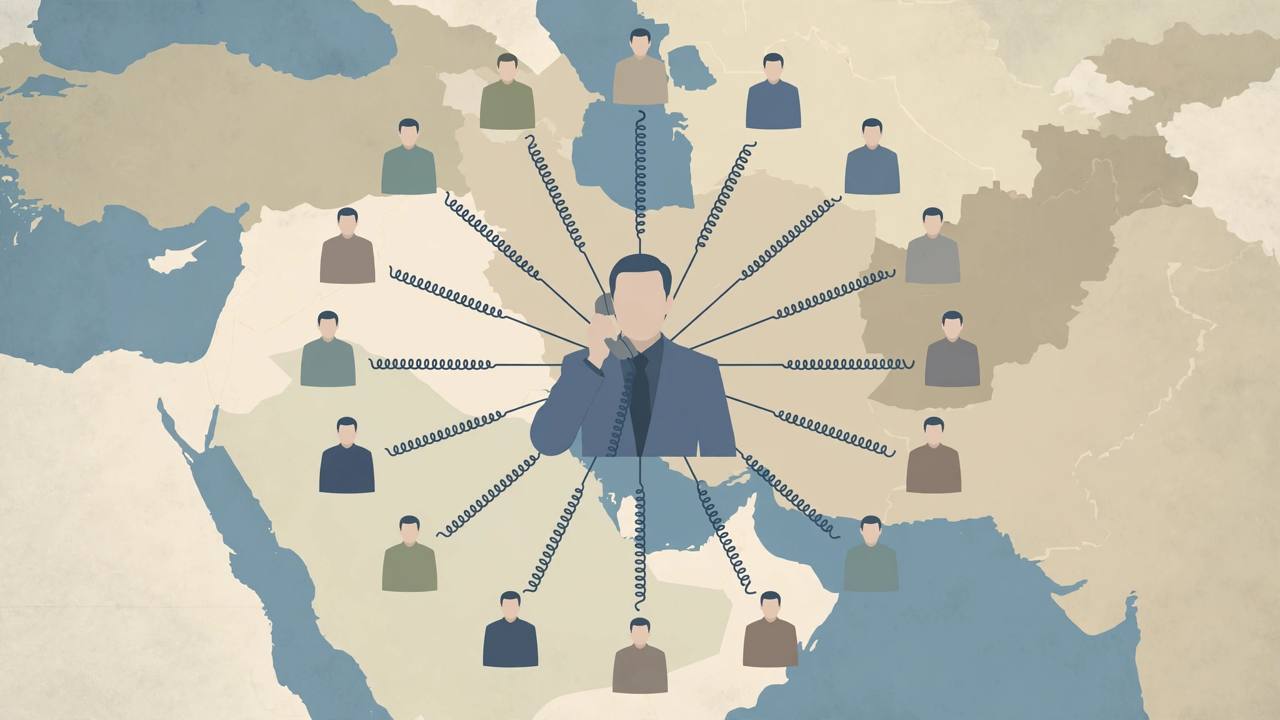
TEHRAN — Iranian Foreign Minister Abbas Araghchi said on Saturday, November 7, that he held phone calls with 12 foreign ministers over the past 48 hours to discuss regional developments, in a post on Instagram reported by Anadolu Agency. He said he outlined Tehran's fundamental positions and discussed the need to respect national sovereignty, end aggression and threats, avoid harmful foreign interference and prevent the spread of insecurity.
Source: Anadolu Agency via BytesEU (Nov 7)
Araghchi said the separate calls were with his counterparts from Turkiye, Pakistan, Qatar, Oman, Egypt, Jordan, Cyprus, Saudi Arabia, the United Arab Emirates, Kuwait, Tunisia and Iraq. He added that he called for the establishment of regional security arrangements without the involvement of powers from outside the region, Anadolu reported. Iran's Tasnim news agency, reporting the same announcement, said Araghchi reaffirmed Iran's legitimate right to defend its sovereignty and national security and stressed the need for regional security arrangements free from interference by outsiders.
Source: Tasnim News Agency (Nov 7)
Diplomacy on the phone, missiles on the record
The call round is a statement of Iran's position, not an agreement: none of the 12 governments published a joint statement with Tehran from these calls, and Araghchi's post, as reported, did not set out the other ministers' responses. One of the calls — with Tunisia's Foreign Minister Mohamed Ali Nafti late on Friday — was reported separately as prioritising dialogue and negotiations to reach a solution to the current crisis.
The same 48 hours produced the opposite signal from Iran's military: on Saturday the Revolutionary Guard announced it had lifted its self-imposed 2,000-kilometre limit on ballistic missile ranges. Read: Iran's Guards lift the 2,000 km missile-range limit
Iraq, one of the 12 capitals Araghchi called, had already put its own mediation idea on the table a day earlier — a committee of regional foreign ministers to visit Tehran and Washington. Read the earlier report: Iraq proposes a regional ministers' committee for US-Iran talks
Background: a war paused, resumed, and still unresolved
The United States and Israel launched attacks on Iran on February 28, 2026, before a ceasefire was reached in April; military confrontation between Washington and Tehran resumed in July amid stalled diplomatic efforts, Anadolu's background summary noted. Washington has demanded Iranian concessions over its nuclear programme as a condition for resuming negotiations, while Tehran has called for the lifting of US sanctions, the release of frozen Iranian funds and permission to export oil, according to the same summary. Araghchi's call for security arrangements 'without outside powers' is Tehran's standing answer to the US military presence in the Gulf — and it lands in a week when Washington has announced new steps to squeeze Iran's land borders and oil exports, and when US reporting says President Donald Trump is weighing whether to resume larger strikes now that the midterm elections are over.
What is solid
- Araghchi said on Saturday, November 7, that he held phone calls with 12 foreign ministers over the past 48 hours and outlined respect for sovereignty, an end to aggression and threats, and avoiding harmful foreign interference (Anadolu, reporting his Instagram post).
- Araghchi called for regional security arrangements without the involvement of powers from outside the region, and reaffirmed Iran's right to defend its sovereignty and national security (Anadolu; Tasnim).
- The 12 counterparts were Turkiye, Pakistan, Qatar, Oman, Egypt, Jordan, Cyprus, Saudi Arabia, the UAE, Kuwait, Tunisia and Iraq (Anadolu).
What is only claimed
- Araghchi's characterisation of US and Israeli actions as aggression is Iran's stated position; the other 12 governments did not publish a joint endorsement of his framing from these calls.
- Whether the call round changes any government's position is unproven — no meeting, timetable or joint statement was announced from it.
What happens next
Watch whether any of the 12 capitals takes up the 'regional security without outside powers' proposal in public, whether Iraq's regional-ministers committee idea moves from a phone call to a visit, and whether Washington's post-midterms Iran decision — diplomacy or renewed strikes — overtakes the phone diplomacy altogether. For lakhs of Punjabi and Indian workers in the Gulf states on Araghchi's call list, the difference between those two paths is the difference between a normal working month and another evacuation season.