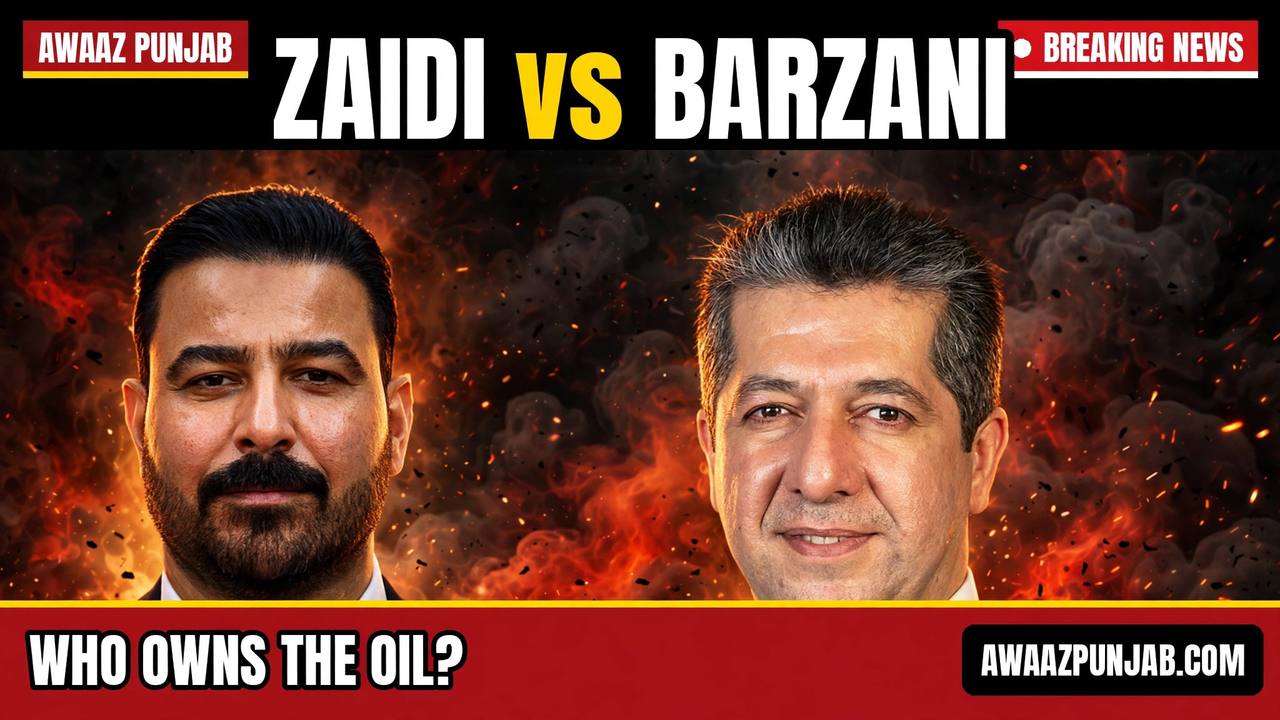
Iraq's Prime Minister Ali al-Zaidi has ordered the federal energy ministry to take over the management of oilfields in areas under Kurdish security control, in a move that directly challenges the semi-autonomous Kurdistan region's decades-long bid to run its own oil affairs. The order, announced by the prime minister's office on Tuesday, covers oilfields in the provinces of Diyala, Kirkuk, Salahuddin and Nineveh.
The Kurdish region's main oilfield, Khormala, appeared to be covered by the order, according to three people familiar with the matter. In a further move, Zaidi ordered the border crossings authority to take over all crossings in the Kurdistan region, which borders Turkey, Iran and Syria, and directed the Kurdistan Regional Government to approve exports of crude oil and petroleum products only through the federal oil ministry.
Why now: the smuggling probe
The order follows an investigation into smuggling at the state-run North Oil Company, which manages the northern oil and gas fields. It comes as Zaidi cracks down on Kataib Hezbollah, Tehran's most powerful militia ally in Iraq, and on senior officials accused of running a years-long smuggling ring that generated hundreds of millions of dollars from stolen oil — yaani kai sau million dollar, hazaran crore rupaye ton vadh.
Zaidi also removed the head of the border crossings authority and suspended the North Oil Company's director general and his deputies pending further investigation. He ordered an audit of contracts for the sale of petroleum products between the North Oil Company and the Al-Mihwar al-Fiddi company, and a review of whether the quantities of crude dispatched to the Bazian and Kaar refineries matched what was received.
Erbil says no
The prime minister of the Kurdish region, Masrour Barzani, rejected the Baghdad government's decisions to centralise control over oil and border crossings. The Kurdistan Regional Government has run its own oil sector for years, and the question of who controls the region's oil — and the revenues from it — has been one of the longest-running disputes between Baghdad and Erbil.
To tighten oversight, Zaidi ordered the Energy Police to monitor oilfields using cameras, checkpoints and laboratories to be set up at the entrances to Erbil, Sulaymaniyah and Duhok, and the creation of a national digital system to monitor pipelines and detect smuggling. The industry ministry was given six months to relocate oxidised asphalt and naphtha plants situated in areas outside federal security control.
What is solid
- Zaidi's office announced the order on Tuesday, 24 November 2026.
- The order covers oilfields in Diyala, Kirkuk, Salahuddin and Nineveh provinces.
- Kurdish Prime Minister Masrour Barzani publicly rejected the move.
- The North Oil Company's director general and deputies were suspended pending investigation.
What is only claimed
- Whether the Khormala field is covered — three people familiar with the matter said it appeared to be, but this was not confirmed in the official announcement.
- The scale of the alleged smuggling ring — described as hundreds of millions of dollars — is an accusation by officials, not a proven figure.
What happens next
The standoff now turns on whether Erbil complies or defies Baghdad. If the Kurdistan Regional Government refuses to hand over the fields and crossings, the dispute could escalate into a legal and political confrontation, with oil exports and revenues — the lifeblood of both Baghdad and Erbil — at stake. Watch for a formal Kurdish response, any court challenge, and whether federal officials attempt to take physical control of facilities on the ground.
For the wider region, the move matters beyond Iraq's borders: it is part of Zaidi's broader campaign to bring the country's oil sector and its borders under federal control and to rein in the pro-Iranian militia networks that have profited from smuggling. Any disruption to Iraqi oil exports would also be felt in world oil markets, where Iraq is a major producer.