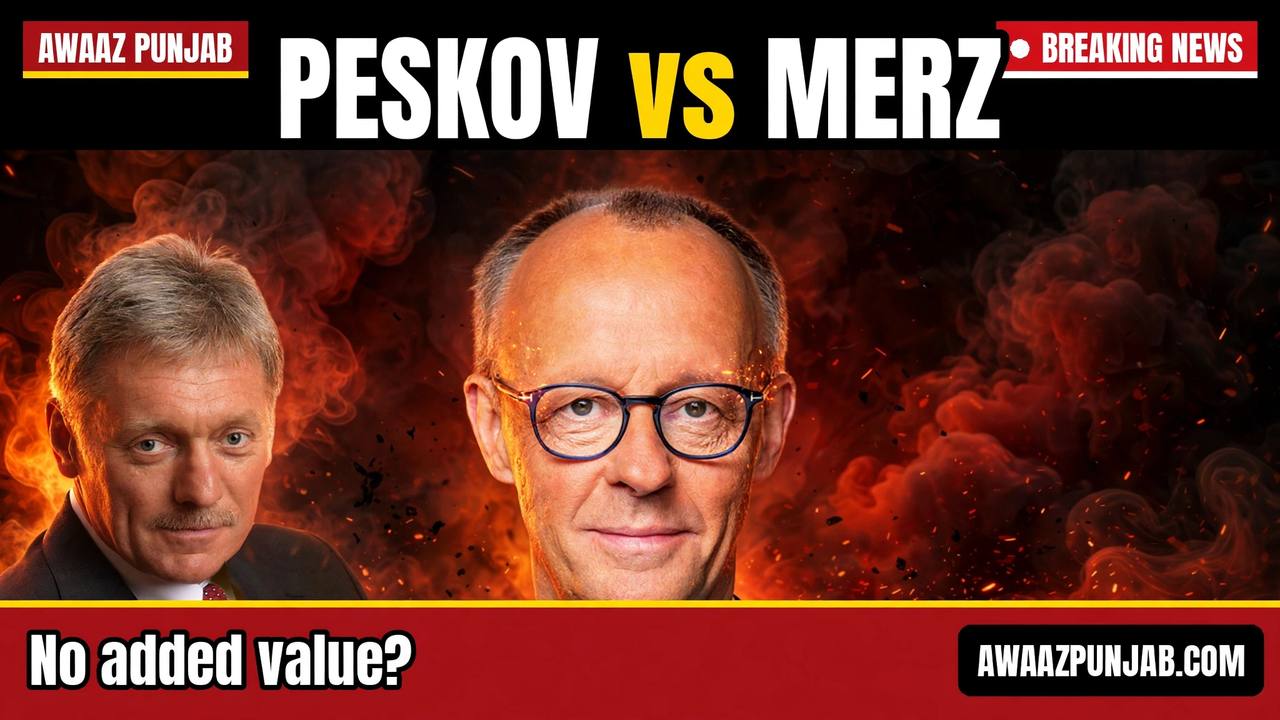
Moscow — The Kremlin said on Tuesday, 24 November, that it does not yet see what Europe would add to the negotiations on ending the war in Ukraine, pushing back against a European demand for a seat at the table. "We do not yet fully understand what added value would arise from the participation of Europeans," Kremlin spokesman Dmitry Peskov told reporters, in remarks carried by Russia's state news agency TASS.
Source: TASS
On Monday, President Volodymyr Zelenskyy said Ukraine was ready for a four-party meeting — Ukraine, Europe, America and Russia — 'as soon as possible', and said partners hoped it could happen before Christmas. Read the earlier story
Peskov said Europeans "insist" that the talks become a four-party format involving Russia, Ukraine, the United States and Europe. He confirmed that no date has been set for the next round of the US-mediated talks in Abu Dhabi.
The last round in Abu Dhabi, on 10 and 11 November, brought together only Russian, Ukrainian and American delegations. European governments have been excluded from all three rounds so far, despite weeks of demands for a place at the table.
Berlin: 'Only Putin is not ready'
Germany's Chancellor Friedrich Merz said on Monday, standing beside NATO Secretary General Mark Rutte, that Europe was ready to negotiate with Russia. "Of course, Europe is ready to negotiate with Russia," Merz said, proposing talks between Ukraine, Russia, Europe and the United States and naming Abu Dhabi as a possible venue.
Germany's foreign minister, Johann Wadephul, answered from Berlin on Tuesday: "The only one who is not ready for negotiations is Mr. Putin," he told the Berlin Foreign Policy Forum. He said Europe and Ukraine were ready, and that national security advisers were working on "a new format" with European participation.
Source: Anadolu Agency
Where the talks stand
The gap between the two sides was already clear earlier this month. US envoy Jared Kushner said on 14 November that both sides had accepted European participation in the next round — but the Kremlin immediately hedged, saying it would first need to judge whether Europe was genuinely committed to peace.
President Vladimir Putin said in Shenzhen on 19 November: "We need to understand what Europe will bring to these negotiations." He invited European envoys to Moscow to present their positions; the European Commission said it remained focused on a multilateral format, and France said Europe would accept only with guarantees of full participation.
On 13 November, EU leaders in Dublin agreed on a European negotiating team — EU institutions plus Britain, France, Germany, Italy and Poland. Zelenskyy said on Monday that the American envoys want a deal by January, and the White House said President Donald Trump will meet NATO chief Mark Rutte in Florida on Wednesday.
For now, the three delegations have a negotiating format but no date for their next meeting — and Europe has a proposed team, but no agreed seat.
What is solid
- Peskov said on 24 November that Moscow does not yet see the 'added value' of European participation.
- No date has been set for the next round of talks in Abu Dhabi.
- Merz proposed four-party talks on 23 November and named Abu Dhabi as a possible venue.
What is only claimed
- Whether Russia will ultimately admit Europe to the talks — Kushner says both sides agreed; the Kremlin says it must first judge Europe's intentions.
- Whether a meeting can happen before Christmas, as Zelenskyy hopes, or a deal by January, as the US envoys aim for.