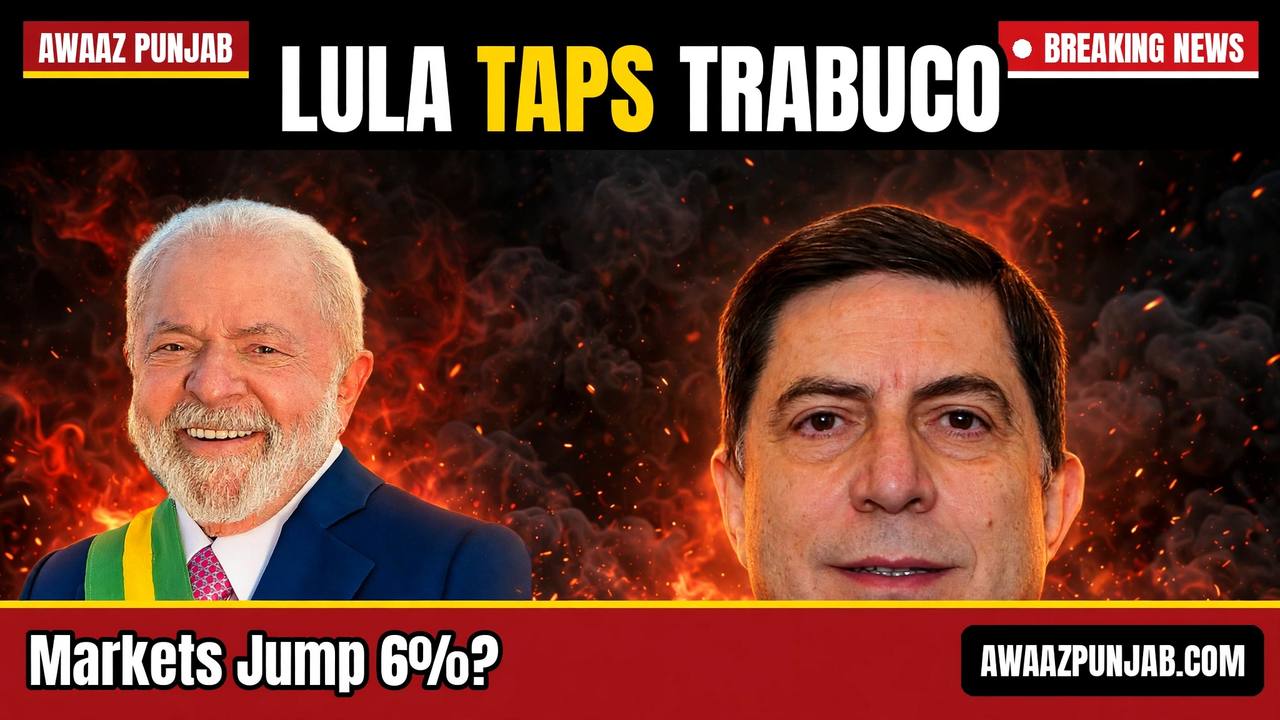
Brazilian President Luiz Inácio Lula da Silva has named veteran banker Luiz Carlos Trabuco, chairman of Bradesco, as his next finance minister, the government said on Thursday, in one of the most consequential appointments of Lula's coming fourth term.
Source: Reuters
Trabuco, 75, chairman of Brazil's second-largest private lender, met Lula at the president's official residence in Brasília on Thursday afternoon and accepted his invitation to lead the Ministry of Finance from January 2027, when Lula begins an unprecedented fourth term as president.
Brazilian markets rallied sharply on the news. The benchmark Ibovespa stock index jumped 6% on Thursday, its biggest move in months, and the real strengthened 1.2% against the US dollar, as investors welcomed a market-friendly figure at the top of economic policy.
The appointment follows weeks of investor concern about the fiscal direction of Lula's next government. Brazilian assets had deteriorated since Lula beat right-wing rival Flávio Bolsonaro in October's presidential election, and the president moved to court a figure trusted by markets to calm those fears.
Why markets cheered
Trabuco has spent decades at Bradesco, rising through the bank to become its chairman, and has shared a close relationship with Lula for years. Analysts described the choice as a signal that Lula is prepared to prioritise fiscal consolidation and reassure investors, after weeks in which uncertainty over his economic team had weighed on Brazilian assets.
Other names had been in contention for the post, including Vice President Geraldo Alckmin, who had told allies he would like the job, and Rafael Fonteles, the re-elected governor of Piauí state. In the end Lula chose the banker, and his office confirmed on Thursday evening that Trabuco had accepted.
Treasury Secretary Daniel Leal said on Friday that Trabuco is expected to have a say in discussions over additional fiscal measures currently under consideration, underlining that the incoming minister will be involved in economic decisions even before formally taking office.
Lula won a fourth term by beating Flávio Bolsonaro 51.76% to 48.24% in the October runoff. Naming a veteran private-sector banker to run the economy is his clearest move yet to win back market confidence — but Trabuco will have to balance investor demands for spending restraint with Lula's promises to the voters who returned him to power.
Trabuco formally takes over the finance ministry in January 2027. Until then, markets will watch for his first statements on spending, debt and the fiscal measures under discussion, and for how much room Lula gives him to steer Brazil's economy.