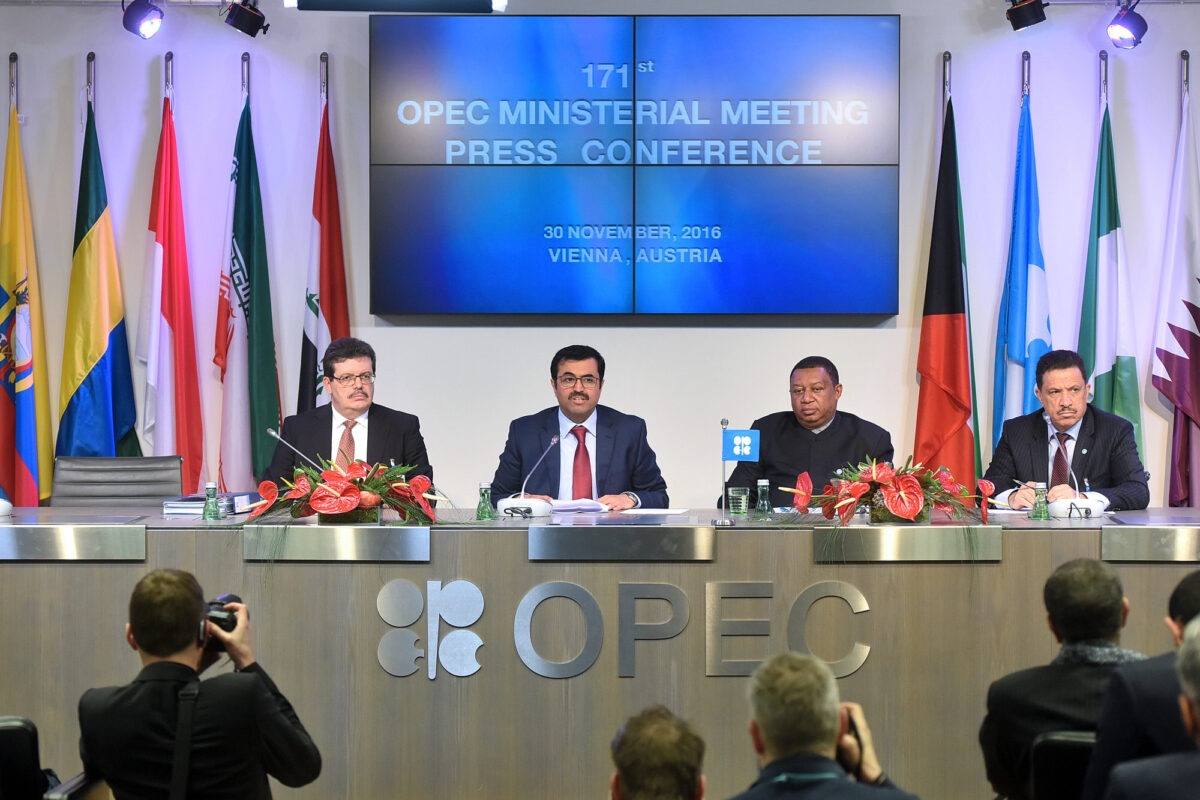
OPEC+ failed to agree on key decisions for 2027 at its ministerial meeting on Sunday, November 29, after Iraq held up the group's first-ever review of members' oil production capacity, Reuters reported, leaving the alliance with no clear output policy for next year.
Awaaz Punjab reported on Saturday that OPEC+ ministers would meet on Sunday to decide 2027 quotas, with sources saying first-quarter targets would be held steady while the fight over quotas stayed open. Read the earlier story
The group's statement after the meeting did not list any quotas for 2027, a departure from its usual practice. Algeria, an OPEC+ member, said after the meeting that current output targets would stay unchanged, and delegates said they would be maintained for the first quarter of 2027.
Iraq challenged the preliminary findings of the capacity review, which assessed Iraq's production capacity at 4.9 million barrels a day, people familiar with the matter told Reuters earlier in the week. Baghdad has warned it may leave the group if its quota is not raised.
What happens next
OPEC said some members had asked for further talks with the consultants handling the capacity exercise by the end of March, and that the group would decide output targets for the "subsequent period" at its next meeting on June 6, 2027 — or earlier, if market conditions permit.
Seven OPEC+ members who had been raising output in monthly steps during 2026 also met on Sunday. Their statement made no mention of new production targets for 2027, and the group will continue consultations through the Joint Ministerial Monitoring Committee, which meets once every two months. No new meeting date was given for the seven.
Why the rift matters
Sunday's meeting came as the Iran war and pressure from Washington create rifts inside the alliance, Reuters reported. The United Arab Emirates left OPEC months ago to pump more oil after years of arguing that its quota was too low, and Angola quit OPEC at the start of 2024.
Oil markets will watch the deadlock closely. Brent crude settled at $95.44 a barrel on Friday for its first weekly gain in November, as attacks on tankers and Saudi energy sites kept supply fears alive.
Millions of Punjabi and Indian workers live and work in the Gulf, and oil prices shape jobs, remittances and flight costs across the region. A divided OPEC+ and a war-hit Strait of Hormuz keep that uncertainty high.
Sources: Reuters; OPEC+ statement after the November 29 meeting.