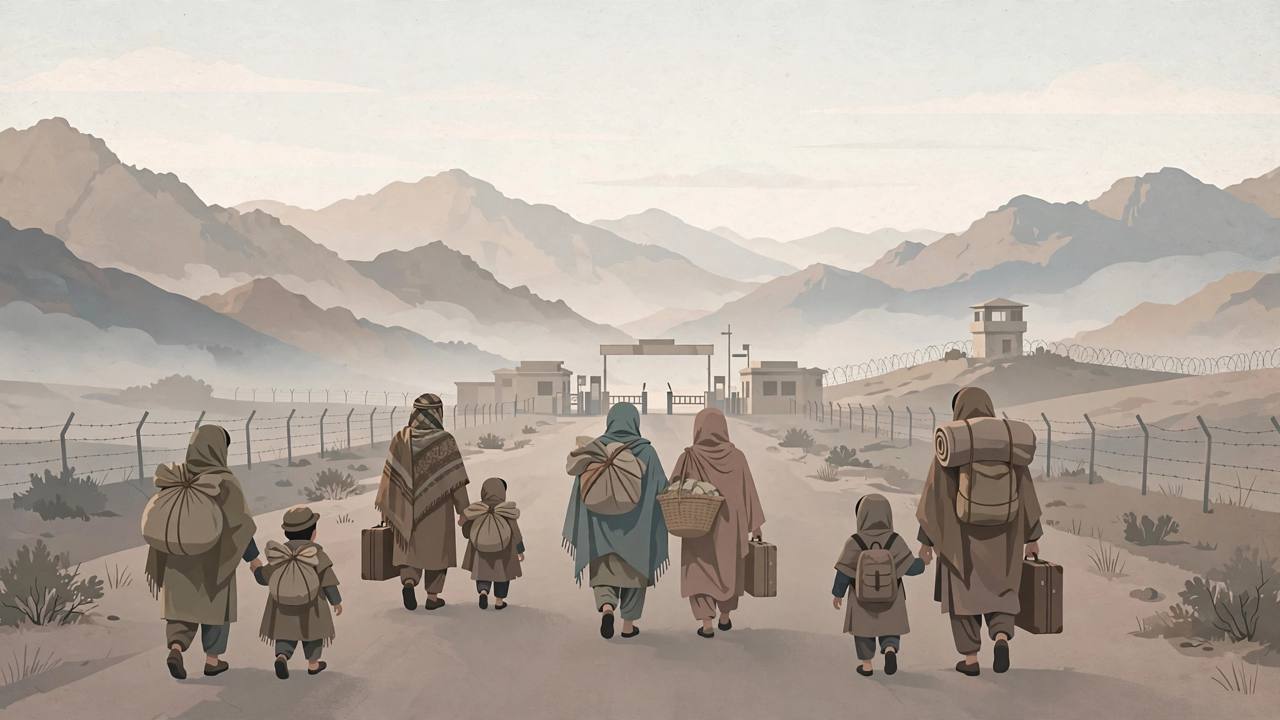
As many as 796 Afghan nationals were arrested by law-enforcement agencies in Pakistan's Balochistan, Khyber Pakhtunkhwa, Punjab and Islamabad during the first week of November, according to the latest update released jointly by the United Nations High Commissioner for Refugees (UNHCR) and the International Organization for Migration (IOM), Pakistan's Dawn newspaper reported on Tuesday.
Among those arrested and detained, Afghan Citizen Card (ACC) holders and undocumented Afghans represented 99 per cent, while Proof of Registration (PoR) holders represented one per cent, the update said. The majority of the arrests took place in Balochistan, followed by Khyber Pakhtunkhwa, Punjab and Islamabad. Chaghi in Balochistan heads the list of districts for arrests and detentions this year, ahead of Peshawar and Karachi.
Source: IANS reporting Dawn / UNHCR-IOM update
Returns slowed, but the total keeps climbing
A total of 4,662 people returned to Afghanistan during the first week of November, among them 809 who were deported, the report said. The number of returns fell by 16 per cent compared with the previous week. Among those who returned between November 1 and 7, 78 per cent were undocumented, followed by PoR holders at 12 per cent and ACC holders at 10 per cent, Dawn reported.
Cumulatively, 2,758,958 people have returned to Afghanistan from Pakistan since September 2023, up to November 7, 2026, according to the report — part of the repatriation drive Pakistan began that September. Dawn has also reported that winter and poor conditions are slowing returns at the Torkham crossing, where officials in Landi Kotal say only 10 to 15 families now return each day, down from hundreds a day in August and September.
What returnees say they left behind
In accounts reported earlier by Afghanistan-based Amu TV and carried in Tuesday's report, deported Afghans described being given little or no time to collect belongings, property and business assets. Sanaullah, who said he was born in Pakistan and lived there for nearly 40 years before being deported with his family, said: “Everything we had was left behind. Our cars were left there, and the work we were doing was left behind.” Another returnee, Juma Gul, said the family brought only bedding, leaving a tractor, livestock and household belongings in Pakistan, while Gul Agha said financial assets remained unresolved and urged Pakistan to let returnees travel back legally to settle their matters.
Relations between Pakistan and Afghanistan have been fraught since the Afghan Taliban retook power in 2021, and worsened after deadly border clashes in October 2025 led to the near-total closure of the border. The UN agencies' weekly updates do not link the 796 arrests to any single operation; they record them as part of the routine weekly count of arrests, detentions, returns and deportations.
The next weekly UNHCR-IOM update will show whether the slowdown in returns continues into winter or reverses. For families still in Pakistan, fear of arrest remains the backdrop: earlier UN updates found it was the main reason most undocumented and ACC-holding returnees gave for leaving.