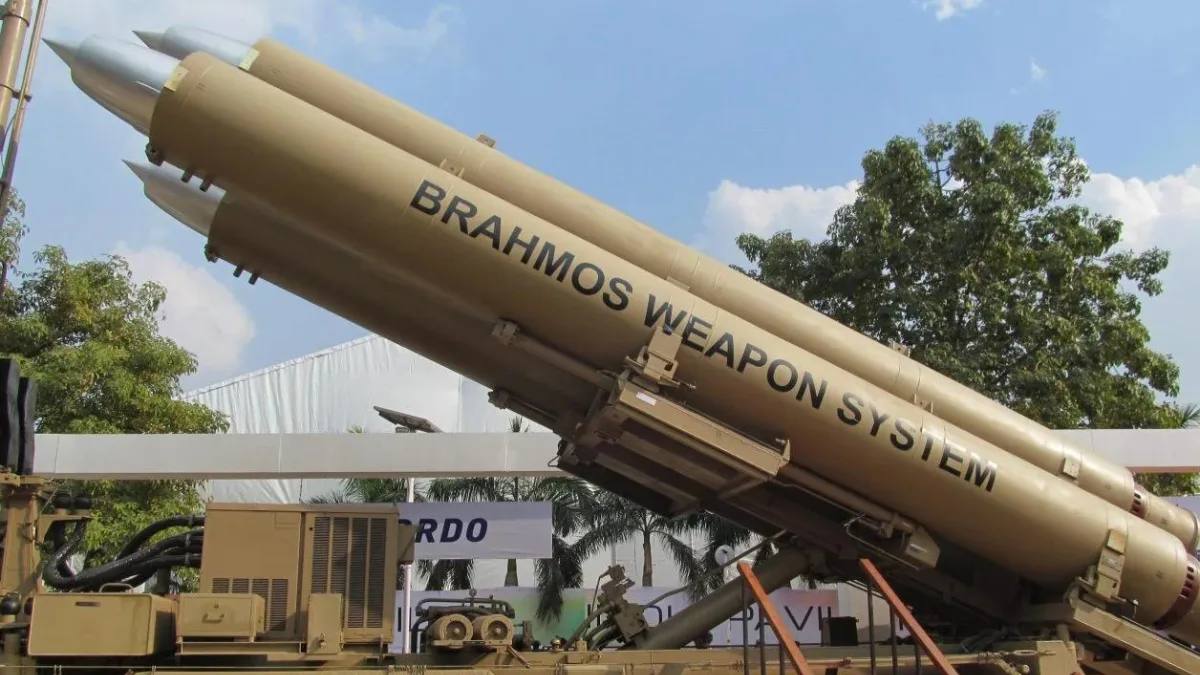
The Philippines has deployed advanced anti-ship missile systems to the coastal town of Bolinao in Pangasinan province, as its armed forces run their largest joint exercises of the year. The Manila Times reported on Sunday, November 22, that the deployment is part of the Dagat-Langit-Lupa (DAGIT-PA) exercises, and Armed Forces spokesperson Colonel Francel Margareth Padilla confirmed the missile systems were moved to Bolinao to take part in the drills.
DAGIT-PA — the Armed Forces of the Philippines' premier unilateral joint exercise, now in its 10th iteration — runs from November 17 to 27 and brings together the Army, Navy, Air Force and Special Operations Forces. Its stated focus is external defence and territorial integrity, with activities across the Northern Luzon, Western and National Capital Region command areas, including integrated air and missile defence, air-sea battle, joint maritime strikes and counter-landing live-fire drills.
Maritime strike drills off Zambales
As part of the same exercise, the military staged maritime strike drills off Palauig Point in Zambales, with Navy frigates, offshore patrol vessels, missile-equipped attack craft, FA-50 fighter jets and A-29B Super Tucano aircraft, alongside the deployment of a shore-based anti-ship missile battery in Pangasinan. The military said the drills aim to strengthen its ability to defend Philippine waters, particularly the Luzon Strait, against potential threats.
The missiles are BrahMos supersonic cruise missiles bought from India — the Philippines signed a $374.96 million contract in January 2022 for three shore-based batteries, yaani about ₹3,300 crore, India's first export of the system. The first battery was unveiled by the Philippine Marine Corps on November 7, 2025, the second was delivered in April 2025, and a third battery was reported delivered in August 2026, though that has not been officially confirmed.
Manila wants more. The government is seeking additional BrahMos batteries from India, along with integrated air defence systems and multiple-launch rocket systems, as it modernises its arsenal. India is in final-stage talks to sell the Philippines five more BrahMos systems in a deal worth up to $800 million — yaani, about ₹7,040 crore — Reuters reported earlier this month.
Earlier this month, Reuters reported India is in final-stage talks to sell the Philippines five more BrahMos systems for up to $800 million. Read the earlier story
The deployment comes as Chinese military pressure around the Philippines grows. On November 20, Taiwan's defence ministry reported a Chinese H-6 bomber flying between Scarborough Shoal and Luzon toward the Philippine coast before turning back about 170 kilometres from Manila, and Chinese warships have kept up patrols around the island. Beijing has previously voiced concern about BrahMos deployments in Philippine exercises. Bolinao, on Luzon's west coast, sits within range of the contested Scarborough Shoal.
What is solid
- The Manila Times reported on November 22 that anti-ship missile systems were deployed to Bolinao for the DAGIT-PA exercises
- AFP spokesperson Col. Francel Margareth Padilla confirmed the deployment was for the exercises
- DAGIT-PA 10-2026 runs from November 17 to 27, the military says
What is only claimed
- How many BrahMos batteries are now operational — a third delivery reported in August 2026 has not been officially confirmed
- Whether the deployment is aimed specifically at deterring China, which Manila has not stated directly
What happens next
The exercises run until November 27, with more live-fire and maritime drills expected in the Northern Luzon and Western command areas. Manila is also pressing ahead with its shopping list: the US has announced a $2 billion military loan for the Philippines, with $400 million earmarked for deterrence in the West Philippine Sea — the name Manila uses for the parts of the South China Sea it claims. Any Chinese response to the Bolinao deployment will be watched closely in the region.
Bolinao is not just an exercise location — it is a coastal town facing the South China Sea, where the Philippines and China are locked in a long standoff over Scarborough Shoal. Putting a supersonic anti-ship missile battery there, even for drills, is Manila's clearest signal yet that it intends to defend those waters with real firepower, not just patrols.
Sources: The Manila Times; GMA News; Philippine News Agency; Reuters.