Poland has launched a special security operation along its northeastern border with Russia, deploying additional police, counterterrorism units, border guards and military personnel after what Prime Minister Donald Tusk described as disturbing movement on the Russian side of the frontier and intelligence warnings of possible sabotage or armed incursions in the first half of November, the Associated Press reported.
Source: Associated Press via KTSA
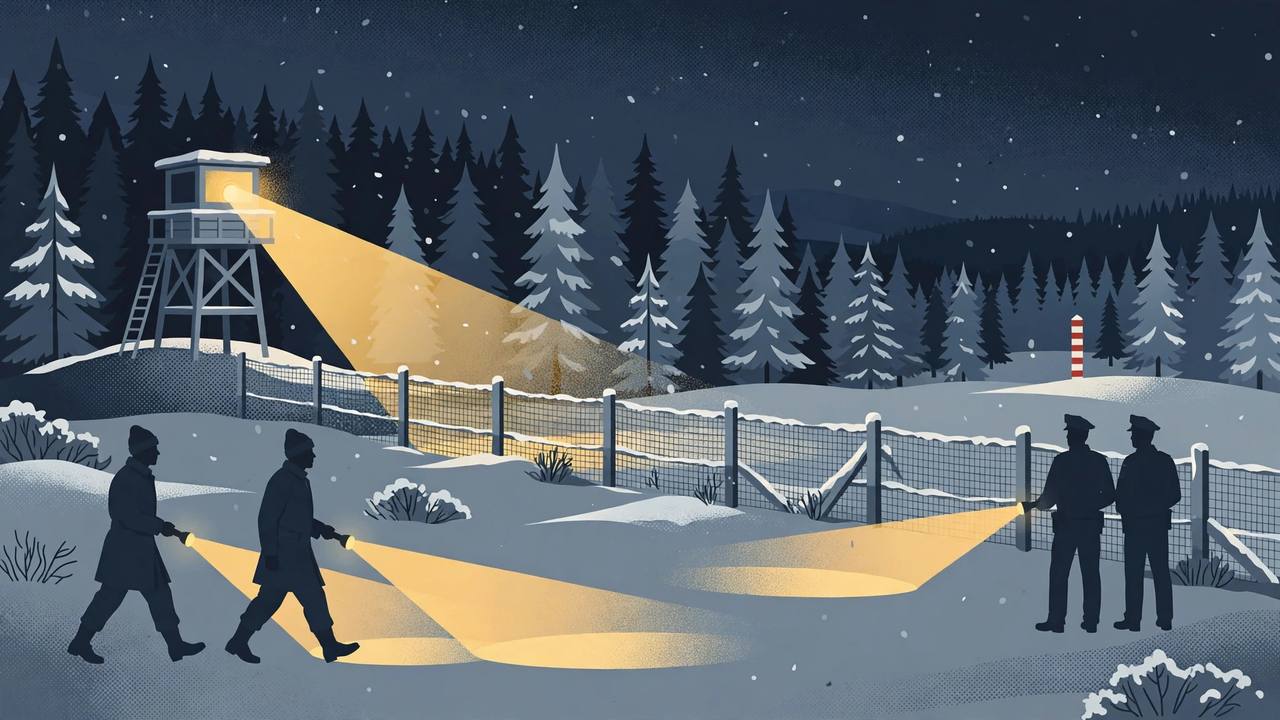
Tusk told a cabinet meeting in Warsaw on Tuesday, November 3, that he had received information from the border guards just after midnight that disturbing movement had been observed on the Polish-Russian border. Border guards spotted unidentified individuals carrying flashlights on the Russian side near Sepopol, in the Warmian-Masurian region, close to Russia's Kaliningrad exclave. Tusk said the individuals' identities and intentions could not be established with certainty.
"We have been receiving information for some time from our services and from allies' services that acts of diversion or more serious provocations on the border with Russia, or even sabotage acts orchestrated by hostile services, could occur," Tusk said, according to the reports. He added that more precise recent information indicated events could occur in the first half of November, including incursions into Polish territory by armed individuals.
Polish national police chief Marek Boron confirmed the operation, which was first reported by the broadcaster RMF FM. A special command centre has been set up inside the National Police Headquarters to coordinate the effort. Police said the operation covers the northeastern provinces of Warmia-Masuria and Podlaskie and involves police officers, counterterrorism units, Border Guard personnel, military forces — including, according to reports, troops from the elite GROM special forces unit — and intelligence services. Boron said the operation would run from Monday until at least November 8.
Tusk said the quick mobilisation may have prevented a provocation overnight. "We very quickly mobilized the necessary security forces and means on site, and we successfully prevented any attempted acts of provocation, if that was the intention. Of course, we will never be able to completely confirm that," he said. Police spokeswoman Katarzyna Nowak told the broadcaster TVN that further operational details could not be disclosed because the information was confidential. A separate order by deputy police commander Tomasz Michulka requires officers to maintain full readiness between November 2 and 8.
A Warning From NATO's Commander in Europe
Tusk said NATO's Supreme Allied Commander in Europe, General Alexus Grynkewich, had also warned of such a scenario during a visit to Warsaw in October. Poland is the largest NATO member on the alliance's eastern flank: it borders Kaliningrad to the north and Belarus, a close ally of Moscow, to the east. Just east of Kaliningrad lies the Suwalki Corridor, the only land link between the Baltic NATO states and the rest of the alliance, sandwiched between Russian and Belarusian territory.
Kaliningrad is Russia's westernmost territory, a heavily militarised exclave on the Baltic Sea bordered only by NATO members Poland and Lithuania. Polish officials said the goal of the operation is to protect the public, detect suspicious activity early and prevent attacks on critical infrastructure. By Tuesday afternoon, Polish authorities had not published evidence of a specific planned sabotage attack originating from Kaliningrad, and no Russian response was included in the reports reviewed.
The deployment is the latest sign of how the Russia-Ukraine war has pushed NATO's eastern members into a permanent state of border vigilance. For residents of Warmia-Masuria and Podlaskie, the practical change is a visibly heavier security presence — more police, counterterrorism units and Border Guard personnel, now coordinated from a dedicated headquarters.
The warning window Tusk cited covers the first half of November, and the police operation runs until at least November 8. Whether the reinforced posture is extended will depend on whether further incidents are detected along the Kaliningrad and Belarus frontiers.
What is solid
- Poland has launched a special operation in Warmia-Masuria and Podlaskie involving police, counterterrorism units, the Border Guard, the military and intelligence services (Polish police and Prime Minister Tusk, reported by AP and RMF FM).
- A special command centre has been set up at National Police Headquarters, and the operation runs until at least November 8 (police chief Marek Boron).
- Border guards observed unidentified people with flashlights on the Russian side near Sepopol shortly after midnight (Tusk).
What is only claimed
- Whether the flashlight incident was a deliberate provocation — Tusk himself said this cannot be completely confirmed.
- Whether acts of sabotage or armed incursions will actually occur in the first half of November — this is an intelligence warning reported by Polish officials, not an established fact, and no specific evidence has been published.