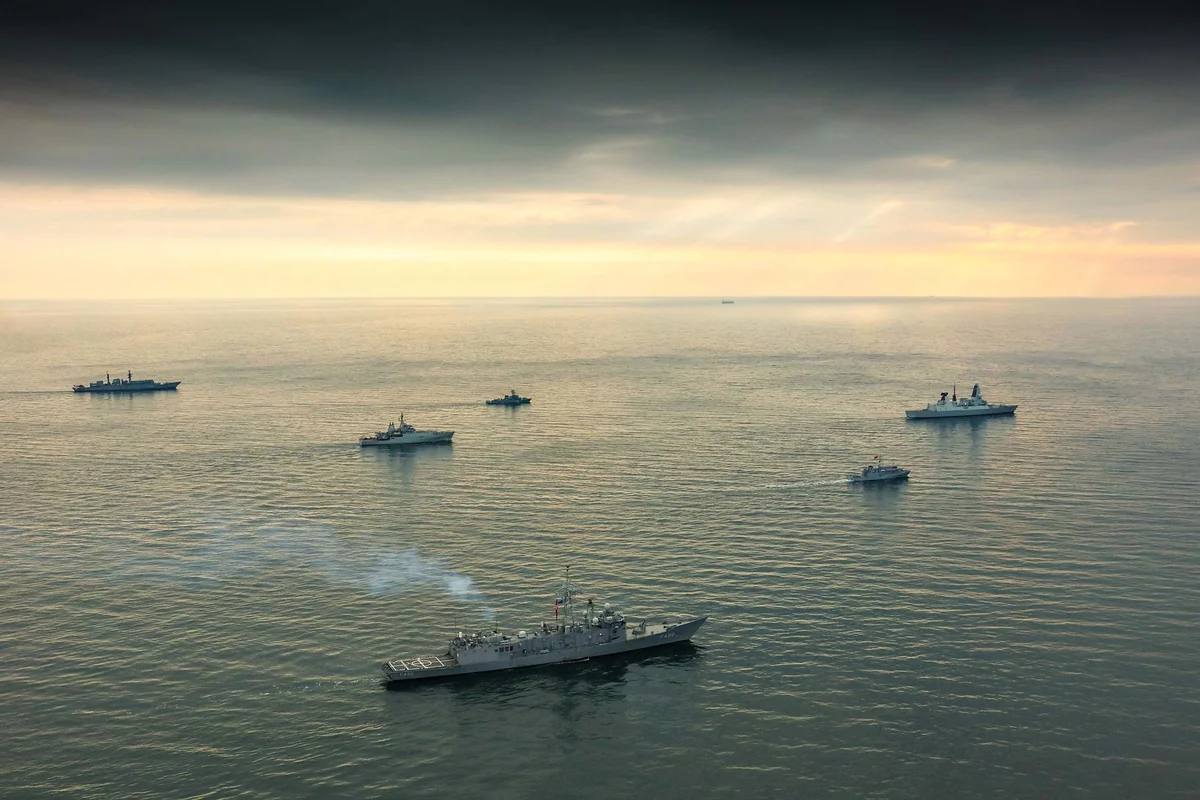
Romania wants NATO to take joint action against hybrid attacks linked to Russia, Foreign Minister Dan Neculăescu said in an interview with the German newspaper Die Welt published on Friday, warning that the Black Sea is becoming a weak spot for European security.
“We need at least a shared situational picture and must systematically look for connections. Are the same actors behind the attacks in Germany, Estonia, or Romania?” Neculăescu asked, according to the interview reported by the dpa news agency.
Source: Europesays (dpa)
Hybrid attacks can take the form of military, economic, intelligence and propaganda operations, as well as cyberattacks and disinformation campaigns, in which the state behind them hides its involvement. Until now, countering them has largely been treated as a national matter inside the European Union and NATO, the minister said.
Allied capitals remain divided on how to institutionalise a collective response. Some NATO members favour making defence against hybrid threats an operational alliance task, while others resist the approach over concerns it could risk escalation with Russia. NATO had not responded to Friday's call when the report was checked on Friday evening.
Black Sea is the weak spot
Neculăescu accused Moscow of trying to establish sole control over the Black Sea. “No one else is supposed to be there. Yet we are there: Romania, Bulgaria, Turkey, Ukraine and other countries. We have the right to defend ourselves, but also a right to peace,” he said.
“Nowhere else in Europe do we experience so many incidents that we attribute to Russia: drone attacks, sea mines, attacks on merchant ships,” the minister said.
A month of incidents at sea
The warning follows a series of drone strikes on commercial shipping near Romania's Black Sea coast and the Danube Delta in recent weeks. On 14 November, three commercial vessels were struck by drones near the Danube Delta off Sulina, prompting the Romanian Air Force to scramble fighter jets twice after defence radars detected aerial targets.
Those strikes came less than 24 hours after an unidentified drone hit the Palau-flagged cargo ship Larissa 1 inside Romania's territorial waters while it was en route to Ukraine, damaging its cargo crane. Earlier in October, drone attacks sank the Comoros-flagged cargo ship Khoryv and damaged the Turkish-owned grain carrier Royad Mammadov off Romania's coast, causing fatal crew casualties.
On the diplomatic track, Romania, Estonia and Sweden jointly called for a united European response on 16 November, and NATO allies and partners met in Bucharest in October to strengthen their response to Russia's hybrid activities. On 26 November, Neculăescu met his German counterpart Johann Wadephul in Berlin to discuss security on NATO's eastern flank and the Black Sea. Romania, Bulgaria and Turkey already cooperate within the MCM Black Sea naval group, and Bucharest wants to extend military cooperation with both countries.
If NATO takes up the proposal, defending against hybrid attacks would become a shared alliance task instead of each country's own problem. The stakes reach beyond Europe: grain shipped through the Black Sea reaches North Africa and Gulf states, and Bucharest also worries about the safety of Neptun Deep, the European Union's largest natural gas production project.