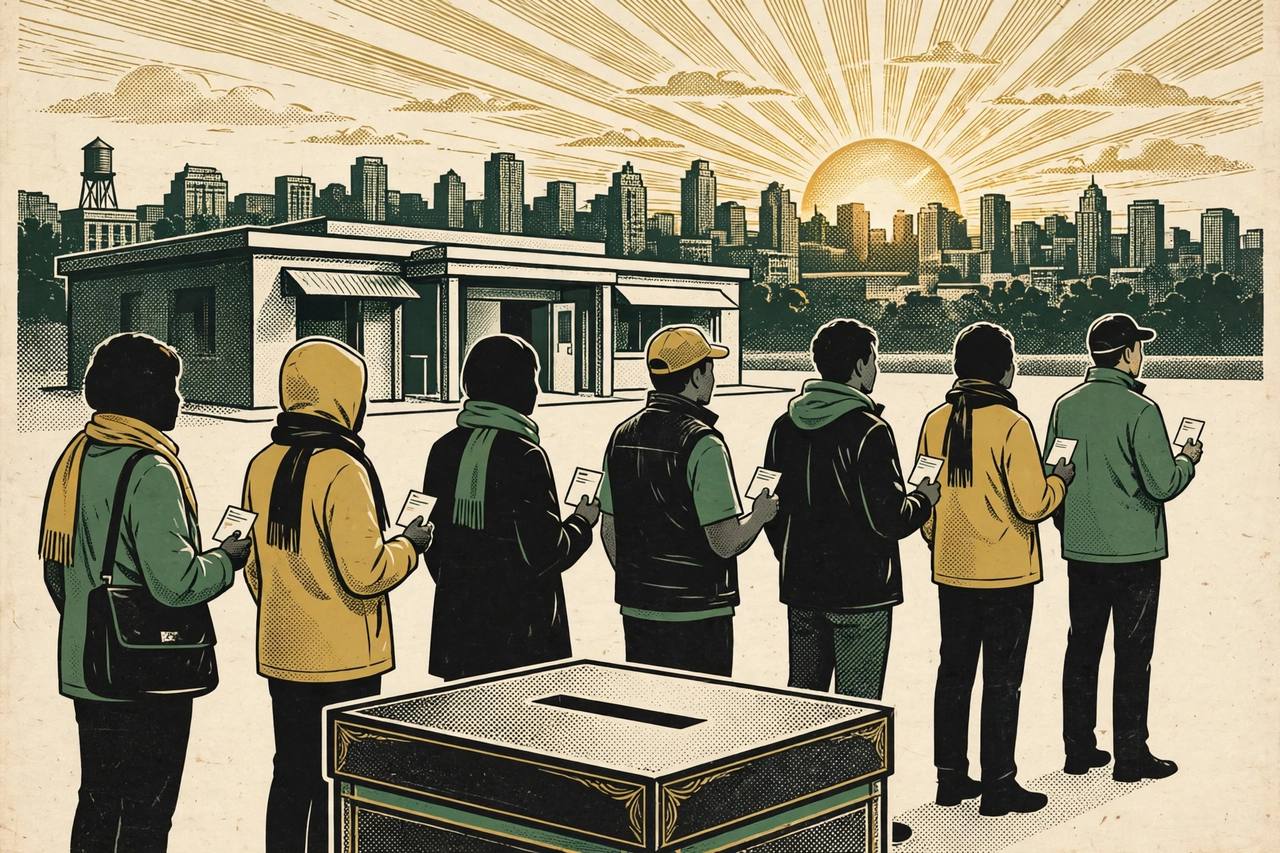
JOHANNESBURG — Millions of South Africans voted on Wednesday, November 4, in municipal elections that are a direct test of the African National Congress (ANC), the party that has governed the country nationally since the end of apartheid in 1994 but has been losing support for a decade. Polling stations opened at 7 a.m. and were scheduled to close at 9 p.m. local time, with Wednesday declared a public holiday to encourage turnout.
Source: Radar Africa, Nov 4, 2026 (Al Jazeera, drawing on Reuters and AP reporting)
Voters are choosing councillors for eight metropolitan municipalities, 44 district councils and 205 local councils, and those councils will then select mayors. The Electoral Commission of South Africa (IEC) said a record 29.2 million people had registered to vote at 23,696 voting stations, and more than 1.4 million special votes had already been cast on Monday and Tuesday, out of a record 2.6 million special-vote applications approved.
Source: BusinessDay (Nigeria), Nov 4, 2026 / IEC figures
The campaign was dominated by anger over failing basic services: unreliable water and electricity, unemployment, crime, corruption and a shortage of affordable housing. Queues formed from sunrise at places including the Lawley informal settlement south of Johannesburg and Khayelitsha in Cape Town. An auditor-general report awarded clean audits to only 39 of South Africa's 257 municipalities for the 2024/25 financial year, a measure of how deep the local-government crisis runs.
Source: The Guardian, Nov 4, 2026 (Rachel Savage)
An ANC in long decline faces another drop
The ANC fell below 50 per cent in municipal elections for the first time in 2021, winning 45.6 per cent, and in 2024 it lost its parliamentary majority for the first time since 1994, taking 40.2 per cent in the national vote; it now leads a government of national unity with the Democratic Alliance (DA) and other parties. Pre-election polls suggested its municipal support could fall below 40 per cent this time, and an Ipsos survey put the ANC at around 30 per cent among registered voters, with the DA close behind at about 28 per cent. Turnout will matter: it was about 46 per cent in the 2021 municipal elections, the lowest of the democratic era, against about 59 per cent in 2024.
President Cyril Ramaphosa rejected talk of irreversible decline at the ANC's final campaign rally. 'What I'm seeing here is that the ANC is going higher and higher and on the 4th [of November] we will show those naysayers,' he told supporters. Analysts say vote fragmentation means the ANC could still end up leading many city coalition governments even while losing control of others — unstable coalitions are already a feature of many municipalities, with a high turnover of mayors blamed for poor service delivery.
Johannesburg and Durban are the big prizes
Johannesburg, the country's commercial centre, has had five mayors in four years and is run by a fragile ANC-led coalition. The DA, which polls suggest is leading in all three big metros but nowhere above 40 per cent, has nominated its former national leader Helen Zille, 75, as its Johannesburg mayoral candidate; one opinion poll put her support at 36 per cent, which would leave her needing coalition partners, possibly including the ANC. The ANC itself has three possible mayoral candidates for the city amid factional infighting, The Guardian reported.
In eThekwini, the metro that contains the port city of Durban, the uMkhonto weSizwe (MK) party of former president Jacob Zuma, 84, is contesting its first local election and was polling above 40 per cent, while the ANC — which won 42 per cent there in 2021 — was polling around 10 per cent. MK became the third-largest party in Parliament in 2024.
What happens next: voting closed at 9 p.m. on Wednesday, and final results are expected on Sunday, November 8. Councils will then have two weeks from the announcement of results to form and elect mayors, so the coalition bargaining — between the ANC, the DA, MK and dozens of smaller parties among the more than 500 contesting — will decide who actually runs South Africa's cities for the next five years.