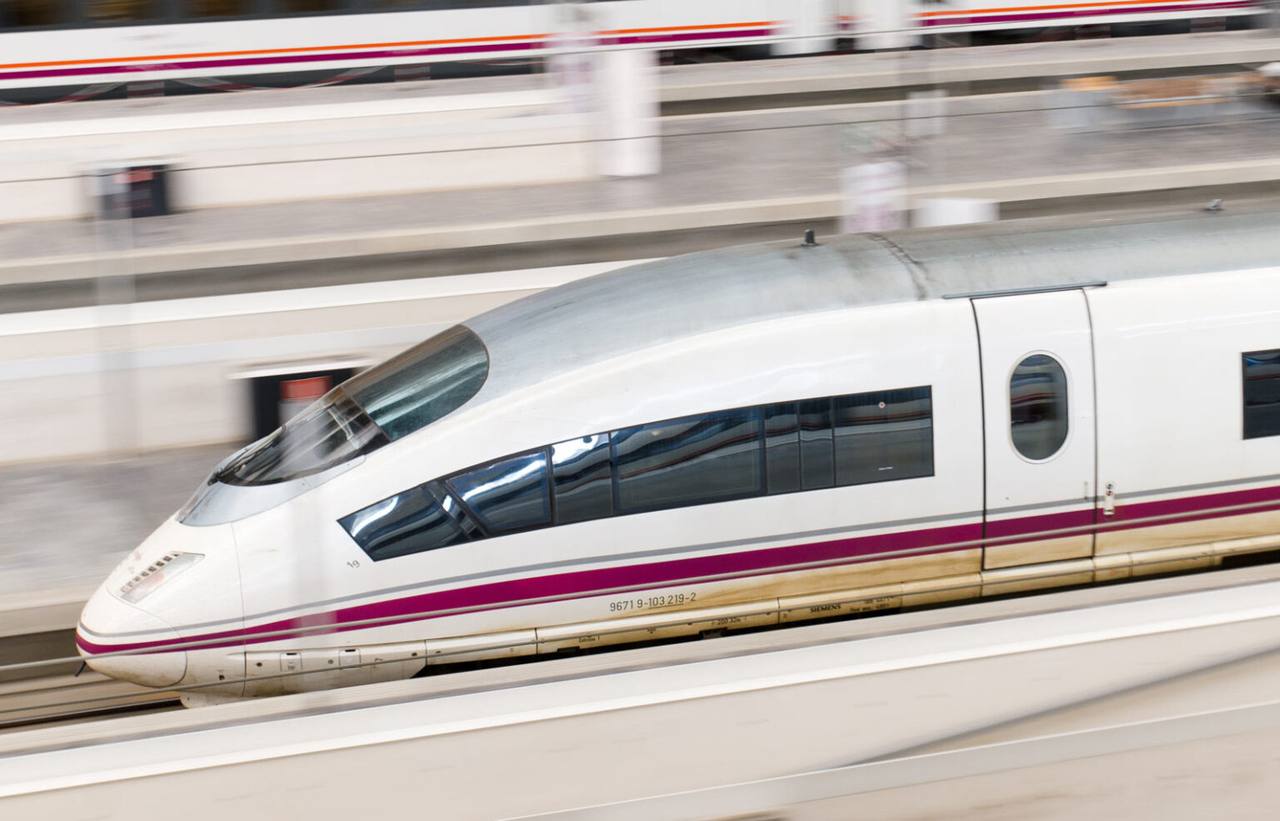
The European Public Prosecutor's Office (EPPO) announced on Friday, 6 November, that it has opened a second investigation into possible fraud involving European Union funds for Spain's Madrid-Seville high-speed railway line, and that its Madrid office was carrying out investigative measures the same day at the railway infrastructure administrator ADIF, the State Railway Safety Agency (AESF) and Spain's Court of Auditors.
Source: European Public Prosecutor's Office (EPPO), official statement, Nov 6, 2026
The EPPO said the investigation, which it opened on its own initiative (ex officio) with support from the Guardia Civil's Central Operational Unit (UCO), concerns possible fraud affecting EU funds allocated to the renovation and upgrading of safety, signalling and communications systems on the Madrid-Seville line. It described its public confirmation as exceptional, made because of high public interest, and said no further details would be made public at this stage.
Source: EPPO, Nov 6, 2026
The crash that put the line under a microscope
The line is the one on which, on 28 October, a Renfe train ploughed into the back of a stationary Iryo train near the village of Urda, about 130 kilometres south of Madrid, killing 69 people - one of the worst railway disasters in Europe this century. According to reporting of the crash investigation, the security system on a 63-kilometre stretch had stopped working because of a computer malfunction, halting all trains on that stretch; central command then told the Renfe train to start running again without speed restrictions, and it struck the stationary train at 8:53 a.m. Transport Minister Oscar Puente said the train should never have been told to move while a stop signal was still active, and that if it had been moved it should at least have been at reduced speed.
Source: AFP via RTE News, Nov 6, 2026
Awaaz Punjab earlier reported the official ADIF report on the Urda crash, which identified four system failures on the line. Read: the ADIF report on the Urda crash
This is the second time EU prosecutors have moved on the same corridor. A first EPPO investigation into the line was opened in March 2026, after a separate crash in January in the southern province of Andalusia, near Adamuz in Cordoba, killed 46 people. Brussels reporting on the case notes that in 2024 the EU allocated 111 million euros from its Regional Development Fund to renovate the railway - yaani about 11.1 crore euros (roughly $128 million) of European money whose use is now under scrutiny in the new probe's area of safety, signalling and communications upgrades.
Source: EPPO, Nov 6, 2026; Brussels Reporter, Nov 6, 2026
What is solid
- The EPPO has confirmed a second, ex officio investigation, opened on its own initiative, with investigative measures on Friday at ADIF, the State Railway Safety Agency and the Court of Auditors, supported by the Guardia Civil's UCO
- The funds in question were allocated to renovating and upgrading safety, signalling and communications systems on the Madrid-Seville line
- A first EPPO investigation into the same line was opened in March 2026
What is only claimed
- Fraud is suspected, not proven: the EPPO has announced no findings, charges or named suspects, and released no further details
- No authority has said that any misuse of funds caused the 28 October crash - the fraud inquiry is a financial investigation that runs on a separate track from the technical investigation into why the crash happened
The EPPO is the EU's independent prosecution office for crimes against the bloc's financial interests: it investigates, prosecutes and brings cases to judgment. Its investigators will now work through the funding and contracting records behind the line's safety upgrades. Politically, the crash and its fallout already overshadow Spain's general election due this month, and a fraud case touching the very systems that failed on 28 October keeps the pressure on the government and on ADIF.