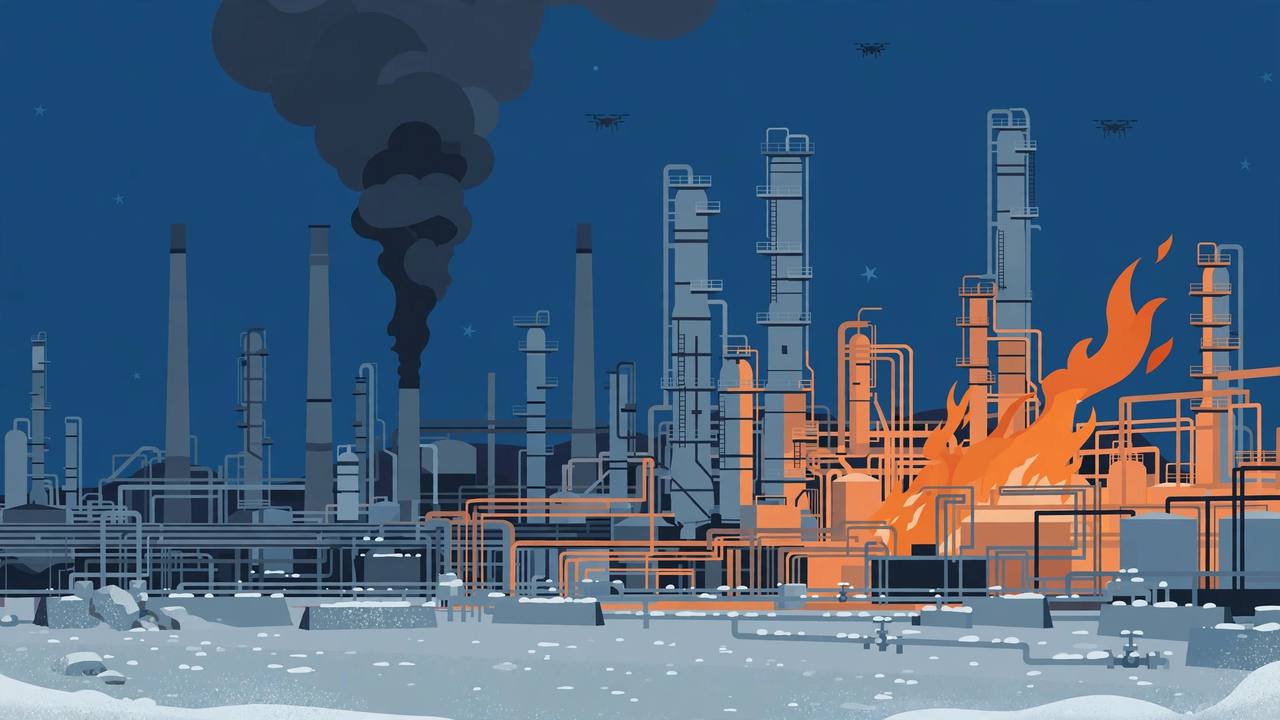
Ukrainian drones struck one of Russia's largest petrochemical complexes, Gazprom Neftekhim Salavat in the republic of Bashkortostan, overnight on Monday-Tuesday (November 16-17), triggering a major fire in the industrial city of Salavat, as Russia's Defence Ministry claimed its air defences had intercepted a record 1,441 Ukrainian drones in a single night.
Source: Kyiv Post
The overnight attacks targeted Salavat and Ufa, the capital of Bashkortostan, according to the republic's emergency situations committee, which said air defences, industrial security teams and mobile fire groups shot down more than 50 drones. Videos filmed by residents and reviewed by the independent Russian outlet Astra indicate the strike hit the Gazprom Neftekhim Salavat complex; residents reported explosions, and the blaze's glow was visible from Sterlitamak, about 17 kilometres (10.6 miles) away.
Russian authorities have not officially confirmed the attack on the Salavat complex or reported any damage there. Awaaz Punjab is treating the drone totals and the scale of the fire as claims by the sides involved, not independently verified figures.
A record night in the drone war
Russia's Defence Ministry said it intercepted 1,441 Ukrainian fixed-wing drones overnight across 21 Russian regions, occupied Crimea and the waters of the Black Sea and the Sea of Azov. If confirmed, that would be the largest Ukrainian drone attack of the war, surpassing the previous record of 1,336 drones the ministry reported just a day earlier, on November 16.
Source: Reuters
Moscow Mayor Sergei Sobyanin said around 800 drones flew toward the Moscow region between the evening of November 16 and the morning of November 17, with 321 brought down on the approaches to the capital. Separately, Ukrainian forces struck the Sadovaya electrical substation in Russia's Kursk region overnight, according to Astra; the substation supplies electricity to around 400,000 residents and major industrial facilities in the city of Kursk.
Why Salavat matters
Founded in 1948, Gazprom Neftekhim Salavat runs oil-refining and gas-chemical plants producing gasoline, diesel, jet fuel, fuel oil, polyethylene, polystyrene, ammonia, urea and butyl alcohols. The complex supplies fuel to the Russian military, and some of its petrochemical output feeds Russia's defence industry — which is why it sits on Ukraine's target list. Ukraine previously struck the complex on October 8, starting a fire near its oil refinery.
The Salavat strike is part of a Ukrainian campaign against Russian refining that has intensified since late October. President Volodymyr Zelenskiy said late on Sunday that the campaign has knocked out over half of Russia's refining capacity — a figure Reuters could not independently verify. Two industry sources told Reuters last week that the renewed attacks had reduced refining capacity by about 30 per cent, and Russian officials have said fuel shortages have returned to at least half a dozen regions.
Source: Reuters
The same overnight wave also hit the Crimea bridge for a second straight day — an operation Zelenskiy has since claimed as a seven-stage SBU plan. Read: Zelenskiy claims the Crimea bridge strike
What is solid
- Ukrainian drones attacked targets in Bashkortostan overnight, and a major fire burned at the Salavat petrochemical complex, seen in resident videos reviewed by the independent outlet Astra
- The overnight wave was, by Russia's own count, the largest of the war — the second record in two nights
What is only claimed
- The exact drone totals (1,441 intercepted; 800 toward Moscow) are Russian Defence Ministry and Moscow mayor claims, not independently confirmed
- The extent of damage at Salavat is unconfirmed — Russian authorities have not officially reported the strike
- How much refining capacity Ukraine has disabled: Zelenskiy claims over half; industry sources cited by Reuters put it near 30 per cent