GENEVA — Exposure to hormone-disrupting chemicals can begin before a baby is even born, and the harm they can cause is broader than previously understood, the United Nations Environment Programme (UNEP) and the World Health Organization (WHO) said on Tuesday in a major new scientific report released in Geneva.
Source: UNEP
These substances, known as endocrine-disrupting chemicals or EDCs, interfere with the body's hormones. They have been detected in blood, breast milk and umbilical cord blood, and early exposure — sometimes before birth — can have lasting effects on brain development, growth and reproductive health, the report said.
First major update since 2012
The report, titled State of the Science on Endocrine Disrupting Chemicals 2026, is the first major global update since the UNEP-WHO assessment of 2012. It finds that more than a decade of research has strengthened the evidence linking EDC exposure to effects on fertility and reproductive development, brain development and neurological function, thyroid and other hormone regulation, metabolism, immunity and cardiovascular health. Newer areas of concern include metabolic liver disease and possible effects on the kidneys, although the agencies said important scientific gaps remain.
"What makes EDCs particularly concerning is that they can disrupt hormones that regulate many essential functions in both humans and wildlife, from development and reproduction to metabolism and behaviour. These effects can be long-lasting, and in some cases, irreversible," said Sheila Aggarwal-Khan, Director of UNEP's Industry and Economy Division. She added that many exposures happen through everyday products, and that companies which test early and disclose what is in their products will be ahead of regulation.
Source: UNEP
"Protecting health means preventing harmful exposures before they occur," said Bruce Gordon, Director a.i. of the WHO's Department of Environment, Climate Change, One Health and Migration. "We need coordinated action across sectors to reduce exposure and protect human health throughout life," he said, calling for risks to be identified early, particularly for pregnant women, children and future generations.
The effects extend well beyond people. Across fish, birds, amphibians and mammals, EDC exposure has been linked to impaired reproduction, development and behaviour. The assessment also warns that people and wildlife are usually exposed to mixtures of chemicals rather than one substance at a time, while many regulatory systems still assess chemicals one by one. Of the more than 350,000 chemicals and mixtures registered globally, only a small fraction has been evaluated for endocrine-disrupting properties, the agencies said.
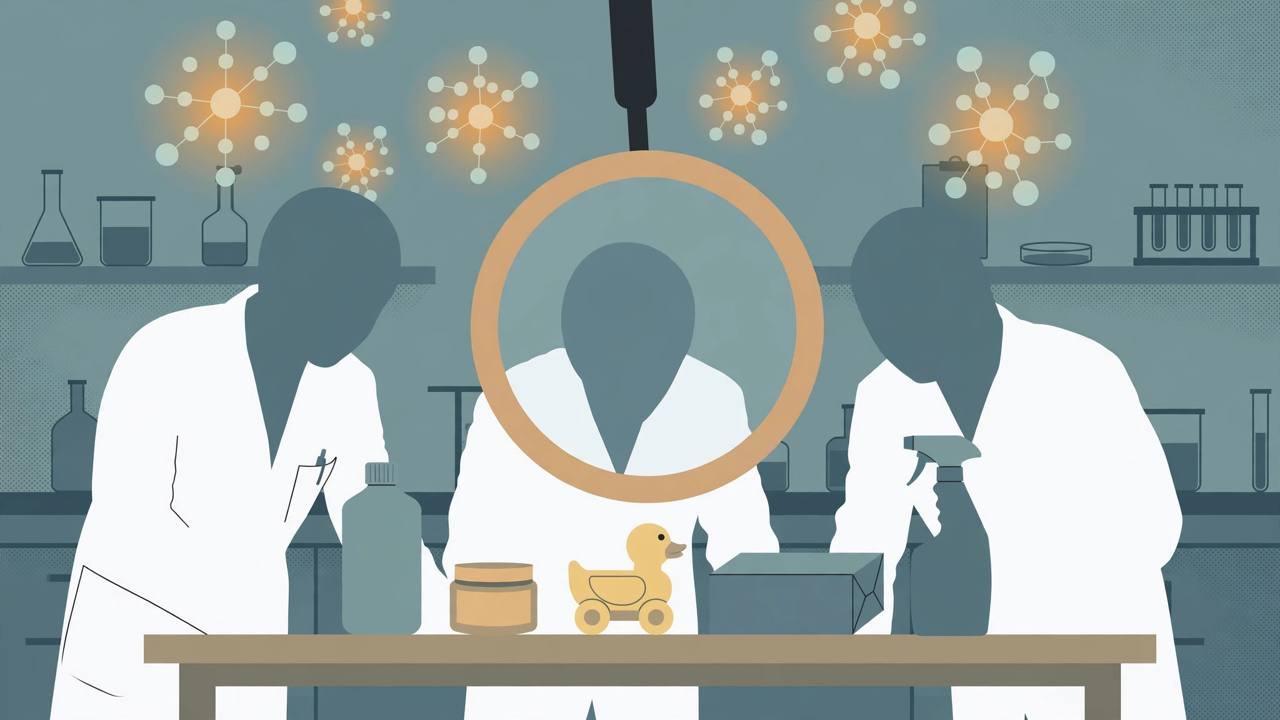
Well-known examples include bisphenol A (BPA), phthalates and polychlorinated biphenyls (PCBs). Chemicals with endocrine-disrupting properties are used in plastics — including packaging, toys and medical devices — as well as pesticides, personal care products, electronics, textiles and pharmaceuticals. Alongside the main report, UNEP published a companion synthesis, From Evidence to Action, setting out practical steps for policymakers across food packaging, cosmetics, toys, textiles, healthcare, agriculture, pharmaceuticals, waste and other sectors. Health Policy Watch, reporting from Geneva, said the assessment puts the global health-related costs of daily exposure at more than US$1.1 trillion every year, and quoted report co-author Laura Vandenberg telling delegates that scientists already have enough evidence to justify restrictions and that current testing regimes are failing to protect the public.
Source: Health Policy Watch
Both reports were launched at the first International Conference of the Global Framework on Chemicals in Geneva, where governments, industry and civil society are meeting from 16 to 20 November. The framework, adopted in Bonn in 2023, aims to phase out the most dangerous industrial substances and push countries to strengthen chemical safety laws. The UNEP-WHO report proposes ways for governments to phase out the most problematic chemicals and promote safer alternatives, and says action can be taken even while some scientific uncertainties remain.