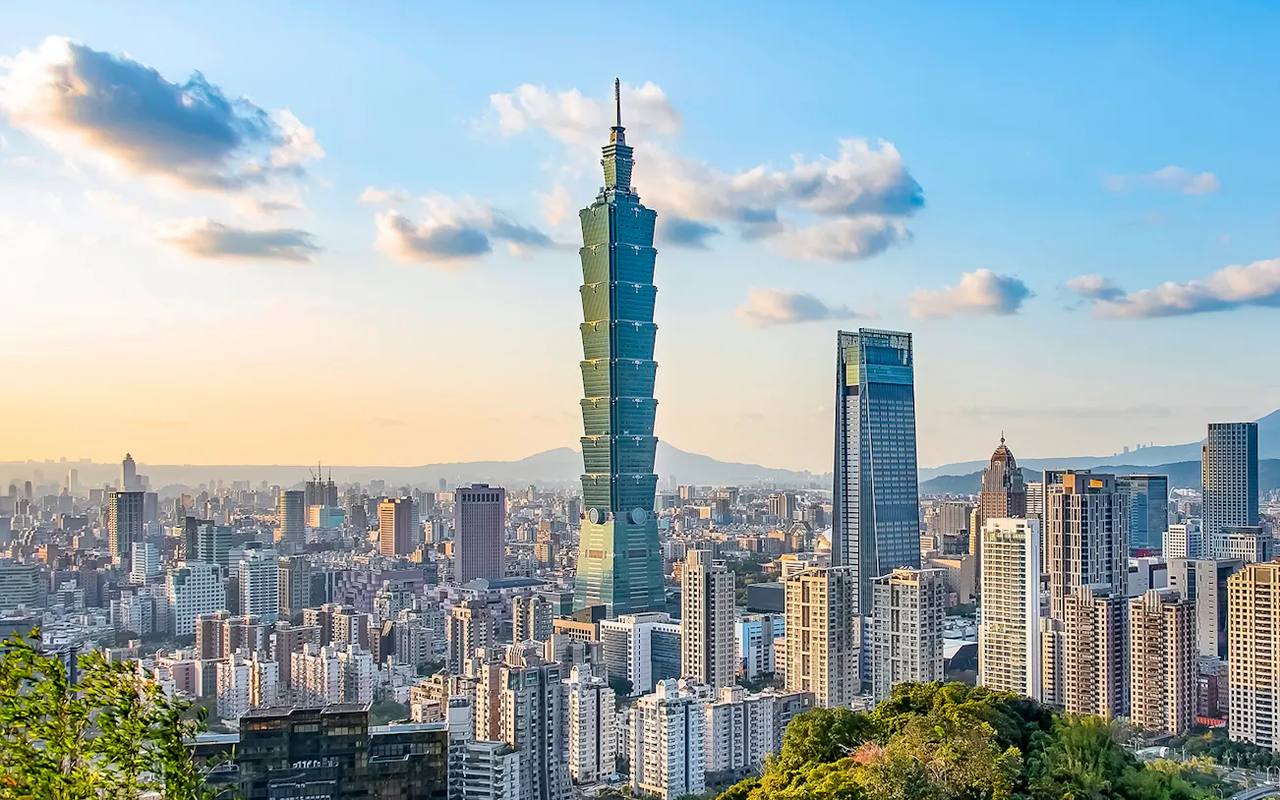
The United States has proposed tariffs of up to 15% on goods from Taiwan, as part of a sweeping Section 301 action against 14 economies accused of building up structural excess manufacturing capacity. The proposal, announced by the Office of the US Trade Representative (USTR) on 25 November, puts Taiwan in the lowest tariff tier — and, crucially for the island's chip-driven economy, leaves semiconductors, computers and servers outside the net.
Source: USTR via EffectStory
For Taiwan, the proposed 15% is calculated net of ordinary most-favoured-nation duties and existing Section 301 tariffs — it is not stacked on top of them. A second, fallback rate of up to 25% would apply only if the trade representative finds that ongoing consultations and commitments are unsatisfactory.
What Washington decided
USTR Jamieson Greer announced affirmative determinations under Section 301(b) of the Trade Act of 1974, concluding that the industrial policies, state subsidies and non-market practices of 14 foreign economies — China, the European Union, Japan, South Korea, Taiwan, Switzerland, Singapore, Indonesia, Malaysia, Thailand, Cambodia, Bangladesh, India and Vietnam — create persistent structural excess manufacturing capacity that burdens US commerce.
The determinations conclude formal investigations opened on 11 March 2026, which included public hearings held on 5–8 May 2026 with testimony from 140 witnesses. For Taiwan, USTR listed nine unreasonable practices, starting with recurring industrial plans to support manufacturing — especially high-technology manufacturing — state-directed research and development, industrial clustering, financing mechanisms, financial repression, past purchases of US-sanctioned Russian feedstock, and inadequate protection of labour rights. USTR said the harm to US producers was most evident in electronics, semiconductors and telecommunications.
What is exempt — and why it matters
Taiwan's notice lists all 20 tariff subheadings for automatic data processing machines — the customs heading that includes servers — among products not covered by the proposed action, alongside server parts, network switches and chips. Products already covered by Section 232 national-security measures, including semiconductors and semiconductor equipment, are also carved out.
Source: techi.com
The carve-outs matter because semiconductors and advanced electronics account for more than 70% of Taiwan's shipments to the American market. Taiwan Semiconductor Manufacturing Co. (TSMC), the anchor of the bilateral economic relationship, has committed $250 billion — yaani 25,000 crore dollars — to build and expand advanced fabrication facilities in Arizona.
Taipei's response
Taiwan's Deputy Premier Cheng Li-chiun said on 26 November that Taipei will defend the agreed 15% tariff ceiling. Taiwan's Executive Yuan said the rate is not stacked and sits in the lowest tier, and that the mechanism also absorbs a 10% forced-labour tariff Washington imposed on Taiwanese goods in July.
Source: East Asia Brief
Markets cheer the carve-outs
With US markets closed for Thanksgiving on Thursday, Taiwan's Taiex index rose 2.8% to 39,262.39. Eight server and network makers rose 7.2% on average and four parts suppliers 7.7%, with five of the twelve closing at Taiwan's 10% daily limit, according to Taiwan Stock Exchange data. TSMC, whose chips were already outside the proposal, slipped 0.2% to NT$2,145.
The same 15% figure applies to Japan, South Korea, the European Union and Switzerland. The proposal goes up to 18% for Thailand and Malaysia, 20% for China, 25% for India and 35% for Vietnam. Bloomberg reported the rates for the EU, Japan, Taiwan and South Korea could rise to 20%, and Greer told CNBC some rates may be raised by a few percentage points.
What happens next
Nothing takes effect yet. Written comments and requests to testify are due by 5 January 2027, and public hearings begin on 25 January 2027 at the US International Trade Commission in Washington. The notice does not state whether Section 232 semiconductor exemptions will automatically transfer to the finalised Section 301 schedule, and USTR has not yet published the full list of tariff-line exclusions.
The US administration had signalled the Section 301 findings were coming in a preview story earlier in the week. Read the earlier preview