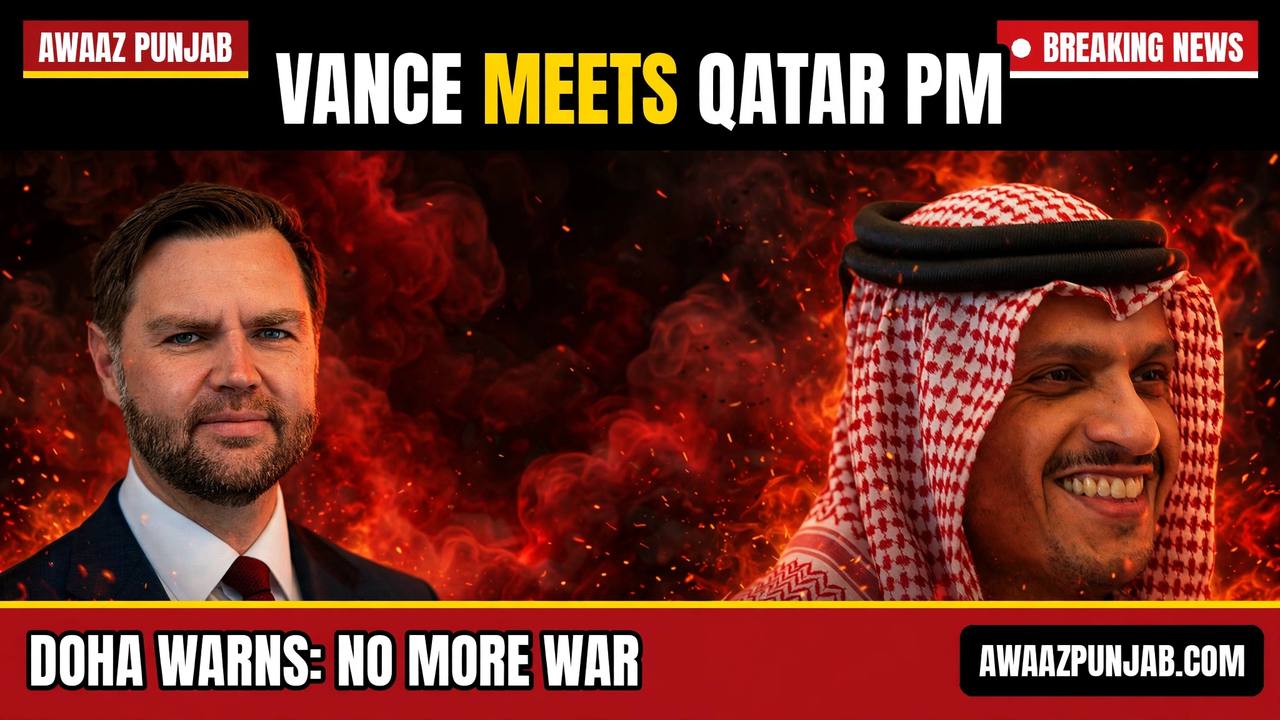
US Vice President JD Vance and Secretary of State Marco Rubio held separate meetings in Washington on Monday with Qatar's Prime Minister and Foreign Minister, Sheikh Mohammed bin Abdulrahman Al Thani, as Doha presses to revive stalled negotiations to end the US-Iran war — and warns the Middle East cannot afford another round of escalation.
Source: Associated Press
Vance met the Qatari prime minister at the White House, according to a person familiar with the meeting, while Rubio received him at the State Department's Treaty Room for the eighth round of the US-Qatar Strategic Dialogue, a biannual forum covering regional security, Iran and the wider US-Qatar partnership.
Source: Associated Press
After the meeting, the State Department said Rubio had expressed appreciation for Qatar's global mediation efforts and stressed the importance of continued close coordination to deter threats and promote stability and security across the Middle East.
Source: US State Department via Associated Press
Speaking to Al Jazeera on Monday, Sheikh Mohammed said Doha was working with both Washington and Tehran to restart negotiations, and warned that the region could not withstand another escalation between the two sides. He said there was no sign yet of an understanding between them.
Source: Al Jazeera
Trump: strikes could resume in the new year
The Washington talks come a day after President Donald Trump told Fox News on Sunday that he was inclined to order renewed major strikes against Iran after the New Year if no agreement is reached, dismissing Tehran's negotiators as 'professional tap dancers' and warning that any Iranian vessel trying to break the US naval blockade would be sunk.
Source: Fox News
Trump also told Vance that the administration did not need a deal with Iran and instructed him to focus on fraud and crime in Democratic-led cities after the Republican Party's wipeout in this month's midterm elections, the Associated Press reported, citing a person familiar with the discussion.
Source: Associated Press
Qatari mediators met Iranian officials in recent days to discuss the latest diplomatic proposals, and Tehran's stated demands remain the full removal of the US naval blockade, an easing of sanctions and the unfreezing of more than $12 billion of Iranian assets — yaani lagbhag ₹1 lakh crore ton vadh.
Source: WMAL
Why this meeting matters
The war began on February 28, 2026, and no ceasefire has held since one collapsed in early July. The US naval blockade of Iranian ports began on April 13, was lifted in June and was reimposed on July 14; by November 21 it had run for 130 consecutive days, according to US Central Command. A framework agreement to end hostilities stalled late in the summer, and fighting has continued intermittently since then.
Qatar has been the key mediator throughout, shuttling proposals between Washington and Tehran, and its prime minister has met both sides repeatedly in recent weeks. Monday's meetings in Washington were the latest step in that effort — but no breakthrough was announced.
For the lakhs of Punjabi and Indian workers living in Qatar and across the Gulf, the stakes are direct: any new escalation would put their safety, their jobs, flights home and the remittances their families depend on at risk. That is why Doha's warning — that the region cannot afford another round — matters far beyond the negotiating rooms in Washington.
What is solid
- Vance and Rubio met Qatar's prime minister separately in Washington on Monday, November 23.
- The meeting was the eighth US-Qatar Strategic Dialogue.
- Qatar's prime minister warned the region cannot afford another US-Iran escalation.
- No breakthrough or agreement was announced.
What is only claimed
- Whether President Trump will order new strikes against Iran in the new year.
- Whether Iran will accept US terms on its nuclear programme and the blockade.
- Whether Qatar's mediation can restart negotiations that have stalled for months.
Days before the Washington meetings, a Qatari delegation held talks in Tehran as part of the same mediation effort. Read the earlier story
What happens next is now the open question. Doha says it will keep engaging both sides, Washington has set a New Year horizon for a decision on strikes, and neither side has yet signalled the concessions the other demands. Until one of them moves, the mediation — and the risk of a wider Gulf confrontation — continues.