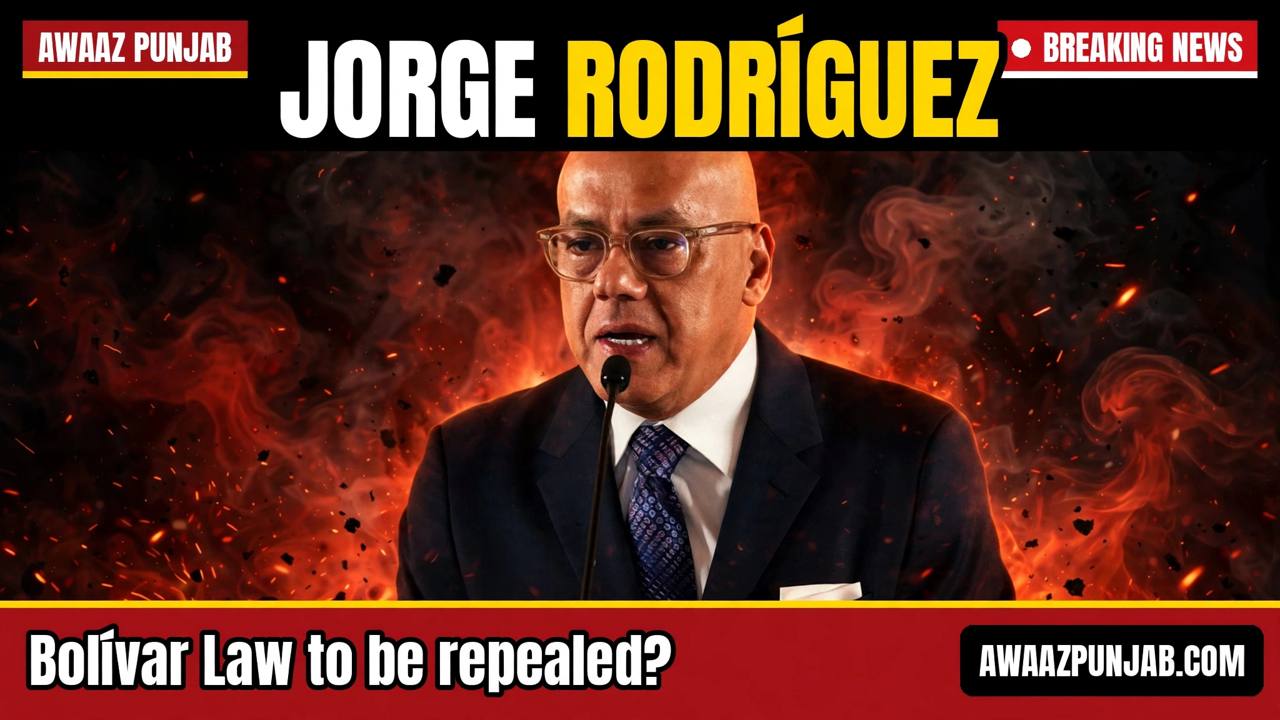
CARACAS — Venezuela's National Assembly will repeal the Simón Bolívar Law, the 2024 law that barred opposition figures from public office for life and jailed people who backed foreign sanctions for up to 30 years, parliamentary chief Jorge Rodríguez announced on Thursday.
Rodríguez, the president of the National Assembly and the older brother of interim president Delcy Rodríguez, said parliament would take up the repeal on Tuesday, December 1, and that he expected the reforms to be approved next week.
The repeal goes further than the statement that closed the fourth round of government-opposition talks on Monday — that statement had not mentioned any repeal. Read the earlier story
What the law did
The Organic Law Libertador Simón Bolívar was passed in November 2024, months after the disputed presidential election in which then-incumbent Nicolás Maduro was declared the winner amid widespread allegations of fraud. Under the law, anyone who promoted or supported foreign sanctions against Venezuela faced prison terms of 25 to 30 years, political disqualification of up to 60 years, trials in absentia, confiscation of assets and fines. Media outlets also faced fines and the loss of broadcast concessions for messages the authorities read as backing sanctions.
The law was widely criticised as a tool of political persecution. Rodríguez said on Thursday that no politician had actually been subjected to its provisions, and that the law had fulfilled its purpose in due time.
What stays in place
The repeal will not extend to the separate Law Against Hate, Rodríguez made clear, saying "we still have hate installed there". That statute has long been used to jail journalists and critics of the government.
Why now
The decision came out of the dialogue table where the interim government negotiates with an opposition delegation led by Dinorah Figuera, president of the National Assembly elected in 2015, and followed recommendations of the Peace and Coexistence Program created by acting president Delcy Rodríguez. "We believe it is very healthy, and a contribution to the dialogue process, for this law to be repealed," Rodríguez told reporters.
The announcement comes eleven months after the United States military operation of January 3 that ended with the capture of Maduro and opened a transition aimed at rebuilding institutions and preparing elections for 2027. The Bolívar law had been approved after more than 2,000 political prisoners were jailed in the crackdown that followed the 2024 election, while opposition leader María Corina Machado went into hiding.
Exiled former presidential candidate Edmundo González Urrutia, who has lived in Madrid for two years, said he would return to Venezuela on December 5. Rodríguez said on Thursday that González could return whenever he wished.
What happens next
Parliament will present the repeal process on Tuesday, with approval expected next week. The interim government has promised free elections, but no election date has been named yet.