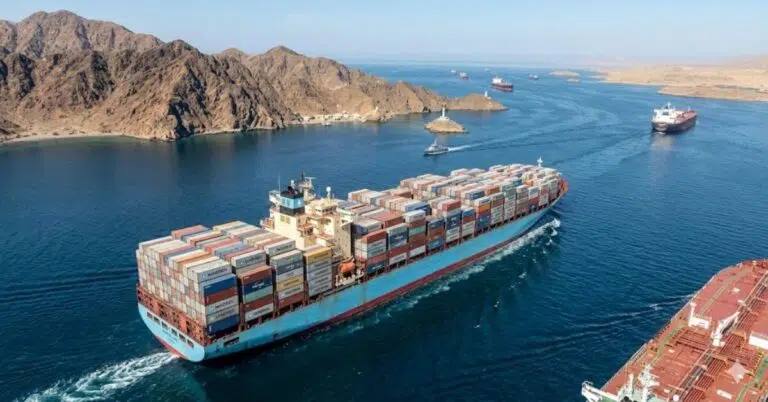
Global seaborne trade will record zero growth in 2026, the United Nations' trade and development agency has warned, as disruptions at four of the world's most important shipping chokepoints force vessels onto longer, costlier voyages.
Source: UNCTAD
UNCTAD's Review of Maritime Transport 2026, released on November 26, projects no growth in seaborne trade volumes this year, after growth of 1.9 percent in 2025 and 3.9 percent in 2024. The world shipped 12.3 billion tonnes of goods by sea in 2025 — yaani 1,230 crore tonnes.
Ships are still sailing more, not less. Demand measured in ton-miles — cargo volume multiplied by distance — is expected to rise 1.5 percent in 2026, because vessels are being forced around disrupted routes instead of through them.
Four chokepoints under pressure at once
The report names four routes under simultaneous pressure: the Strait of Hormuz, the Red Sea and the Suez Canal, the Black Sea and the Panama Canal. Disruptions there are lengthening voyages, raising fuel costs, driving port congestion and adding to uncertainty, UNCTAD said.
The Strait of Hormuz, the narrow passage carrying a large share of the world's oil, has been hit hardest in recent months. War-risk premiums for a $100 million tanker jumped within days of disruption there from about $200,000 — yaani 2 lakh dollar — to $1 million — yaani 10 lakh dollar — per voyage, according to the report.
Container shipping has held up better than bulk cargo: containerised trade is expected to grow 3.3 percent in 2026. But container spot freight rates more than doubled between January and August 2026 as disruptions squeezed available capacity, UNCTAD found.
What it means for prices
Higher shipping costs feed into the price of everyday goods. UNCTAD modelled a scenario in which marine fuel prices stay 70 to 80 percent above their January–February 2026 levels: that alone could raise global consumer prices by about 0.19 percent, with the impact reaching 0.27 percent in small island developing states and 0.35 percent in least developed countries.
For India — one of the world's biggest seafaring nations, with lakhs of Indian seafarers working on merchant ships and a huge share of its trade moving by sea — longer voyages mean costlier imports and delays for exporters, while Gulf-based Indian and Punjabi workers watch fuel and food prices in the region.
UNCTAD projects a recovery of 3.2 percent in 2027, but warns that the outlook depends on geopolitical conditions and the restoration of reliable shipping routes. US President Donald Trump's latest tariffs, targeting 14 trading partners, were announced after UNCTAD's estimates were made — and analysts say they could wipe out the projected 2027 recovery, according to shipping publication Seatrade Maritime.
What is solid
- UNCTAD projects zero growth in seaborne trade volumes in 2026, after 1.9% growth in 2025 and 3.9% in 2024
- 12.3 billion tonnes of goods were shipped by sea in 2025
- Ton-miles demand is projected to rise 1.5% in 2026 as voyages lengthen
- Container spot freight rates more than doubled between January and August 2026
What is only claimed
- Whether the projected 3.2% recovery in 2027 will hold — Seatrade Maritime says Trump's new tariffs on 14 economies could negate it, and UNCTAD's own estimates were made before the tariffs were announced
To help vulnerable countries cope, UNCTAD's report urges shared stocks of food staples and fuel, along with pre-agreed alternative trade routes and customs procedures to keep essential goods moving when a chokepoint is disrupted.