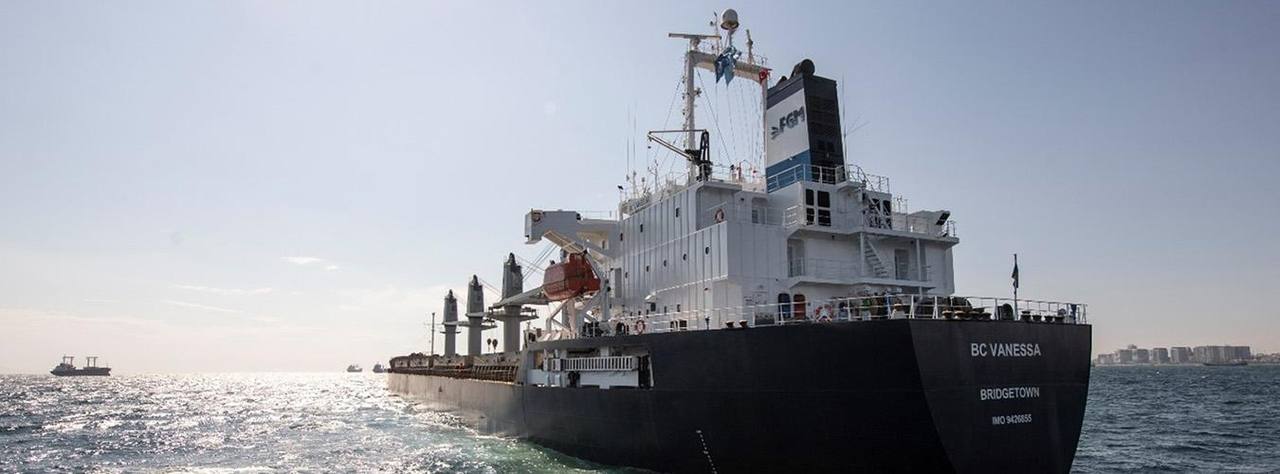
Incidents involving drones, mines and commercial ships in the Black Sea have surged roughly tenfold this year, NATO figures cited by CBS News show — making the waterway deadlier for sailors than the Strait of Hormuz, the flashpoint of the US–Iran war.
Source: CBS News
"In 2025, for example, we saw fewer than 50 incidents in the Black Sea. This year alone, we're talking four to five hundred," NATO military spokesperson Colonel Martin O'Donnell told CBS News. The International Transport Workers' Federation puts the Black Sea sailor death toll this year at at least 40, against 25 in the Strait of Hormuz, according to the International Maritime Organization.
The roughly tenfold increase threatens a major artery of global grain and fuel shipments. The Black Sea carries Ukrainian and Russian grain to world markets, and both sides in the Russia–Ukraine war have been striking shipping and port infrastructure. Ukraine confirmed this month that its forces sank the Russian corvette Merkury off the Libyan coast.
Ukraine confirmed earlier this month that its forces sank the Russian corvette Merkury off the Libyan coast — the latest strike in the war at sea. Read the full story
Romanian Navy Captain Mihai Iordache, whose forces patrol NATO's Black Sea waters, told CBS News his crews are stretched thin. "Four years ago, we were ready for one drifting mine, and right now we are ready for tens of drifting drones," he said, describing how specialist divers and drones must locate and destroy unexploded weapons before they hit shipping.
NATO's south-eastern flank
Three of the six countries bordering the Black Sea — Romania, Bulgaria and Turkey — are NATO members, which puts the alliance's warships and sailors close to the fighting. CBS News reported that the line between containing the war and becoming part of it is "dangerously thin", warning that one misstep could draw NATO and the United States into direct conflict with Russia. Russian cruise missiles landed in Poland days earlier, underlining how easily the war can spill across borders.
For India and Punjab, the stakes are direct: the Black Sea is a key route for wheat, cooking oil and fertiliser, and every attack on shipping pushes up freight and insurance costs that eventually reach Indian kitchens and farms. The same disruption logic is playing out in the Strait of Hormuz, where mine strikes on tankers have pushed Brent crude towards $97 a barrel this week.
What is solid
- NATO's spokesperson told CBS News that Black Sea incidents rose from fewer than 50 in 2025 to 400–500 in 2026.
- At least 40 sailors have been killed in the Black Sea this year, per the International Transport Workers' Federation.
- Three Black Sea coastal states — Romania, Bulgaria and Turkey — are NATO members.
What is only claimed
- The 400–500 figure is NATO's estimate range, not a precise count; attribution of individual drone and mine incidents is often disputed.
What happens next: NATO navies are stepping up mine-clearing and patrols in the Black Sea, while shippers weigh the rising cost and risk of using the route. Any further strike on a grain carrier or tanker — or another missile landing in NATO territory — would sharpen the debate in Washington and Brussels over how far the alliance goes to protect shipping without entering the war.