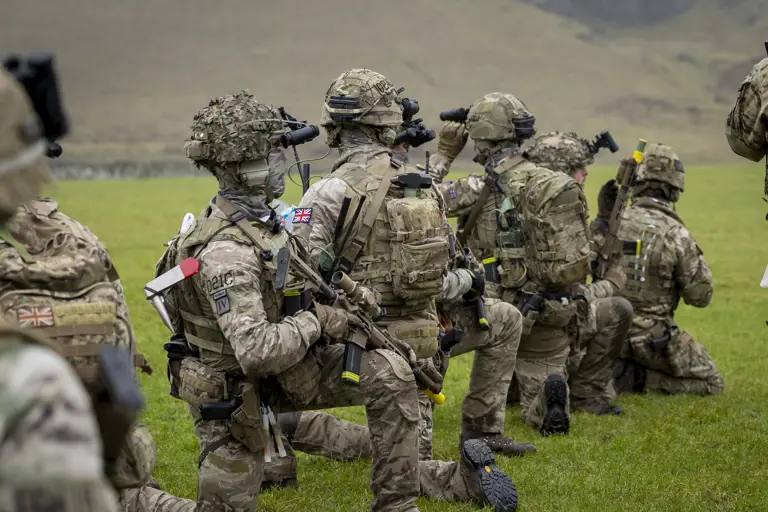
LONDON — Britain's Ministry of Defence has written to about 100,000 former service personnel in the Strategic Reserve, asking them to update their contact details and skills in the first large-scale contact with the reserve since the Cold War, as the government steps up preparations for a possible conflict amid the growing Russian threat.
Source: The Telegraph
The letters, signed by the heads of the British Army, Royal Navy and Royal Air Force, went to former regular personnel who retain a legal duty to return to service in a national emergency, an attack on the UK or a transition to war. Recipients were asked to confirm their contact details and to describe the civilian jobs and skills they have gained since leaving the forces.
Defence Secretary Wes Streeting confirmed the move on Thursday in an interview with Sky News, describing it as a necessary precaution. He said the country should be "alert, not alarmed" as threats across Europe grow, and stressed that the letters are not call-up papers.
Not a call-up, ministers insist
The letters make clear that recipients are not being asked to return to service. "To be clear, we are not asking you to return to service," the correspondence says, according to reports. The Ministry of Defence said the exercise is a practical step to strengthen readiness and deterrence, and that identifying in advance the people it could draw on in an emergency would help reduce the risk of conflict. The ministry has not published an official count of how many letters were sent; the figure of about 100,000 comes from British press reports, first carried by The Telegraph and The Times.
The letters also invite former personnel to volunteer for training and exercises, including NATO's flagship Steadfast Defender exercise in the spring of 2027. The government says it is working to make sure volunteers are not left out of pocket for taking part.
Why now
The move comes as Russia's war in Ukraine grinds on and Moscow's hybrid campaign against NATO members intensifies — from airspace violations to sabotage and cyberattacks. Germany's Chancellor Friedrich Merz warned this week that Russia poses an "escalating" threat to European security, and NATO allies have been stepping up defence spending and readiness across the continent.
Streeting warned in October that Britain should be ready for war by 2030, citing Russia's military capabilities and what he described as intensifying hybrid warfare against NATO members. On the same day the letters landed, the government announced an £8 billion contract to upgrade the nuclear submarine fleet — yaani lagbhag ₹94,000 crore — which Streeting said would help get the country "warfighting ready".
During the Cold War, Britain issued uniforms and equipment to the Strategic Reserve and held training once a year. Those activities were discontinued after the collapse of the Soviet Union, partly because of the cost — which is why Thursday's mailing is the first of its kind in more than three decades.
Britain is home to one of the largest Punjabi and Indian communities outside India, and many veterans now work in civilian jobs across the country, including in transport, health care and small business. Any future call on the reserve would reach deep into those communities, which is why the readiness drive is being watched closely by diaspora families across the UK.
What is solid
- The Ministry of Defence has written to members of the Strategic Reserve, signed by the three service chiefs.
- The letters ask recipients to update contact details and skills, and invite them to volunteer for training.
- Ministers say the letters are not a call-up or mobilisation order.
What is only claimed
- The figure of about 100,000 letters comes from press reports; the MoD has not published an official count.
What happens next: the ministry will collect the updated details and gauge how many veterans volunteer for training. The Steadfast Defender exercise in the spring of 2027 will be the first big test of the renewed reserve, and further readiness announcements are expected as Britain and its NATO allies keep building up their defences.