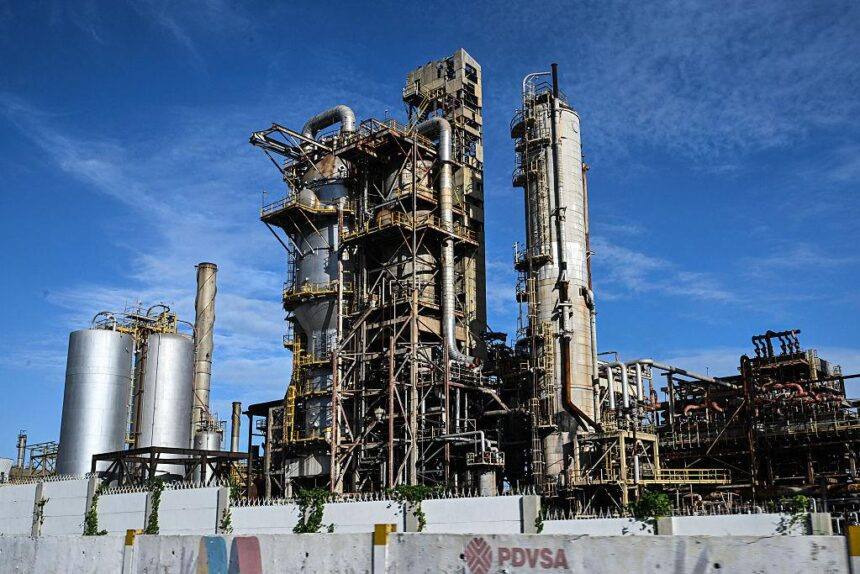
Spain's Repsol and Italy's Eni have committed to jointly invest $2 billion over five years in their joint ventures with Venezuela's state oil company PDVSA, according to a macroeconomic framework published by the Venezuelan government on Tuesday. The pledge, reported by Reuters on November 25, is the biggest European energy commitment to Venezuela in years — and it comes alongside a separate deal between PDVSA and Germany's Siemens Energy to rebuild the power systems that keep the country's oilfields running.
Under the framework, Eni and Repsol have also agreed to more than double offshore gas production at the Cardón IV field in the Gulf of Venezuela and export the fuel as liquefied natural gas (LNG) through a floating terminal, with the first exports targeted by the end of 2031. The two European companies each own half of the Cardón IV gas joint venture and are partners with PDVSA in oil projects in the country.
The Siemens Energy partnership, formalised separately, aims to rehabilitate the electrical infrastructure that supplies Venezuela's oilfields. The agreement was signed by PDVSA president Héctor Obregón and Siemens Energy chief executive Christian Bruch, and is meant to restore equipment, improve power reliability and support oilfield operations after years in which access to technology, spare parts and maintenance was restricted, according to Venezuelan energy publication Finanzas Digital.
Why this matters
The two European majors have operated in Venezuela for decades despite political upheaval, economic collapse and US sanctions — and despite being owed billions by PDVSA for gas sold years ago. Financial filings put the unpaid amounts at roughly $8 billion combined: Eni's nominal credit exposure to PDVSA is about $2.7 billion, while Repsol was owed about $5.4 billion at the end of 2025, according to an analysis of the companies' accounts. The new pledge is therefore as much a bet on getting paid in future production as it is fresh cash.
Neither company has confirmed the $2 billion figure itself. Reuters said neither Eni nor Repsol immediately replied to its requests for comment, and no detailed investment plan has been published. The commitment, as it stands, is a line in a Venezuelan government document — not a company announcement — and the spending would run at about $400 million a year split between the two firms.
The backdrop is a Venezuelan oil industry sitting on the world's largest proven crude reserves but producing a fraction of what it once did after years of mismanagement and sanctions. Caracas has been courting European capital and technology to revive output, and the same government framework that carries the Eni-Repsol pledge also put Venezuela's total debt at $237.5 billion — the country's first full economic framework in years.
The government document behind this pledge also put Venezuela's total debt at $237.5 billion — read our earlier story on that framework. Venezuela puts its debt at $237.5 billion
For world oil markets the effect is medium-term, not immediate. Doubling Cardón IV would add roughly 100,000 barrels a day of oil equivalent in gross terms, analysts estimate — about 50,000 barrels a day net to each partner — and the first LNG cargoes are still six years away. For big importers such as India, which buys crude on world markets, any extra supply helps keep prices in check, but nothing in this announcement changes supply tomorrow.
$2 billion means 200 crore dollars spread over five years — about $400 million a year, split between Eni and Repsol. That is small next to each company's annual spending, but large for Venezuela, whose oil industry has been starved of investment for years.
What is solid
- Eni and Repsol have committed to jointly invest $2 billion over five years in their PDVSA joint ventures, according to a macroeconomic framework published by Venezuela's government (Reuters, November 25).
- The framework includes agreements to more than double gas output at the Cardón IV field and export LNG via a floating terminal by the end of 2031.
- PDVSA and Siemens Energy formalised a partnership to rehabilitate power infrastructure for Venezuela's oilfields, signed by Héctor Obregón and Christian Bruch (Finanzas Digital).
What is only claimed
- Whether the $2 billion will actually be spent — neither company has confirmed the figure and no detailed investment plan has been published.
- Whether LNG exports from Cardón IV will really start by the end of 2031 — the terminal is still at the planning stage.
What happens next
Watch for three things: whether Eni and Repsol publish their own detailed investment plans; whether work actually starts at Cardón IV and on the oilfields' power grid; and whether the US sanctions picture — and the political talks in Caracas, where a US-backed reconciliation process concluded a fourth round this week — holds steady enough for European firms to keep spending. Until the companies confirm the numbers themselves, the $2 billion remains a government-document pledge, not a signed corporate commitment.