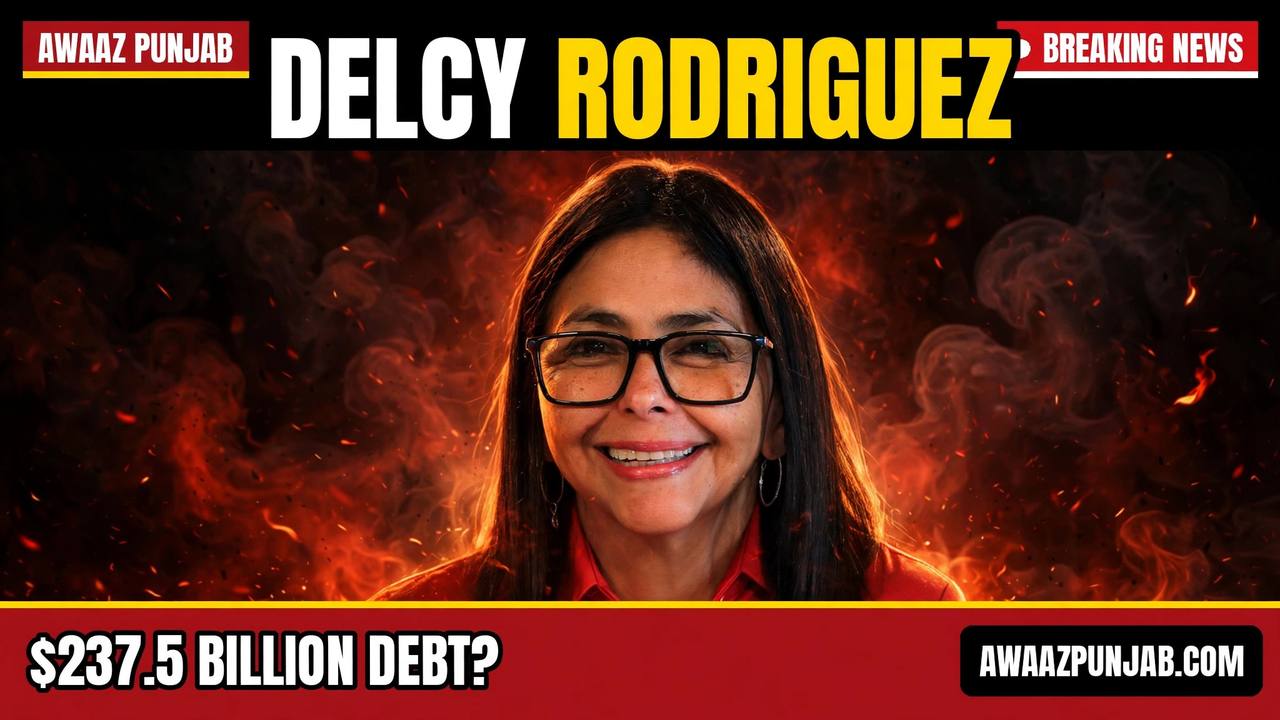
Venezuela's government has put the country's total public debt at $237.5 billion in a long-awaited macroeconomic framework published on Tuesday, giving the clearest picture in years of its shattered finances and a possible foundation for one of the largest sovereign debt restructurings ever attempted.
Source: Reuters
The nearly 200-page document was published by the interim government of President Delcy Rodríguez. It puts the debt at 242% of gross domestic product at the end of 2025 — yaani 23,750 crore dollars — and says the burden is 'in a state of protracted default' and unsustainable.
What the framework reveals
The $237.5 billion total includes $110.1 billion in eurobonds, $67.3 billion in non-financial obligations concentrated at the state oil company PDVSA, $26.3 billion in arbitration claims and $4.2 billion owed to multilateral lenders, Reuters reported. At least $35 billion of PDVSA's non-financial obligations are counted as debt between public-sector bodies, so the headline figure is not all owed to outside creditors.
"Venezuela's public debt is in a state of protracted default and is unsustainable, reflecting the constraints imposed by financial sanctions, the decline in hydrocarbon revenues and years of macroeconomic imbalances," the government said in the document.
Ambitious growth targets
The framework expects economic output to more than double over the next five years, to $200.9 billion. It projects oil production — the key driver of government revenue — rising 9.1% a year to 2.9 million barrels per day by 2036, with oil export revenue of $30.1 billion this year. The economy is expected to grow 5.0% this year, while inflation is set to rise before easing to an average of 24% over the medium term.
Markets reacted at once: Venezuela's defaulted sovereign bonds and PDVSA bonds rose more than 4 cents on the dollar after the framework was released, according to Reuters.
Why this matters
Venezuela has been largely shut off from the international financial community since the United States imposed financial sanctions in 2017. It has re-engaged with creditors and oil markets since the shock seizure of former president Nicolás Maduro by US forces in January, with Rodríguez leading an interim government.
A credible debt figure is the first step toward any restructuring. Investors and creditors have waited years for an official account of what Venezuela owes, to whom, and on what terms — without it, no negotiation over repayment can begin.
But the framework is only a starting point. Investors are still awaiting a comprehensive debt sustainability analysis that will help determine how much Venezuela can afford to repay, based on expected financial flows, reserve accumulation and total debt-servicing costs.
What happens next: the framework assumes public debt returns to a sustainable path and sufficient external financing is secured, but debt-service payments, financing flows and reserve accumulation all depend on restructuring terms that have yet to be negotiated. The government says it is committed to restoring sustainability — the hard bargaining with bondholders over how much they will be repaid has yet to begin.