The National Highway Traffic Safety Administration proposed on Tuesday to give automakers two more years to install automatic emergency braking in nearly all new cars and light trucks, pushing the deadline from 2029 to 2031.
Under the proposed rule, published as a Notice of Proposed Rulemaking, the compliance date for Federal Motor Vehicle Safety Standard No. 127 would move from September 1, 2029 to September 1, 2031 for major manufacturers. Smaller manufacturers, final-stage manufacturers and vehicle alterers would get until September 1, 2032, instead of September 1, 2030.
Why the agency wants more time
“The technology has not progressed as much as expected, and providing automakers with this additional lead time will ensure that these systems are thoroughly tested, reliable, and trusted by American drivers,” NHTSA Administrator Jonathan Morrison said in the agency's announcement.
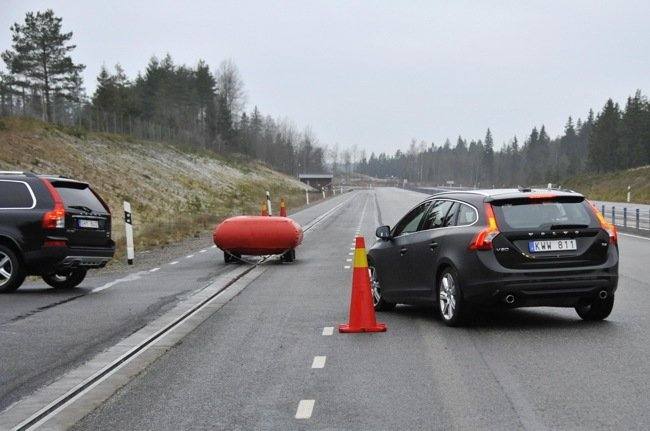
Preliminary testing under the New Car Assessment Program on model-year 2025 vehicles found that current automatic braking systems still struggle to consistently avoid a collision in high-speed and low-light situations, the agency said. The proposal also clarifies test-speed tolerances and sets out procedures to check that the systems can detect a malfunction and warn the driver.
NHTSA is also asking for public comment and performance data on the core of the rule — including false-positive braking, the safety risks of unexpected braking, and whether the systems are practicable at all. Comments can be filed for 60 days after the proposal is published in the Federal Register, under Docket No. NHTSA-2026-2476.
The rule it would change
The rule dates to the Biden administration, which in 2024 required automatic emergency braking — and pedestrian automatic emergency braking, which detects people in the road — in nearly all new cars and light trucks by 2029. It was described at the time as one of the most far-reaching US auto-safety regulations in recent years.
The car industry fought the rule from the start. The Alliance for Automotive Innovation, which represents General Motors, Toyota, Volkswagen, Hyundai and other major manufacturers, sued to block it in early 2025, calling the regulation “practically impossible with available technology.”
What it means for drivers — and for truckers
For anyone buying a new car or light truck, the delay means the systems will take longer to become standard on every model. The technology uses cameras and sensors to brake automatically when a crash is imminent, and pedestrian detection adds protection for people crossing the road. For Punjabi truckers and other professional drivers, the rule itself covers passenger cars and light trucks — heavy-truck braking rules are handled separately.
What happens next is the comment period. Once the 60 days close, NHTSA will weigh the submissions — including data on false braking and high-speed performance — and decide whether to finalize the two-year delay. The decision will set the timetable for one of the biggest safety changes to American cars in years.